USS Vincennes shoots down civilian plane
On 3 July 1988, one of the most controversial naval incidents of the late Cold War took place over the Strait of Hormuz, when the American guided-missile cruiser USS Vincennes shot down Iran Air Flight 655, a civilian passenger aircraft carrying men, women and children on a short scheduled flight from Bandar Abbas in Iran to Dubai. In a matter of minutes, a normal commercial journey became an international tragedy. All 290 people on board were killed, and the incident left a wound in Iranian memory that has never fully healed.
The disaster happened during the final stages of the Iran-Iraq War, a brutal conflict that had already lasted nearly eight years. By 1988 the fighting had spread into the Persian Gulf, where oil tankers, patrol craft and warships operated in a tense and dangerous environment. The United States had increased its naval presence in the region to protect shipping, especially after attacks on tankers threatened the flow of oil through one of the world’s most important sea lanes. This period became known as the Tanker War, and the Strait of Hormuz was one of its most sensitive flashpoints.
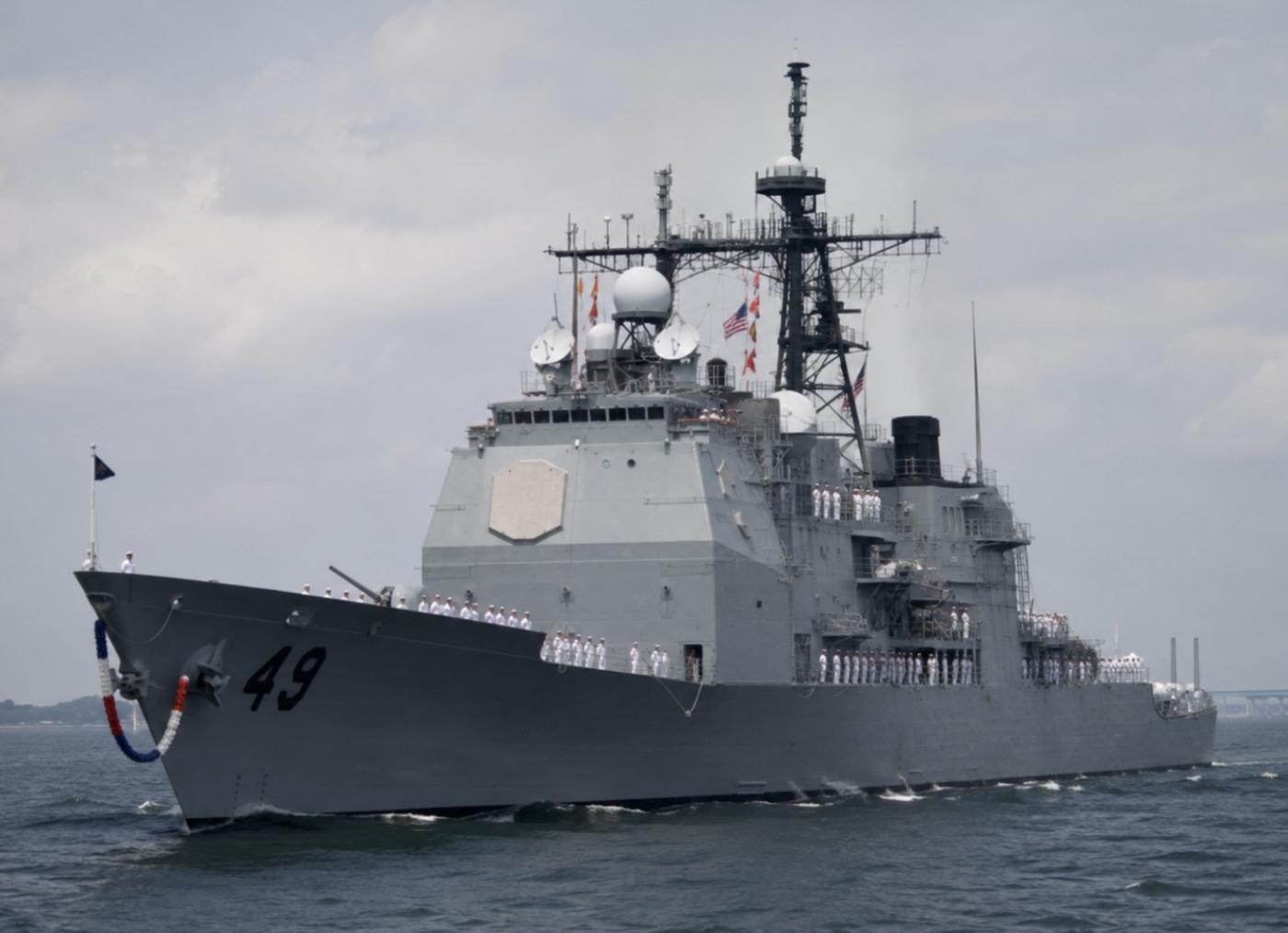
USS Vincennes was one of the most advanced warships in the United States Navy. She was a Ticonderoga-class cruiser equipped with the Aegis combat system, designed to track and engage multiple air threats at once. In theory, this gave the ship powerful defensive capability. In practice, on that July morning, advanced technology, human judgement, poor communication and battlefield tension combined in a catastrophic way.
Iran Air Flight 655 was operated by an Airbus A300, a wide-bodied civilian airliner. It had taken off from Bandar Abbas International Airport, which was both a civilian and military airfield. The aircraft was flying a regular route to Dubai, a journey that normally took around half an hour. The flight was not a secret military movement, nor was it flying an unusual course. It was climbing along an established commercial airway over the Gulf.
At the same time, USS Vincennes was involved in a confrontation with Iranian small boats. The American account stated that Iranian gunboats had behaved aggressively and that a helicopter from Vincennes had come under fire. Vincennes moved to engage the boats, and the atmosphere on board the cruiser was one of high alert. The crew were dealing with a surface action while also monitoring aircraft in the area. In such conditions, every radar contact could be seen through the lens of possible attack.
The fatal mistake came when Flight 655 appeared on the ship’s radar. The aircraft was climbing after take-off, but the crew of Vincennes believed it might be descending towards the ship. It was also wrongly identified as a possible Iranian F-14 Tomcat fighter. Iran had acquired F-14s from the United States before the 1979 revolution, so American forces knew Iran possessed the type. To the men inside the combat information centre of Vincennes, already under pressure from the surface engagement, the radar contact was interpreted as a potential hostile aircraft.
Warnings were sent on military and civilian emergency frequencies, but the airliner’s crew did not respond. One reason was that some of the warnings were addressed to an unidentified aircraft by speed, position or altitude rather than directly to Iran Air Flight 655. A civilian airliner crew, flying a scheduled route and communicating with normal air traffic control, may not have realised the warnings were meant for them. The passengers almost certainly had no warning at all. They would have been expecting a brief flight across the Gulf, not a missile attack from a warship below.
Captain William C. Rogers III, commanding USS Vincennes, had only a short time to decide whether the radar track represented a threat. Believing his ship could be under attack, he ordered missiles fired. Two Standard surface-to-air missiles were launched. They struck the Airbus in the sky above the Gulf. The aircraft broke apart and crashed into the water. There were no survivors.
The loss of life was appalling. The dead included 274 passengers and 16 crew members. Among them were 66 children. Families travelling for business, family visits, holidays and ordinary civilian reasons died instantly in an incident they could not have understood or avoided. For Iran, the image of an American warship shooting down a passenger aircraft became a symbol of injustice and disregard for Iranian lives.
The first American reaction was defensive. Washington stated that USS Vincennes had acted in self-defence, believing the aircraft to be a hostile Iranian fighter. President Ronald Reagan expressed deep regret over the loss of life, but the United States did not admit that it had deliberately attacked a civilian aircraft. American officials argued that the ship was operating in a combat environment, had issued warnings, and had acted under the belief that an attack was imminent.
Iran rejected that explanation. To Tehran, the aircraft was clearly civilian, flying inside a recognised commercial air corridor, transmitting a civilian transponder signal and climbing away from Bandar Abbas. Iranian officials accused the United States of a reckless and unlawful act. They argued that no warship had the right to fire on a passenger plane following a normal route, especially when the aircraft was not attacking and was carrying hundreds of civilians.
The international reaction was serious, although not as punishing for the United States as Iran wanted. The matter went before the United Nations Security Council, where Iran called for condemnation. Many countries expressed sorrow and concern, but the politics of the Cold War and the Iran-Iraq War shaped the response. The Security Council eventually expressed deep distress at the downing of the aircraft and profound regret over the loss of innocent life, while also calling for restraint and stressing the need to end the wider Iran-Iraq War.
The tragedy also raised difficult questions about modern naval warfare. USS Vincennes possessed some of the most sophisticated radar and missile systems in the world, yet the aircraft was still misidentified. The case showed that technology does not remove the danger of human error. In a tense combat zone, information can be misunderstood, warnings can fail, and crews can see what they fear rather than what is actually there. A civilian aircraft can become, in the minds of frightened or pressured operators, an incoming threat.
There was also criticism of the conduct of Vincennes before the shootdown. Later reporting and analysis questioned how aggressively the ship had acted during the engagement with Iranian boats and whether the cruiser had placed itself in a more dangerous position than necessary. The United States Navy’s formal investigation found that the crew had believed they were under threat, but it also confirmed key facts that made the tragedy even more painful: Flight 655 had been on a normal commercial flight profile, in a recognised airway, and climbing when it was destroyed.
The incident had a long afterlife. In 1989, Iran brought a case against the United States at the International Court of Justice. In 1996, the two countries reached a settlement. The United States agreed to pay compensation, including money for the families of the victims, but did so without accepting legal liability. For many Iranians, this was not enough. The absence of a full formal apology became part of the bitterness surrounding the incident.
In the United States, the shootdown was often described as a tragic mistake made in the fog of war. In Iran, it was remembered as something darker: a civilian airliner destroyed by a superpower that then refused to fully accept blame. These two versions of memory still matter. The event remains one of the most painful episodes in the long hostility between Iran and the United States, and it is still invoked whenever tensions rise in the Gulf.
One of the most striking aspects of the tragedy is how ordinary the flight itself was. It was not a spy aircraft, not a bomber, not a fighter and not a military transport. It was a scheduled civilian airliner making a short regional journey. Its passengers boarded expecting to land in Dubai within the hour. Instead, they became victims of a war they were not fighting and a mistake made by men who believed they were defending themselves.