USS Solace
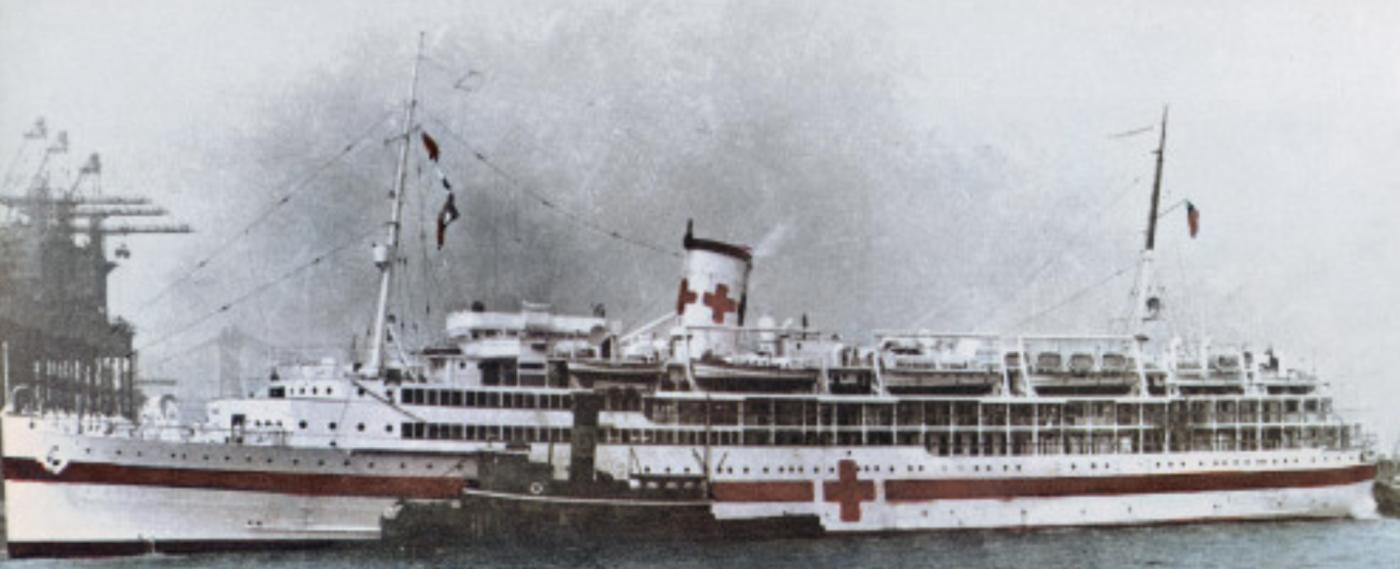
During the attack on Pearl Harbor on 7 December 1941, thousands of sailors and civilians were wounded within minutes. The sudden influx of casualties created an immense strain on the medical system, and treatment had to be improvised across ships, shore stations, and emergency field locations. Many of the injured were indeed taken aboard the hospital ship Solace, which played a central role that morning, while others were spread across multiple naval and civilian facilities throughout Oahu.
The hospital ship Solace was moored at Pearl Harbor’s Merry Point and began receiving casualties within minutes of the first explosions. Her crew worked continuously through smoke and burning oil, using boats and makeshift rafts to bring aboard men pulled from the water. Solace treated hundreds of burn victims that day, and her surgical teams performed dozens of operations without pause. One notable fact is that every wounded man who reached Solace alive on 7 December survived, a testament to her medical crew’s experience and readiness.
Beyond Solace, the majority of casualties were distributed to a network of military and civilian facilities already on Oahu. Naval Hospital Pearl Harbor, later known as the Naval Medical Center Pearl Harbor, received a large portion of the most severe cases. Despite damage to some of its buildings from nearby explosions, the medical staff managed to organize triage, surgery, and long-term recovery. Many survivors with extensive burns were saved through repeated surgeries and early skin-grafting procedures that were, at the time, still relatively new.
The US Army’s Tripler General Hospital also became a major receiving site. At this time, Tripler was located near Fort Shafter rather than on its current hilltop site. Army surgeons and nurses joined Navy teams in what became one of the largest emergency medical responses in Hawaiian history. Hundreds of men with shrapnel injuries, fractured limbs, and blast wounds were treated there, and its isolation wards were converted into burn units within hours.
The small Navy dispensary at Hickam Field, itself heavily bombed during the attack, nevertheless treated dozens of wounded airmen on the spot. In some cases, patients were stabilized under fire before being transferred to Tripler or Pearl Harbor’s naval facilities. Schofield Barracks Station Hospital, further inland and untouched by the attack, served as an overflow facility and received many of the less critical casualties, allowing more heavily hit hospitals to focus on the gravely wounded.
Civilian hospitals in Honolulu also received patients when military facilities became overwhelmed. Queen’s Hospital, the largest civilian medical center in Hawaii, treated a mixture of military and civilian casualties. Straub Clinic and St. Francis Hospital likewise participated in the emergency response. Civilian doctors, nurses, and volunteers worked alongside military personnel in these facilities, marking one of the earliest large-scale cooperative medical efforts between civilian and military medical systems in the Pacific.
The survival rate for those who reached medical care was far higher than many expected. Although 2,403 people were killed during the attack, a substantial majority of the wounded survived. Burn injuries were especially numerous, yet roughly two-thirds of even the most severely burned patients lived after receiving early debridement, grafting, and infection control. One interesting figure often cited by medical officers afterwards was that more than 90 percent of personnel who arrived at a hospital with a detectable pulse ultimately survived. This was despite limited supplies, improvised surgical theaters, and the sudden, overwhelming volume of patients.
Another notable fact is that the naval medical system had run extensive mass-casualty drills in the months before the attack, a preparation that proved invaluable. These drills had emphasized triage, rapid movement of patients, and the distribution of casualties among multiple sites, all of which occurred almost exactly as rehearsed. Many surgeons later credited these exercises with saving hundreds of additional lives.