
Armstrong Whitley Bomber
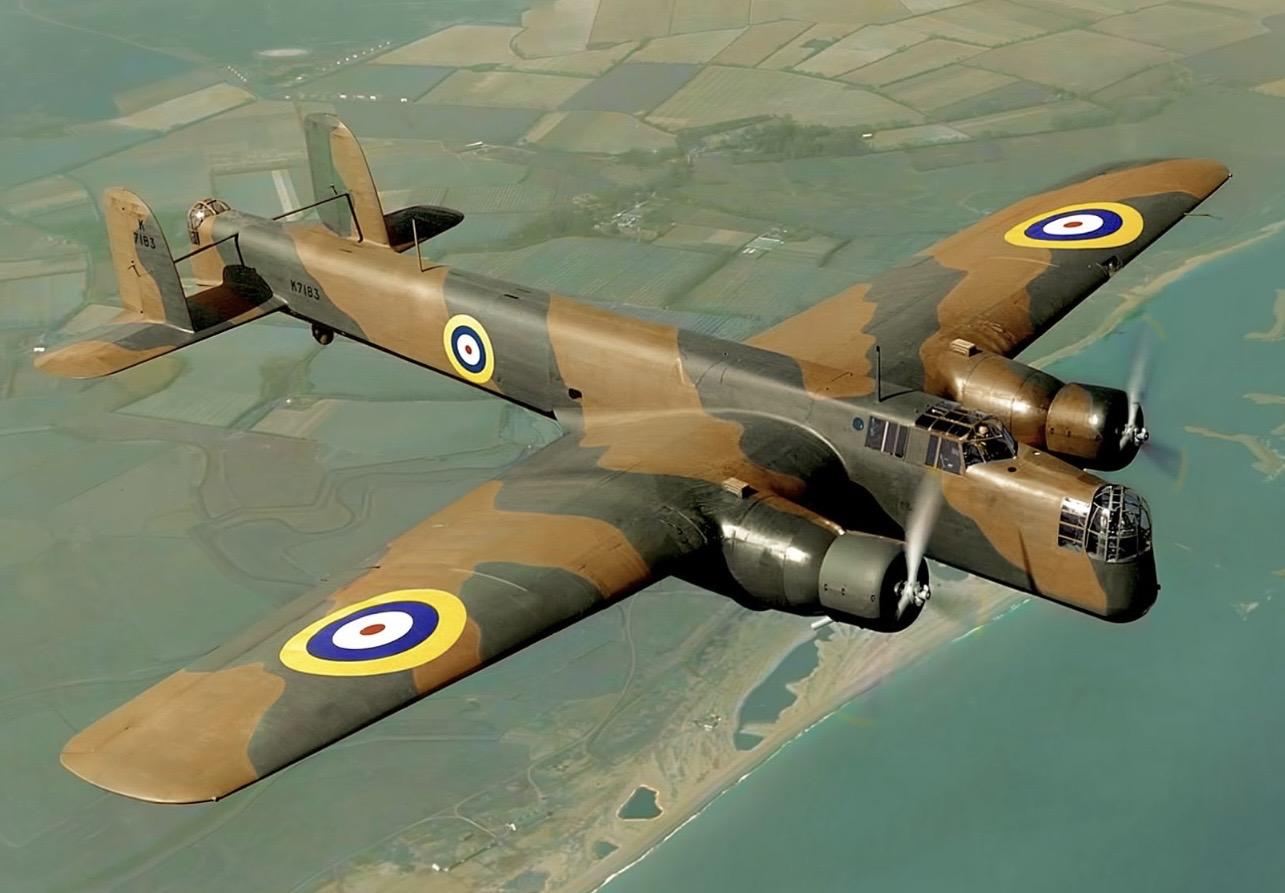
The Armstrong Whitworth Whitley was one of Britain’s earliest modern heavy bombers and played a vital transitional role during the opening years of the Second World War. Though later overshadowed by more famous RAF aircraft, it was instrumental in moving British bomber operations from pre-war concepts into active wartime service and achieved several notable historical firsts.
The aircraft was designed in the mid-1930s by John Lloyd, chief designer at Armstrong Whitworth Aircraft of Coventry. His work was a response to Air Ministry Specification B.3/34, which called for a long-range night bomber capable of carrying a substantial internal bomb load. At the time, the Royal Air Force was rapidly abandoning biplanes and outdated designs in favour of all-metal monoplanes, and Lloyd’s proposal reflected this shift toward modern construction and operational thinking.
Production was undertaken entirely by Armstrong Whitworth at its Coventry facilities. Manufacturing began in 1936 and continued until 1943. Over this period, a total of 1,814 aircraft were built across several variants, ranging from the early Mk I to the later Mk VII. These marks reflected ongoing improvements, including changes in engines, defensive armament, and operational roles. Initial versions were powered by Armstrong Siddeley Tiger radial engines, while later models adopted Rolls-Royce Merlin engines, which improved overall performance and reliability.
As a bomber, the design was advanced by the standards of the late 1930s. It was capable of carrying a maximum bomb load of around 7,000 pounds, though typical missions usually involved lighter loads depending on range and conditions. A fully enclosed internal bomb bay represented a major step forward for the RAF, reducing drag and improving aerodynamic efficiency. Operational payloads included a variety of high-explosive bombs, and later adaptations allowed the aircraft to carry depth charges when assigned to maritime duties.
Operational range was approximately 1,650 miles, enabling long-distance missions from Britain into occupied Europe and Germany. Maximum speed was roughly 230 miles per hour, which was acceptable at the time of introduction but gradually became a weakness as enemy fighter performance improved. The service ceiling was around 26,000 feet, although most combat sorties were flown at lower altitudes, particularly during night operations where navigation and safety were greater concerns.
One of the most recognisable characteristics was its pronounced nose-down attitude in flight. This unusual appearance resulted from the wings being mounted at a high angle of incidence to improve take-off performance from relatively short airfields. While aerodynamically sound, it gave the aircraft an awkward look and became a frequent subject of humour among aircrews. Despite this, pilots generally regarded it as stable and predictable, qualities that were highly valued during long nocturnal missions.
Historically, the type holds a significant place in the early air war. On the night of 11–12 June 1940, aircraft of this design carried out the first British bombing raid of the Second World War against targets in Germany, striking railway yards in the Ruhr. Earlier RAF operations had been limited to leaflet-dropping missions, but this raid marked the beginning of Britain’s sustained strategic bombing campaign.
As the conflict progressed, the airframe proved adaptable to roles beyond bombing. Later variants were widely used by RAF Coastal Command for maritime patrol and anti-submarine warfare, particularly the Mk VII. It was also employed as a glider tug and paratroop transport, supporting early airborne and commando operations before more specialised transport aircraft became available.
By 1942, it was no longer suitable for frontline bombing duties, having been overtaken by newer and more capable designs. Nevertheless, its contribution during the critical early years of the war was substantial. It provided the RAF with a modern bomber at a time of urgent need and helped establish the tactics, navigation methods, and operational experience that would later be refined by crews flying more advanced aircraft.
Although no complete examples survive today, its historical importance remains clear. It was not a fast or elegant machine, but it was dependable and timely, carrying the weight of Britain’s earliest offensive air operations and laying the groundwork for the bomber force that followed.