On this day in military history…
Operation Colossus was the first British airborne operation of the Second World War and represented a major step in the development of Britain’s airborne and special forces capability. It took place during the night of 10–11 February 1941 in southern Italy, near the Tragino aqueduct close to Calitri, with the Royal Air Force delivering British parachutists deep into enemy territory for the first time. At this early stage of the war, airborne warfare was still experimental, and the operation was designed as much to test new ideas as to inflict physical damage on the enemy.
The raid was planned in response to the growing awareness that Germany had gained a significant advantage through the use of airborne troops in 1940. British military planners recognised the need to develop similar capabilities quickly, despite limited experience and equipment. Rather than attempting a large-scale airborne assault, they opted for a small, focused operation that would test aircraft performance, parachute equipment, night navigation, and the ability of troops to operate independently after landing. The chosen target was an aqueduct supplying water to the port of Taranto, a key Italian naval base, with the intention of disrupting infrastructure while gathering vital operational experience.
The men selected for Operation Colossus were not ordinary infantry soldiers. They were drawn from No. 2 Commando, a unit already composed of volunteers chosen for their physical fitness, initiative, and willingness to undertake hazardous missions. From within this unit, a small group was formed that became known as X Troop. Although Britain did not yet have dedicated airborne units, these soldiers were commandos in every sense, trained for raiding and demolition tasks and expected to operate in small groups behind enemy lines. Their role in Operation Colossus made them Britain’s first operational parachutists.
Training for the mission took place at RAF Ringway, where parachute techniques were still being developed almost from scratch. The men trained using static-line parachutes and practised jumping from converted bombers rather than specialised transport aircraft. Night jumps, landing with heavy equipment, rapid assembly after landing, and cross-country movement in darkness were all central elements of the training. Demolitions instruction was equally important, as the aqueduct was to be damaged using explosives carried in separate components to reduce the risk during the drop. In effect, the men were being trained simultaneously as parachutists, saboteurs, and independent raiders, with little existing doctrine to guide them.
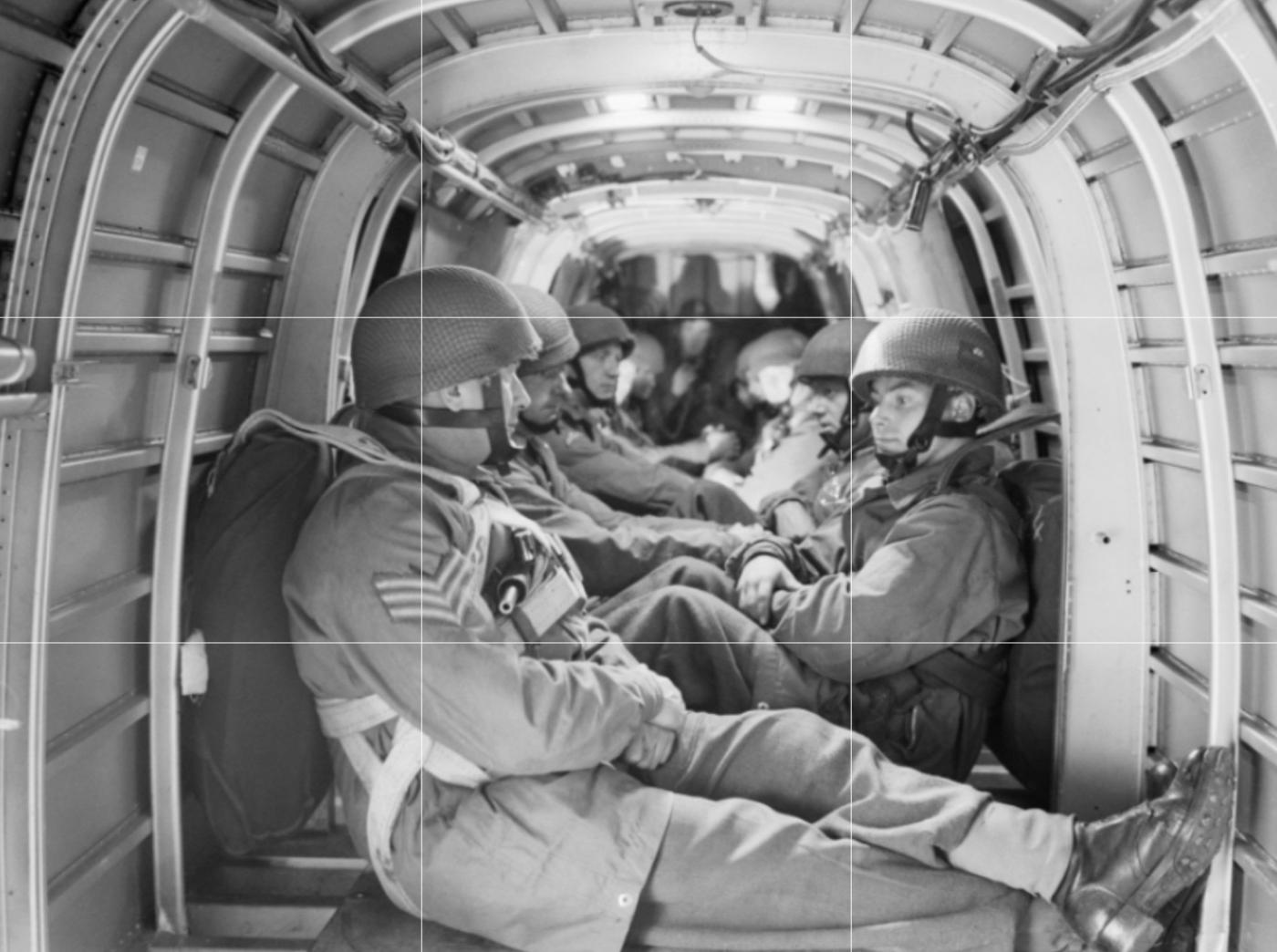
On the night of the operation, six Whitley bombers of the Royal Air Force flew from Malta to Italy carrying the parachutists. Navigation proved difficult due to weather conditions and the limitations of contemporary equipment, and the men were scattered over a wide area when they jumped. Despite this, most of the force managed to regroup and reach the aqueduct. Explosive charges were placed and detonated, successfully damaging the structure and temporarily interrupting the water supply. While the physical impact of the raid was limited and the aqueduct was repaired relatively quickly, the operation demonstrated that British airborne troops could carry out a night insertion and demolition mission under combat conditions.
The plan for escape after the attack was highly optimistic. The men were expected to move south and evade capture with minimal support, at a time when organised resistance networks in Italy were virtually nonexistent. The difficult terrain, lack of local contacts, and language barriers made evasion extremely challenging. Within days, all surviving members of the raiding party were captured by Italian forces. Crucially, they were treated as prisoners of war rather than executed, helping to establish an important precedent regarding the status of captured parachutists.
Although Operation Colossus did not achieve lasting strategic damage, its wider significance was considerable. It provided invaluable lessons on airborne navigation, aircraft modification, parachute training, and the organisation of small units operating independently behind enemy lines. These lessons directly influenced the formation of Britain’s airborne forces, including the Parachute Regiment, and shaped later operations in North Africa, Sicily, Normandy, and beyond. The raid marked the moment when Britain moved from theory to practice in airborne warfare, using trained commandos to explore an entirely new dimension of military operations under wartime conditions.