USS Missouri Battleship
The USS Missouri, often called “Mighty Mo,” was one of the most significant warships ever built and marked the culmination of American battleship design. The keel was laid down at the New York Naval Shipyard in Brooklyn on 6 January 1941, at a time when the United States was rapidly expanding its naval strength in response to growing global tensions. Construction progressed at remarkable speed, and the vessel was launched on 29 January 1944. The launch was sponsored by Margaret Truman, daughter of Senator Harry S. Truman, a symbolic connection that would later gain historic significance. After sea trials and final fitting out, the ship was commissioned into the United States Navy on 11 June 1944, becoming the last battleship ever commissioned by the nation.
In terms of size and power, the ship was immense. It measured roughly 887 feet in length, with a beam of 108 feet, and displaced about 45,000 tons under standard conditions, rising to more than 58,000 tons when fully loaded. Crew numbers varied over time, but during the Second World War it typically carried around 2,700 officers and enlisted personnel, increasing to nearly 3,000 when acting as a fleet flagship. Conditions aboard were demanding, with long hours and strict discipline, yet the ship offered comparatively good living standards for its era, including better ventilation and storage than earlier battleships.
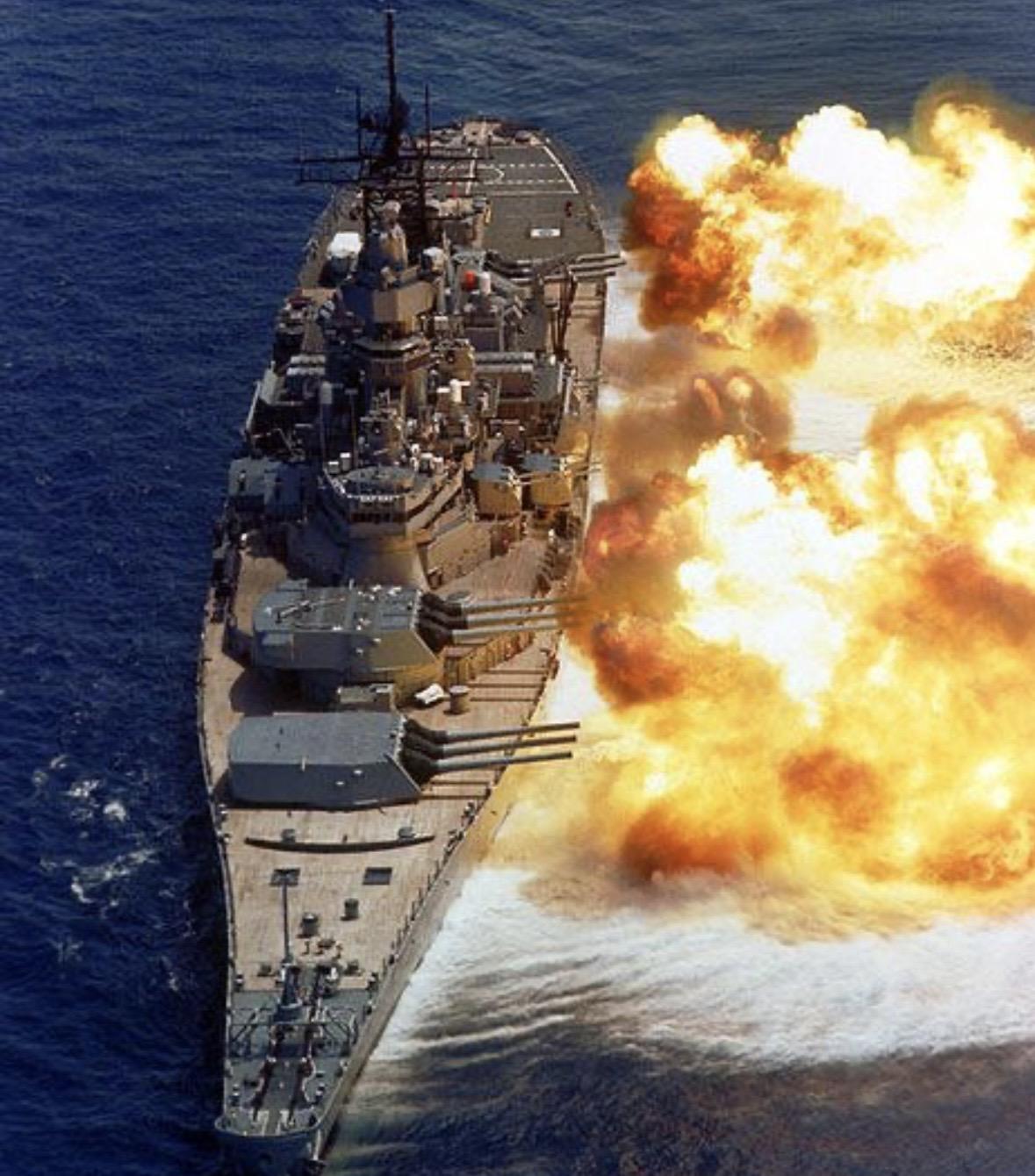
The vessel’s armament reflected its role as a capital ship designed to dominate both sea and shore targets. Its primary battery consisted of nine 16-inch/50 caliber Mark 7 guns, arranged in three triple turrets. These guns were capable of firing shells weighing up to 2,700 pounds over distances exceeding 20 miles, delivering devastating force against enemy warships and hardened fortifications. Supporting this main battery were twenty 5-inch/38 caliber dual-purpose guns mounted in ten twin turrets, effective against aircraft, surface targets, and shore positions. During the Second World War, a dense array of anti-aircraft weapons, including 40 mm Bofors and 20 mm Oerlikon cannons, provided protection against air attack, particularly from Japanese kamikaze aircraft.
After commissioning, the battleship was deployed to the Pacific Theater in late 1944 and quickly integrated into fast carrier task forces. It served as an escort for aircraft carriers, provided heavy anti-aircraft defense, and carried out shore bombardment missions in support of amphibious landings. During operations at Iwo Jima and Okinawa, its heavy guns were used to systematically destroy Japanese defensive positions, caves, artillery sites, and troop concentrations. On 11 April 1945, a kamikaze aircraft struck the ship, causing only limited damage and demonstrating the vessel’s resilience. It continued operations until the end of the war.
The ship’s most famous moment came on 2 September 1945 in Tokyo Bay, when it hosted the formal Japanese surrender ceremony. Allied representatives signed the surrender documents on the quarterdeck, making the battleship a lasting symbol of victory and the end of the Second World War. In the years that followed, it took part in training exercises, diplomatic visits, and fleet operations as the United States Navy adjusted to the emerging realities of the Cold War.
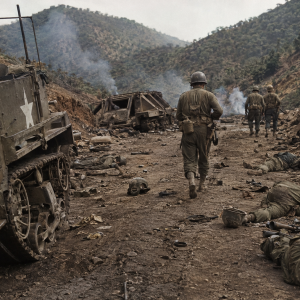
When war erupted on the Korean Peninsula in 1950, the battleship was brought back into active combat service and deployed to Korean waters. In this conflict, naval gunfire support proved crucial, and the ship’s firepower was used to devastating effect. Operating close to the coastline, it bombarded enemy troop formations, supply depots, railways, bridges, and fortified positions. The destructive impact of the 16-inch shells not only caused physical damage but also had a powerful psychological effect, often forcing enemy units to abandon defensive positions.
The ship played a key role in supporting United Nations ground forces by delivering sustained and accurate fire from offshore positions. Its presence allowed commanders to call in heavy bombardment regardless of weather conditions or air availability. The secondary 5-inch guns were heavily employed for closer targets and continuous harassment fire, disrupting enemy logistics and movements along the coast. This ability to remain on station for extended periods and deliver overwhelming firepower made the battleship an exceptionally valuable asset during the Korean War.
Following the conflict, the ship was decommissioned in 1955 as naval warfare shifted toward aircraft carriers and missile technology. It was later reactivated and modernized in the 1980s, eventually seeing combat again during the Gulf War in 1991. Today, preserved as a museum ship, it stands as a powerful reminder of the era of big-gun battleships and the decisive role that naval firepower played in twentieth-century warfare.