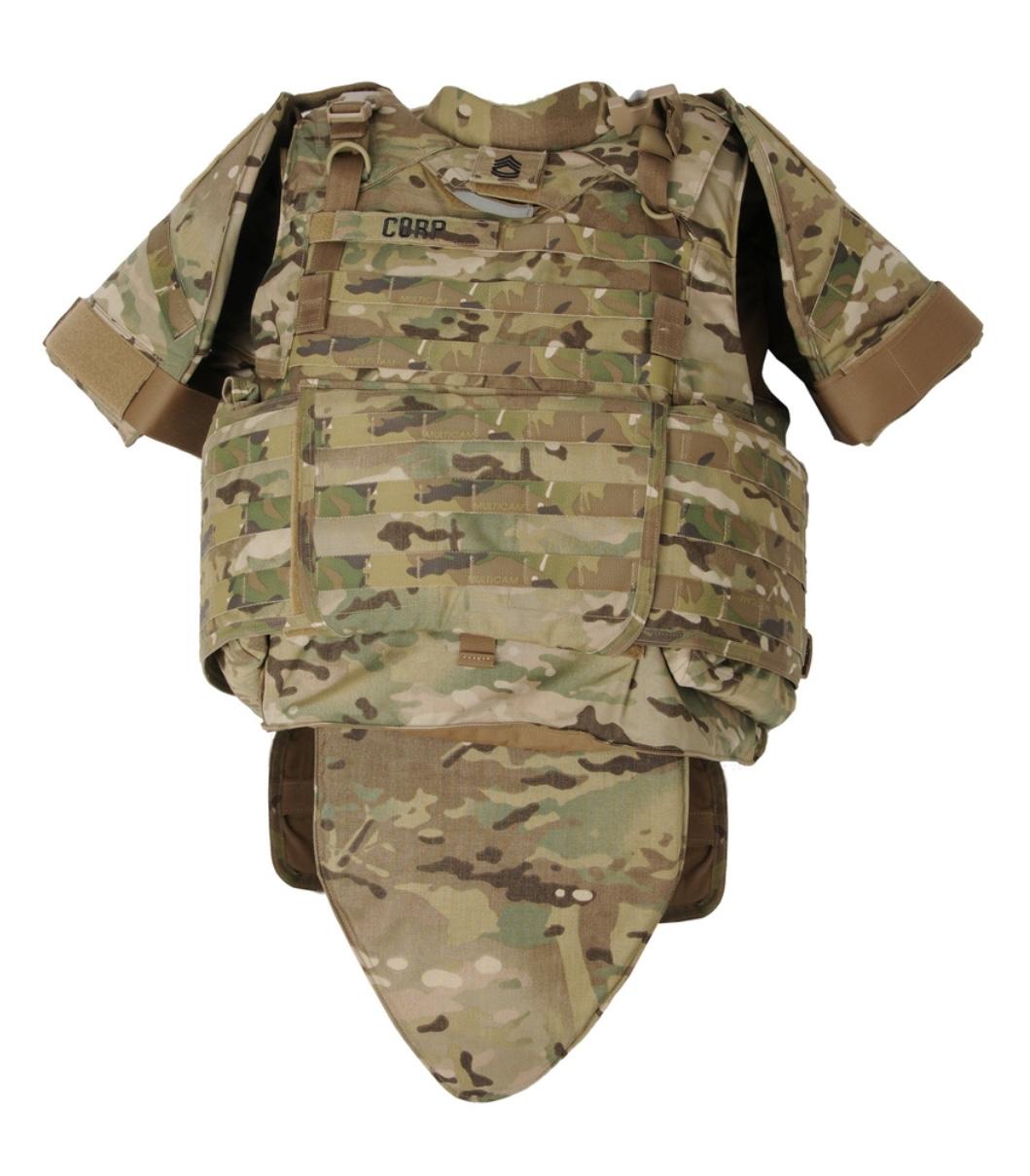
U.S Tactical Vest Armour LOTV
The IOTV wasn’t created by a single inventor. It was developed through a long design process led by the U.S. Army’s Program Executive Office Soldier and the Natick Soldier Research Center. Engineers collected direct feedback from troops who were fighting overseas, then redesigned the older Interceptor vest to improve comfort, mobility and protection. The goal was to produce armour that provided high stopping power while reducing the awkward weight distribution that soldiers had complained about.
Production of the vest has involved a wide network of American manufacturers over the years. Companies such as Point Blank Body Armor, BAE Systems, KDH Defense Systems, Creative Apparel Associates, Protective Products Enterprises and even UNICOR (Federal Prison Industries) have all built versions of the IOTV. Separate companies provide the ceramic plates that fit into the vest, including Ceradyne, Armorworks and others. The system is really the result of a national industrial effort rather than a single factory.
The vest itself is made from tightly woven ballistic fibres similar to Kevlar and other modern aramid and polyethylene materials. These soft armour panels provide protection against pistol rounds and shrapnel. The real stopping power comes from the ceramic rifle plates that slide into pockets on the front, back and sides. These plates are usually made from boron carbide ceramic backed by tough composite layers. When a rifle round strikes the plate, the ceramic cracks to absorb energy and the backing catches the bullet remnants. With the plates installed, the vest can stop full-power rifle threats, including armour-piercing rounds.
Although the outer fabric shell of a medium IOTV weighs only a few pounds, the complete system can weigh around 30 pounds for a medium and closer to 35 for a large when all plates and add-on protectors are included. To make that manageable, the vest uses an internal waist belt and a wrap-around cummerbund that shift much of the load toward the hips rather than hanging everything from the shoulders. It can be put on over the head or by opening one shoulder strap and sliding into it from the side, which helps when a soldier is already carrying equipment.
One of the more clever features is its quick-release system. Hidden inside the vest is a cable connected to a pull handle. Pulling it instantly disassembles the vest into several loose panels, which is crucial if a soldier falls into water, becomes trapped in a vehicle or needs lifesaving medical attention. This ability to strip the vest away in seconds has been credited with saving time and lives in emergencies.
The vest is highly modular. Rows of MOLLE webbing allow additional pouches, first-aid kits, radios and ammunition to be attached wherever the soldier prefers. Shoulder, neck, side, groin and lower-back protectors can be added or removed depending on mission needs. For vehicle crews or those operating in areas with heavy IED threats, more coverage is often used, while lightened versions are preferred for long foot patrols.
Exact production numbers aren’t publicly released, but the quantities are enormous. Individual contracts have totaled tens of thousands of vests at a time, and single manufacturers have reported producing hundreds of thousands over the years. When all companies are combined, well over a million vests and plate sets have likely been produced, making it one of the most widely issued military armour systems in the world.
As for lives saved, the exact number is impossible to pin down, but countless soldiers have reported plates absorbing bullets or shrapnel that would have otherwise been fatal. Many service members have walked away from direct hits to the chest or side thanks to the IOTV’s combination of soft armour and ceramic plates. The vest’s role throughout both major post-2000 conflicts means it has seen almost constant use under fire.
An interesting development has been the female-specific version of the IOTV. Early unisex models did not fit many women comfortably, which affected movement and even caused injuries. In response, the Army introduced redesigned versions shaped to fit female soldiers better, providing improved mobility without reducing protection. Feedback on these versions has been overwhelmingly positive.
Despite its strengths, the IOTV isn’t perfect. Many soldiers find it heavy and bulky, especially during long dismounted operations. This is one of the reasons newer systems such as the Modular Scalable Vest have begun replacing it in U.S. service. Even so, the IOTV’s long service life, adaptability and proven protection have made it a key piece of gear for nearly two decades.