Unsinkable Sam
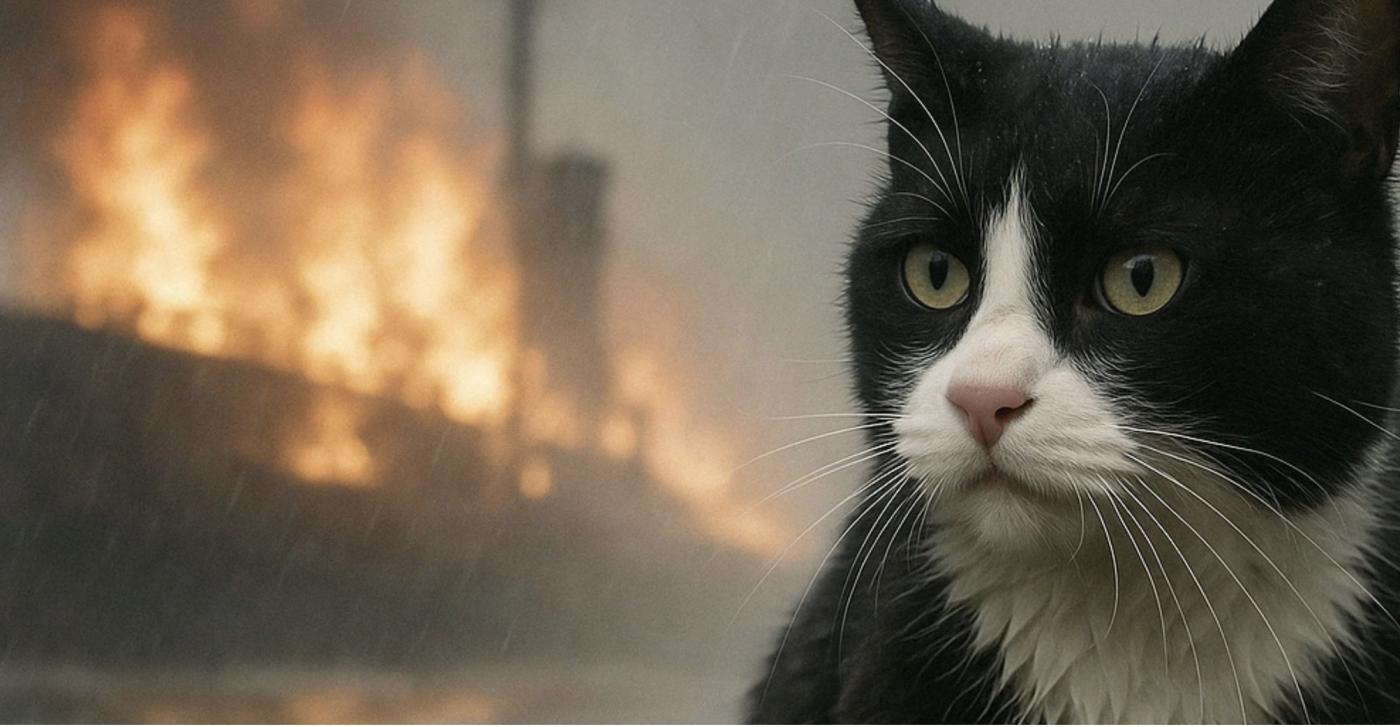
Unsinkable Sam is one of the most unusual and endearing legends to come out of the Second World War, a story that blends tragedy, luck, and an almost mythical resilience. Though a small and unassuming black-and-white cat, he drifted through some of the war’s most dramatic naval events, surviving three sinkings and earning a place in maritime folklore. His story is a reminder that even in the most destructive conflicts, people still sought comfort in small creatures, and those creatures sometimes left extraordinary stories behind.
Sam’s tale begins aboard the German battleship Bismarck, one of the most formidable warships ever built. Launched by Nazi Germany in 1939, Bismarck entered the Atlantic in May 1941 with the mission of disrupting Allied shipping. On board, among the thousands of men, was a cat the German crew called Oskar. How Oskar originally came on board is unclear—some believe he was a shipyard stray who was adopted by sailors, while others think he was purposely brought to control rodents. Whatever his origin, he quickly became part of daily life on the massive warship.
The Bismarck’s mission was short-lived. After a fierce chase across the Atlantic, the Royal Navy cornered and sank the battleship on 27 May 1941. Out of more than 2,200 crew members, only around 115 survived. Among the debris and oil-slicked water, British sailors spotted something drifting on a wooden board. It was the cat Oskar, miraculously alive despite the carnage. They pulled him aboard the destroyer HMS Cossack, and the crew, moved by the sight of this unlikely survivor, gave him a new name they felt was more fitting: Sam.
Life aboard HMS Cossack was a stark contrast to a German battleship. The British sailors treated Sam as something like a mascot, feeding him scraps and letting him roam the decks. Cossack undertook dangerous escort missions in the North Atlantic and the Mediterranean, and Sam became a familiar sight to the crew. Yet fate dealt another blow on 24 October 1941 when a torpedo fired from the German submarine U-563 struck the destroyer. Once again chaos filled the water. The explosion tore the ship apart, and although it didn’t sink immediately, it was fatally damaged. As rescue ships came alongside, sailors again discovered Sam clinging to floating wreckage, shocked but alive. He was saved for a second time and taken to Gibraltar.
After his second sinking, Sam was transferred to the aircraft carrier HMS Ark Royal, a ship already known for surviving several brushes with destruction. The crew took Sam in with warmth and amazement—word had begun to spread of this strange black-and-white talisman who could not be drowned. Sam adjusted quickly to yet another home at sea, wandering the hangar decks, sleeping near warm machinery, and accepting food from anyone who offered it. But on 14 November 1941, disaster returned once more. Ark Royal was struck by a single torpedo from U-81, leading to a catastrophic flooding of compartments. The crew fought to save their ship, but the damage was too great, and Ark Royal slowly capsized the next day.
Rescue ships arrived, and amid the evacuation, sailors discovered Sam floating on a piece of debris, calm and apparently resigned to the situation. A wartime report later described him as “angry but quite unharmed,” suggesting that even the most resilient cat had limits to his patience. With that, he became known as Unsinkable Sam, a name that captured not only his survival but also his strange journey across enemy lines and multiple naval crews.
After his third ordeal, the Royal Navy decided that Sam had used up enough of his nine lives. He was brought ashore permanently to avoid further danger. Initially he was cared for by the Governor of Gibraltar, where he lived in relative safety and comfort, enjoying a calm routine far removed from gunfire and the roar of engines. Later he was transported to the United Kingdom and given a home at the sailors’ retirement residence known as the Home for Sailors in Belfast. There he spent his final years as a peaceful resident, beloved by those who looked after him.
Sam died in 1955, long after the war had ended and the ships he once sailed on were either scrapped or lay rusting on the sea floor. His portrait, painted by the artist Georgina Shaw-Baker, now hangs in the National Maritime Museum in Greenwich, a quiet testament to his improbable life. Though some of the details of his story have blurred with time and retelling, his existence is well documented enough to show that he really was passed between ships, rescued repeatedly, and cherished by sailors on both sides of the conflict.