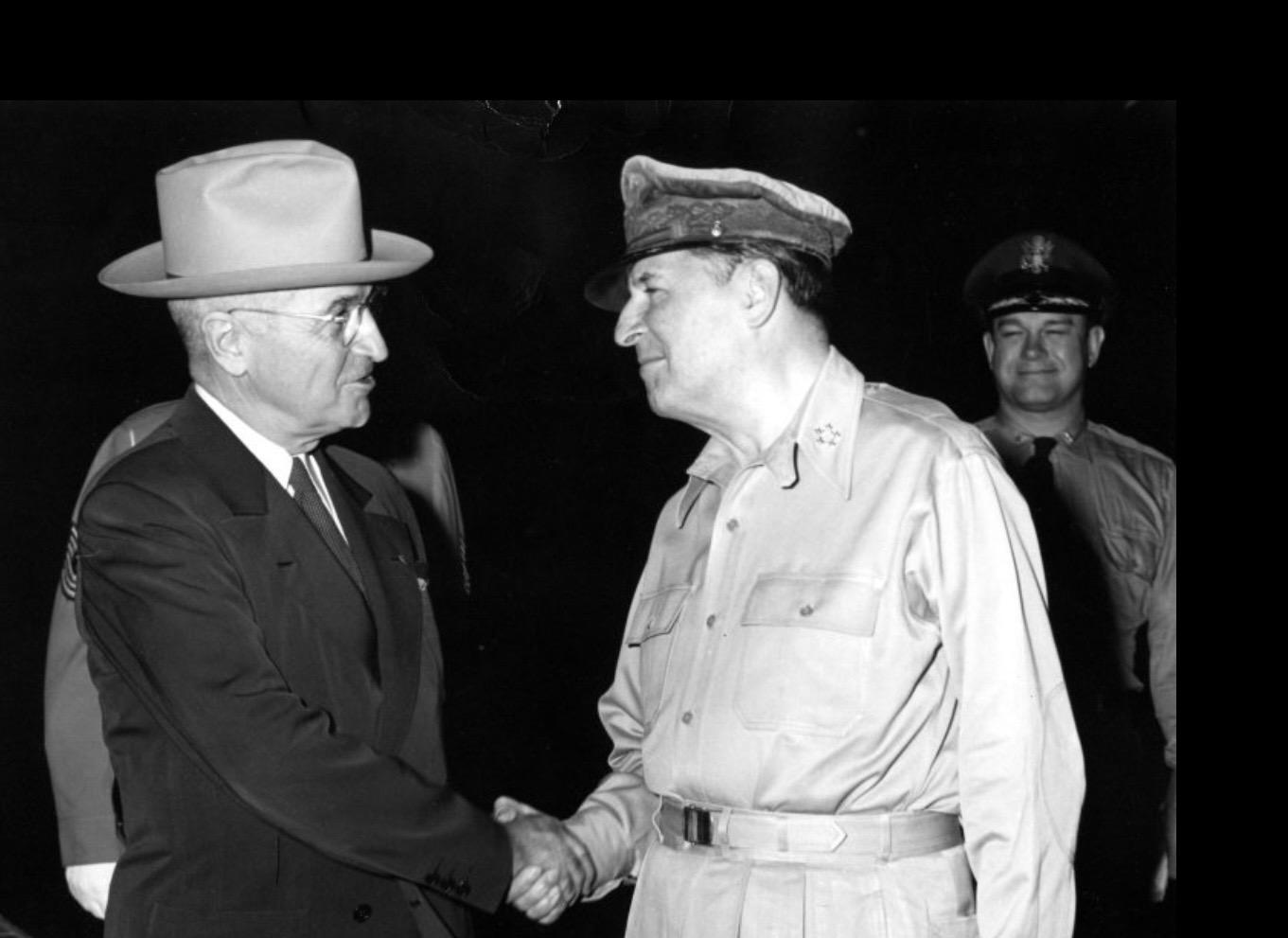
Truman sacks McArthur
On April 11, 1951, President Harry S. Truman made the highly controversial decision to relieve General Douglas MacArthur of his command during the Korean War. This moment marked one of the most dramatic confrontations between civilian authority and military leadership in United States history, raising fundamental questions about control of the armed forces and the limits of military independence.
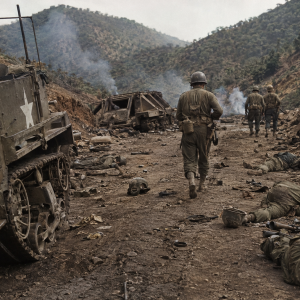
The Korean War began in June 1950 when North Korean forces crossed the 38th parallel and invaded South Korea. The United States, acting under the banner of the United Nations, quickly intervened to support South Korea. General MacArthur, a highly respected and decorated military leader from World War II, was placed in command of United Nations forces. His early leadership was widely praised, particularly after the successful amphibious landing at Inchon, which pushed North Korean forces back and allowed UN troops to advance deep into North Korea.
However, the conflict escalated when Chinese forces entered the war in late 1950, pushing UN troops back toward the south. At this point, disagreements began to emerge between MacArthur and President Truman over how the war should be conducted. Truman’s administration was committed to a policy of limited war, aiming to avoid a wider conflict with China or the Soviet Union, both of which could potentially lead to a third world war. MacArthur, on the other hand, advocated for a more aggressive strategy, including bombing Chinese territory and possibly using Nationalist Chinese forces from Taiwan.
MacArthur did not confine his views to private discussions. He made public statements and communicated directly with political figures and the press in ways that openly challenged the administration’s policies. One particularly significant moment came when he issued a letter to a member of Congress that was later made public, criticizing the limitations placed on military operations. These actions were seen by Truman and his advisors as insubordination and a direct challenge to civilian control over the military.
The principle at stake was central to the American constitutional system: the military is subordinate to elected civilian leadership. Truman believed that allowing a general to publicly oppose and attempt to influence national policy would set a dangerous precedent. Despite MacArthur’s popularity with the public and his status as a war hero, Truman concluded that he had no choice but to remove him from command.
The decision provoked a storm of reaction in the United States. Many Americans supported MacArthur and viewed his dismissal as unjust, leading to protests and political criticism of Truman’s leadership. When MacArthur returned to the United States, he was welcomed with a hero’s reception and addressed Congress in a famous speech in which he declared that “old soldiers never die; they just fade away.” Nevertheless, over time, public opinion began to shift as more details of the situation became known.
In the longer term, Truman’s decision is widely regarded by historians as a crucial affirmation of civilian control over the military. It reinforced the idea that military leaders, regardless of their achievements or popularity, must follow the policies set by elected officials. The episode also highlighted the difficulties of fighting limited wars in the nuclear age, where military and political objectives can come into sharp conflict.
The removal of MacArthur did not immediately change the course of the Korean War, which continued until an armistice was signed in 1953. However, it remains one of the most significant moments of the conflict