On this day in military history…
On 11 April 1945, elements of the United States Army reached the outskirts of the Buchenwald concentration camp, one of the largest and most notorious camps established by Nazi Germany. Situated on a wooded hill near the city of Weimar, Buchenwald had been in operation since 1937 and had held tens of thousands of prisoners from across Europe—political prisoners, Jews, Soviet POWs, and others deemed enemies of the regime. By the spring of 1945, as Allied forces closed in from both east and west, the camp had become dangerously overcrowded, its conditions collapsing into extreme starvation, disease, and brutality.
In early April, the rapid advance of American forces into central Germany forced the SS to begin evacuating camps in an attempt to conceal evidence of their crimes. At Buchenwald, thousands of prisoners were marched away on what later became known as death marches, many dying along the roads from exhaustion, exposure, or execution. Yet tens of thousands remained behind, too weak to move or deliberately left as the German administration began to disintegrate.
Inside the camp, an organised resistance movement had formed among prisoners of various nationalities. As the sound of artillery grew closer in the days leading up to 11 April, this underground network prepared to act. On the morning of that day, with SS guards beginning to flee, resistance members seized control of key areas of the camp. Armed with smuggled weapons and improvised tools, they captured remaining guards and took over watchtowers, effectively liberating themselves shortly before Allied troops arrived.
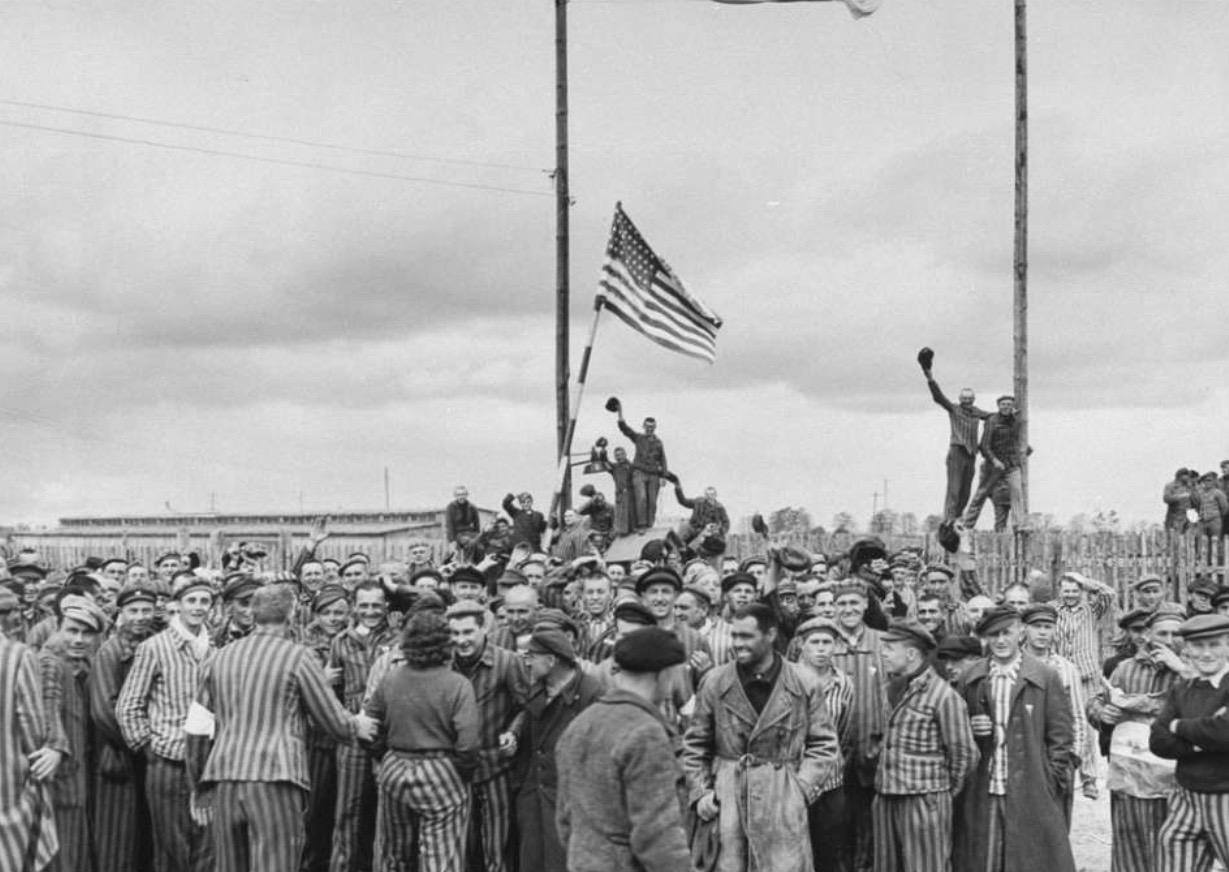
Units of the U.S. Army, primarily from the 6th Armored Division of General George S. Patton’s Third Army, reached Buchenwald later that afternoon. What they encountered was unlike anything many of the soldiers had seen before. Thousands of emaciated prisoners, many barely able to stand, emerged from barracks and open grounds. The Americans were met not with resistance but with a mixture of disbelief, relief, and overwhelming emotion.
The physical condition of the camp revealed the scale of suffering. Barracks were packed far beyond capacity, sanitation had broken down, and disease—particularly typhus—was rampant. Piles of corpses lay in various areas of the camp, evidence of the high death rate in the final weeks. Survivors later described the atmosphere as one of both liberation and shock, as they struggled to comprehend that their ordeal was ending.
American soldiers quickly moved to secure the camp, provide medical assistance, and organise food distribution. However, the sudden introduction of food to starving prisoners posed its own dangers, and efforts had to be carefully managed to avoid further loss of life. Military doctors and support personnel began treating the sick and documenting conditions, recognising the importance of recording what had been discovered.
The liberation of Buchenwald became one of the earliest and most significant exposures of the Nazi concentration camp system to the Western Allies. Journalists, photographers, and military officials were brought in to witness and record the scene. Images and testimonies from the camp would later play a crucial role in shaping global understanding of Nazi atrocities.
In the days following the liberation, American authorities compelled local German civilians from nearby Weimar to visit the camp and witness its conditions firsthand. This was intended to confront them with the reality of what had occurred in their vicinity and to counter claims of ignorance. For many of those civilians, the visit was a moment of profound shock.
The events of 11 April 1945 stand as a defining moment in the final phase of the Second World War in Europe. While Buchenwald was not an extermination camp like Auschwitz, it was a place of immense suffering where tens of thousands perished through forced labour, starvation, execution, and medical experimentation. Its liberation highlighted both the scale of Nazi crimes and the resilience of those who endured them.
For the soldiers who entered the camp, the experience left a lasting impression, shaping their understanding of the war’s purpose. For the survivors, liberation marked the beginning of a long and difficult recovery, both physical and emotional. The memory of that day continues to serve as a powerful reminder of the consequences of hatred, totalitarianism, and indifference.