Tragedy strikes
The sinking of the SS Cap Arcona on 3 May 1945 remains one of the most tragic and least widely known disasters of the Second World War. It happened in the Bay of Lübeck, in the Baltic Sea near the German town of Neustadt in Holstein, just days before Germany surrendered. What should have been a moment of liberation for thousands of concentration camp prisoners instead turned into a catastrophe that cost thousands of lives.
In the final days of the war, the SS began evacuating prisoners from the Neuengamme concentration camp and its satellite camps. Thousands of men, already weakened by starvation, disease and forced labour, were transported north to the Baltic coast. There, they were forced onto several ships, including the Cap Arcona and the Thielbek. The Cap Arcona had once been a luxury liner, but by this point it had been turned into a floating prison.
Conditions on board were appalling. The prisoners were crammed into the holds, locked below decks, and given almost no food or water. Many were already dying. There was confusion even among the Germans about what was to happen next, but later evidence suggests the SS may have intended to destroy the ships and kill the prisoners to prevent them from being freed and telling the world what had happened in the camps.
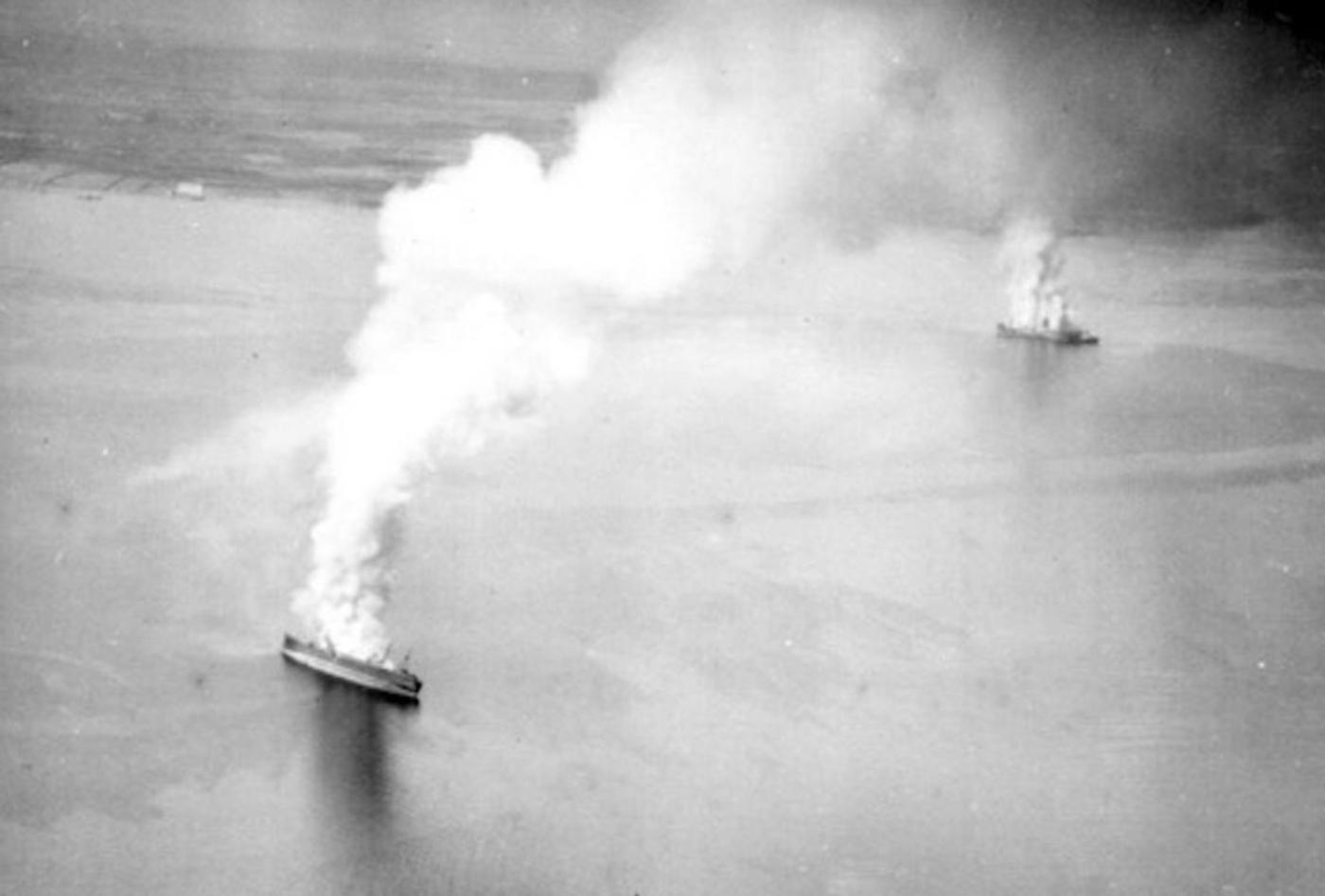
On the afternoon of 3 May 1945, aircraft from the Royal Air Force’s 2nd Tactical Air Force attacked shipping in the Bay of Lübeck. They were flying Hawker Typhoon fighter-bombers, heavily armed with rockets and cannon. The attack was carried out by several squadrons under No. 83 Group RAF. Intelligence had suggested that Nazi officials and SS personnel were trying to escape by sea, possibly heading for Norway, and the ships in the bay were believed to be part of that effort.
Crucially, the pilots had no idea that the ships were packed with concentration camp prisoners. Any warnings that had reached Allied intelligence about prisoners being on board never reached the men flying the mission.
The Typhoons began their attack in waves, firing rockets into the ships and strafing them with cannon fire. The Cap Arcona was hit repeatedly and quickly caught fire. Flames spread through the ship, and with the prisoners locked below decks, many were trapped and burned alive. Others managed to break out or were forced to jump into the icy Baltic waters.
The situation in the water was just as deadly. The sea was freezing, and many prisoners drowned or died from exposure within minutes. Some who tried to swim to shore were shot by SS guards. Others were caught in the continued strafing runs as aircraft attacked what they believed were enemy personnel trying to escape.
Within a short time, the Cap Arcona was engulfed in flames and eventually capsized. The nearby Thielbek was also sunk. Out of the roughly 5,000 prisoners on board the Cap Arcona, only a few hundred survived. Across all the ships attacked that day, more than 7,000 people were killed.
In the immediate aftermath, the full scale of the tragedy was not understood. At first, the attack was seen as a successful strike against enemy shipping. Only later did the truth emerge, that the victims were concentration camp prisoners who had been on the brink of freedom.
Investigations after the war showed that the disaster was the result of a terrible chain of failures. Intelligence about the prisoners had not been passed on to the RAF units carrying out the attack. The ships were not marked in any way to show they were carrying civilians or prisoners. At the same time, the actions of the SS had made the situation far worse by deliberately placing the prisoners on the ships, locking them below decks, and in some cases shooting those who tried to escape.
No one person was held directly responsible. The RAF had acted on the information it had, believing it was striking legitimate military targets. The SS, however, had created the situation that led to the disaster and ensured that the prisoners had almost no chance of survival.
For years after the war, bodies continued to wash up along the Baltic coast, and mass graves were created near Neustadt. The event remained relatively unknown compared to other wartime tragedies, but it stands as a stark reminder of the chaos of the war’s final days and the suffering of those who were caught in it.
The sinking of the Cap Arcona is now remembered not just as a maritime disaster, but as a deeply tragic moment when the victims of the concentration camps, so close to being freed, were instead killed in one last, devastating turn of fate.