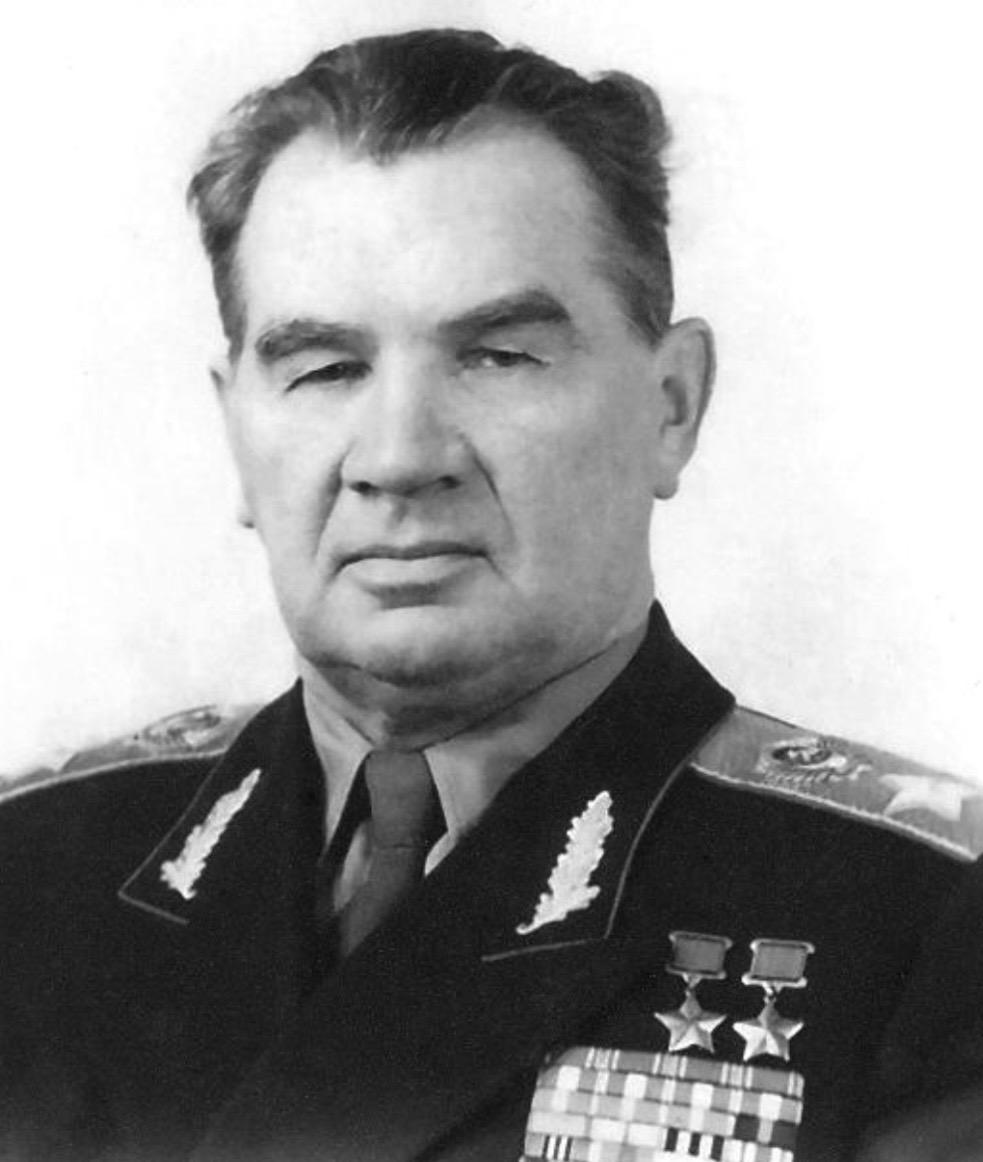
General Vasily Chuikov
Vasily Chuikov was one of the most determined and battle-hardened commanders produced by the Soviet Union during the Second World War, a figure closely tied to the savage fighting at Stalingrad and the final assault on Berlin. His journey from rural poverty to high command reflected both personal resilience and the demands of a state forged in constant conflict.
Born in 1900 into a poor peasant family in the Tula region, he was one of twelve children and grew up working as a shepherd and labourer. Life was harsh and offered little opportunity, but the upheaval of the Russian Revolution created a path forward. Joining the Red Army during the Russian Civil War, he quickly demonstrated reliability and toughness under pressure, gaining promotion despite limited formal education. These early experiences shaped his blunt, practical leadership style.
During the interwar years, he continued rising through the ranks, combining frontline experience with formal military education. Service abroad, particularly as a Soviet adviser in China, broadened his understanding of warfare, including urban and irregular combat. By the time Operation Barbarossa began in 1941, he was an experienced officer, though not yet widely known.
His defining role came in 1942 at Stalingrad, where he took command of the 62nd Army and was ordered to hold the city against the forces of Adolf Hitler. The battle became one of the most brutal in history. He adopted tactics that forced close combat, keeping Soviet troops near German positions to reduce the effectiveness of enemy artillery and air strikes. Fighting took place in shattered buildings, factories, and even underground passages.
His leadership was strict and often severe, but effective. Staying close to the front, he maintained pressure on his troops while allowing capable officers room to act. This relentless defence turned the battle into a war of attrition that wore down the German 6th Army. When Soviet forces encircled the city, the trapped enemy was eventually defeated, marking a major turning point in the war and elevating him to national prominence.
After Stalingrad, he continued leading his army—later redesignated the 8th Guards Army—through offensives across Ukraine and Poland. By 1945, he played a major role in the Battle of Berlin, commanding forces that fought through the German capital in intense urban combat. His troops reached the city centre, and German General Helmuth Weidlingsurrendered Berlin’s defenders to him, marking the collapse of Nazi resistance.
In the postwar years, he held senior military roles, eventually becoming Commander-in-Chief of Soviet Ground Forces and contributing to Soviet strategy during the early Cold War. Despite high rank, he remained known for his direct, no-nonsense character rather than political refinement.
His legacy rests on resilience, adaptability, and the ability to command under extreme conditions. Though not seen as a great theorist, his effectiveness in brutal urban warfare made him one of the most significant Soviet commanders of the war. When he died in 1982, he was buried at Mamayev Kurgan in Volgograd—the site of the fiercest fighting at Stalingrad—linking his memory permanently to the battle that defined his career.