Tehran conference
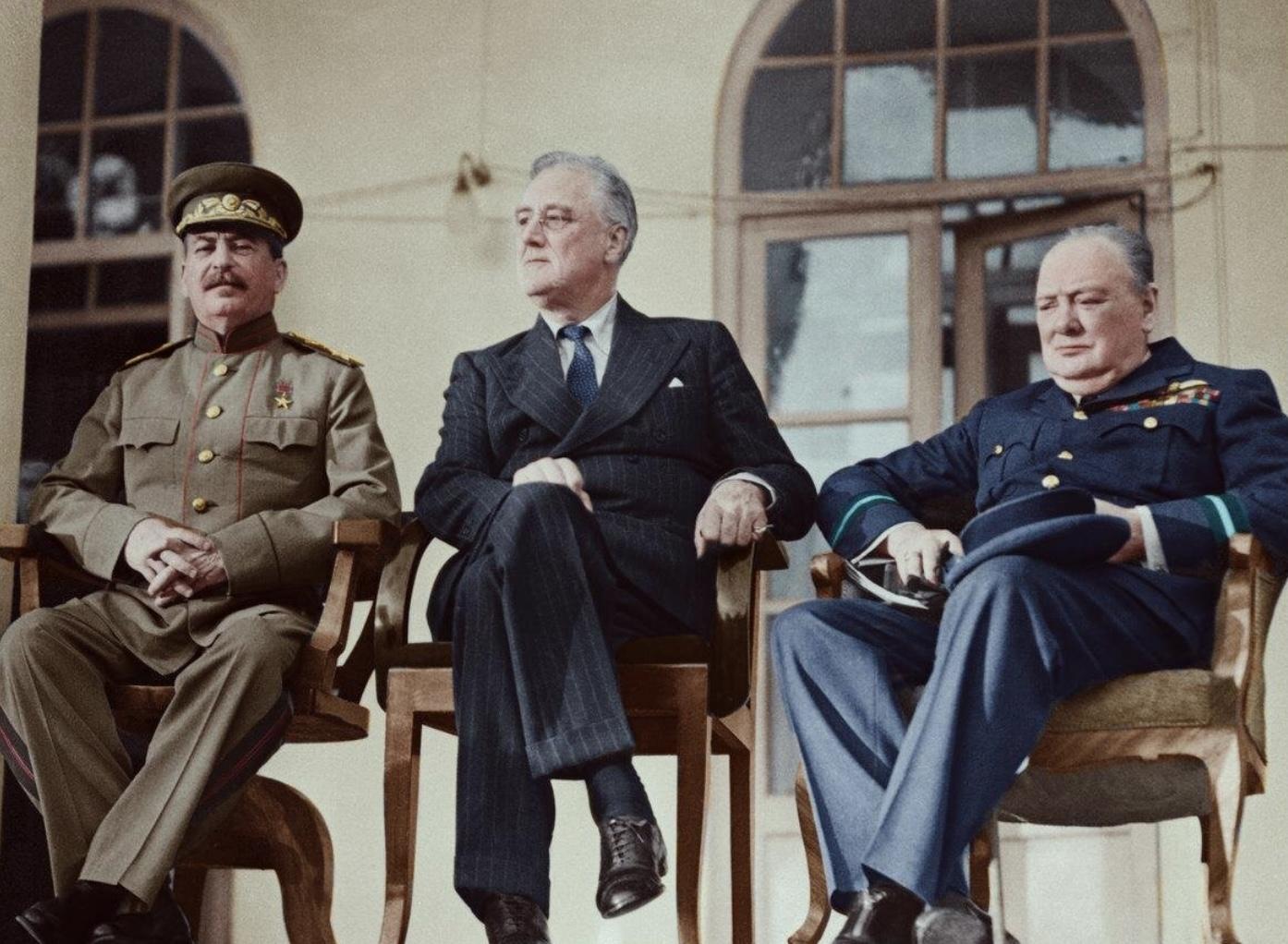
The Tehran Conference of 1943 marked the first occasion on which the three principal Allied leaders—Winston Churchill, Franklin D. Roosevelt, and Joseph Stalin—met together in person to shape the direction of the Second World War and the world that would follow it. Beginning on 28 November and continuing into early December, the conference brought the leaders into a tightly secured corner of wartime Tehran, where secrecy and caution defined every movement and every discussion.
The choice of Tehran as the meeting place was driven by strategy, security, and Soviet insistence. Stalin, whose presence was crucial for any meaningful Allied summit, refused to travel far from the Soviet Union. Churchill and Roosevelt therefore agreed to come to him. Iran, already occupied by British and Soviet forces to secure the vital Persian Corridor supply route, provided a location where the Allies could manage security without depending on local authorities. The Iranian leaders themselves were almost entirely unaware that the most powerful men in the world were gathering in their capital, and arrangements for security were handled discreetly and almost exclusively by the occupying forces.
One compelling reason for such secrecy was the discovery of what was believed to be a German plot to assassinate the Allied leaders during the conference. Although historians still debate the reality and scope of the threat, the concern was serious enough for Roosevelt to abandon his original plan to stay at the American legation. Instead, he chose to reside in the Soviet compound so the three leaders could move between meetings with minimal exposure. This arrangement gave Stalin a strategic advantage, allowing him to shape the environment and observe both Roosevelt and Churchill in close quarters as negotiations unfolded.
At the negotiating table, the key achievement of the conference was the firm Allied commitment to launch Operation Overlord—the cross-Channel invasion of Nazi-occupied France—in the spring of 1944. Stalin had long demanded a second front to relieve the immense pressure on Soviet forces fighting the bulk of Germany’s armies. Roosevelt strongly supported the plan, understanding both its military necessity and its political implications. Churchill, though ultimately agreeing, had reservations and preferred extending operations in the Mediterranean. Tehran marked the moment when all three leaders finally aligned behind Overlord, setting the stage for the decisive phase of the European war.
Other discussions reached beyond immediate military plans. The leaders debated the postwar order, including the future of Germany, the realignment of European borders, and the principles that would guide international cooperation once the war ended. Though many details remained open, Tehran laid the early groundwork for later conferences and hinted at the cooperation—and emerging tension—that would shape the postwar world.
What makes the Tehran Conference especially striking is how improbable and delicate it was. For several days starting on 28 November, three men who governed nations with vastly different systems and ambitions gathered behind sealed gates in a city whose own government did not fully grasp what was taking place. Surrounded by layers of secrecy, foreign troops, and hastily tightened security, they made decisions that would alter the course of the war and much of the world’s future.