Submarine Museum
The Submarine Force Museum in Groton, Connecticut, sits quietly along the Thames River, yet it represents one of the most important centres of naval history in the United States. For anyone interested in submarines, naval warfare, or the lives of the men and women who served beneath the sea, this museum offers a rare chance to connect with a world that is usually hidden from view.
Groton is often called the “Submarine Capital of the World,” and the museum’s location explains why. It stands near Naval Submarine Base New London, the primary home of the U.S. Navy’s submarine force. For more than a century, this area has been closely tied to submarine development, training, and deployment. The museum exists not simply as a collection of artefacts, but as a living reminder of how submarines shaped American naval power and how generations of sailors lived and worked in extreme conditions.
The museum was established in 1955 by the U.S. Navy Submarine Force Library and Museum Association. Its purpose was to preserve the history, technology, and traditions of the submarine service. Over time it has grown into the largest submarine museum in the world, with thousands of objects, documents, photographs, and models that tell the story of undersea warfare from its earliest experiments to the nuclear age.
One of the museum’s most powerful features is the way it balances technology with personal experience. Visitors can see early submarine designs that look fragile and experimental, reminding us how dangerous early undersea navigation was. These early craft relied on limited propulsion, simple control systems, and brave crews willing to accept enormous risks. As the exhibits move forward in time, the steady evolution of submarine design becomes clear, from diesel-electric boats of the World Wars to the sleek, nuclear-powered submarines of the Cold War and beyond.
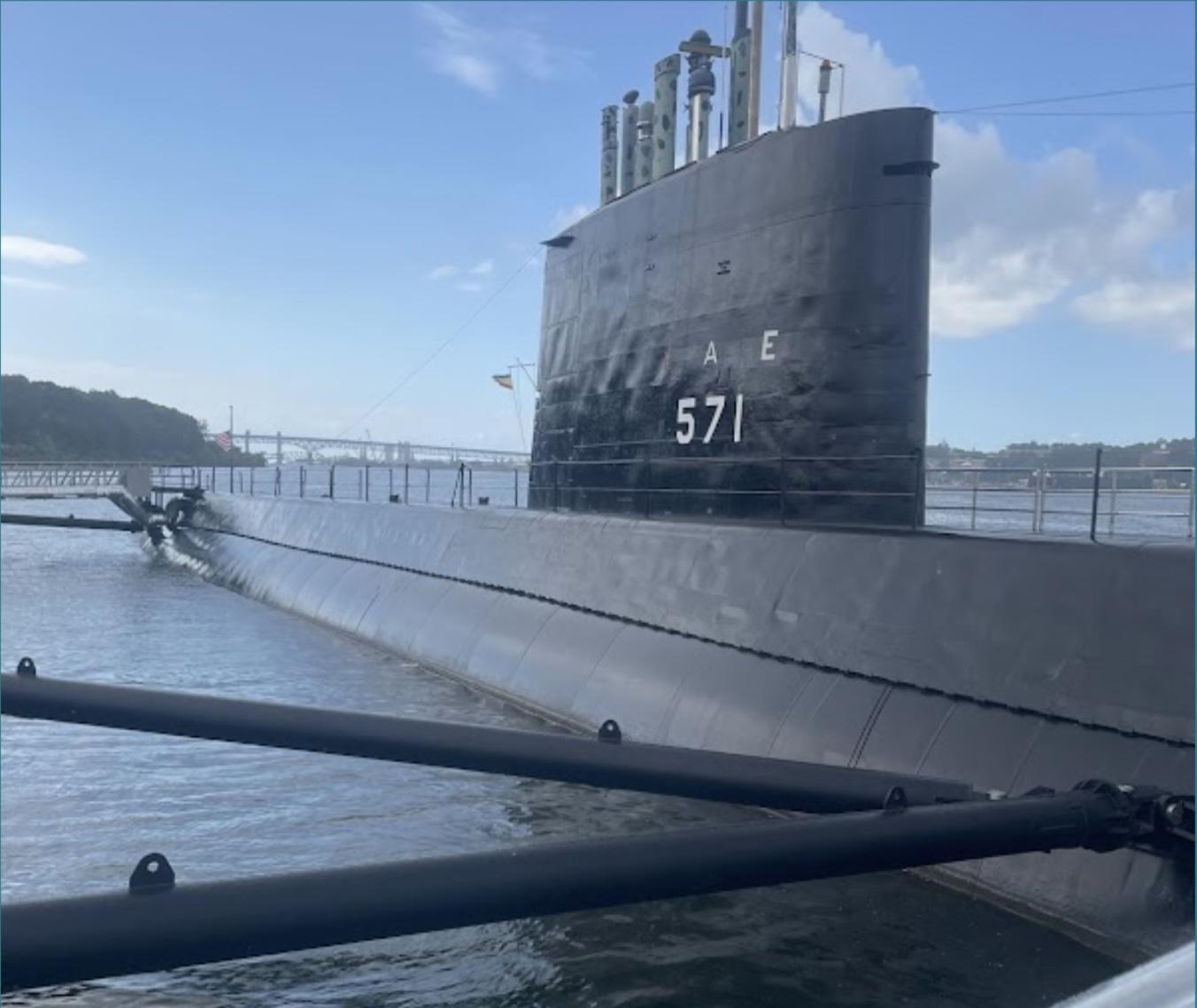
The centrepiece of the museum is the USS Nautilus, the world’s first nuclear-powered submarine. Moored directly outside, Nautilus is not a replica but the real vessel, preserved and open to the public. Launched in 1954, Nautilus changed naval warfare forever. Nuclear propulsion allowed submarines to remain submerged for months, limited more by crew endurance than fuel. This single breakthrough transformed submarines from coastal weapons into global strategic assets.
Walking through Nautilus is a deeply memorable experience. The narrow passageways, low ceilings, and compact living spaces make it immediately clear how confined life was aboard a submarine. Crew bunks are stacked tightly, machinery fills nearly every available space, and privacy was almost nonexistent. Control rooms, torpedo rooms, and engine spaces are all preserved to show how the submarine functioned during its active service. The vessel’s historic achievements, including its famous voyage beneath the North Pole in 1958, are explained in a way that feels grounded and human rather than abstract.
Inside the main museum building, the exhibits expand on the broader story of the submarine force. There are detailed displays covering World War I and World War II, periods when submarines proved their devastating effectiveness. American submariners in the Pacific played a crucial role in cutting Japanese supply lines during World War II, despite suffering heavy losses. Personal letters, patrol reports, and photographs bring these campaigns to life and ensure the focus remains on the people, not just the machines.
The Cold War section of the museum explores the tense decades when submarines became central to nuclear deterrence. Ballistic missile submarines, often referred to as the silent backbone of national defence, are explained in clear and accessible terms. The museum does not glorify conflict, but instead highlights the responsibility carried by crews who operated powerful weapons while remaining unseen and unheard beneath the oceans.
Memorials are an important part of the museum experience. Several areas are dedicated to submariners who lost their lives, whether through combat or accidents. These spaces are simple and respectful, encouraging quiet reflection. They serve as a reminder that submarine service has always involved danger, even in peacetime. The loss of vessels such as USS Thresher and USS Scorpion is acknowledged with dignity, ensuring that the human cost of undersea service is never forgotten.
The museum also pays attention to daily life aboard submarines. Displays show uniforms, tools, navigation instruments, and even personal items carried by sailors. These details help visitors understand the routines, traditions, and humour that helped crews cope with long deployments in isolation. Food, sleep schedules, and the unique social structure aboard submarines are all touched upon, making the experience relatable even to those with no military background.
What makes the Submarine Force Museum especially effective is its clarity. The subject matter could easily become overwhelming or overly technical, yet the exhibits are designed to be approachable. Explanations are written in plain language, models are used to show complex systems, and historical context is always provided. This makes the museum suitable not only for specialists, but also for families, students, and casual visitors.
Beyond its educational role, the museum functions as a place of pride for current and former submariners. Reunions, ceremonies, and commemorations are often held there, reinforcing the sense that this is not just a museum, but a home for shared memory and identity. It preserves traditions that are rarely visible to the wider public, giving civilians a glimpse into a tight-knit and demanding profession.