Storm troops
The First World War is often associated with static trench lines and costly assaults, but the later years of the conflict saw important tactical innovation. Among the most significant developments was the creation of German storm troops—specialized, fast-moving units designed to restore mobility to the battlefield. Their effectiveness became clear during the German response to the Allied attack at Cambrai in November 1917.
The British assault at Cambrai, launched on 20 November, achieved surprise by using hundreds of tanks in a coordinated strike against the Hindenburg Line. The initial breakthrough alarmed German commanders, who quickly organized a counteroffensive. To regain the initiative, they relied heavily on storm troop formations already being tested elsewhere along the front.
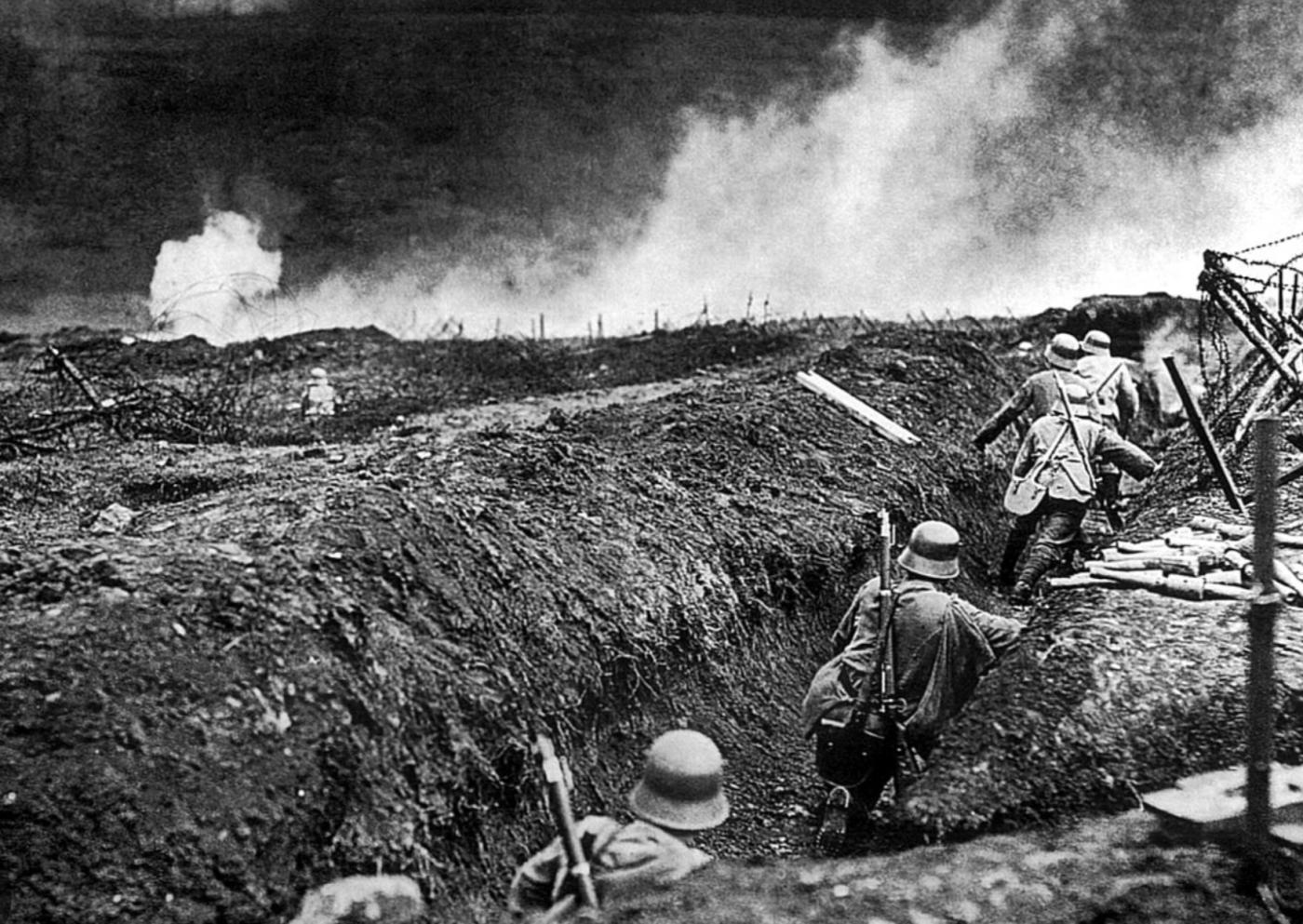
These storm troops operated very differently from traditional infantry. Instead of massed, linear attacks, they advanced in small groups, seeking out weak points in the enemy’s defenses. Their aim was not to smash through every position but to bypass strongpoints, isolate defenders, and penetrate deep into rear areas. Light equipment, grenades, portable machine guns, and rapid movement were central to their method.
When the German counterattack began on 30 November, storm troops led the way. They exploited gaps between British units, infiltrated command posts, and attacked isolated positions from the flank or rear, avoiding costly frontal assaults. Their speed and flexible tactics helped the Germans recover much of the ground lost in the opening stages of the battle.
The performance of these units at Cambrai demonstrated a clear shift in German military thinking. Rather than relying on overwhelming numbers, the emphasis moved toward agility, initiative, and short, intense bursts of violence aimed at disrupting the enemy. These methods foreshadowed later concepts of maneuver warfare that would become prominent in the twentieth century.
The use of storm troops in the Cambrai counteroffensive marked a significant evolution in German tactics. Their ability to move quickly, strike precisely, and exploit enemy weaknesses allowed Germany to regain territory and showed that even on the trench-bound Western Front, mobility could still be achieved.