Soviet btr-60
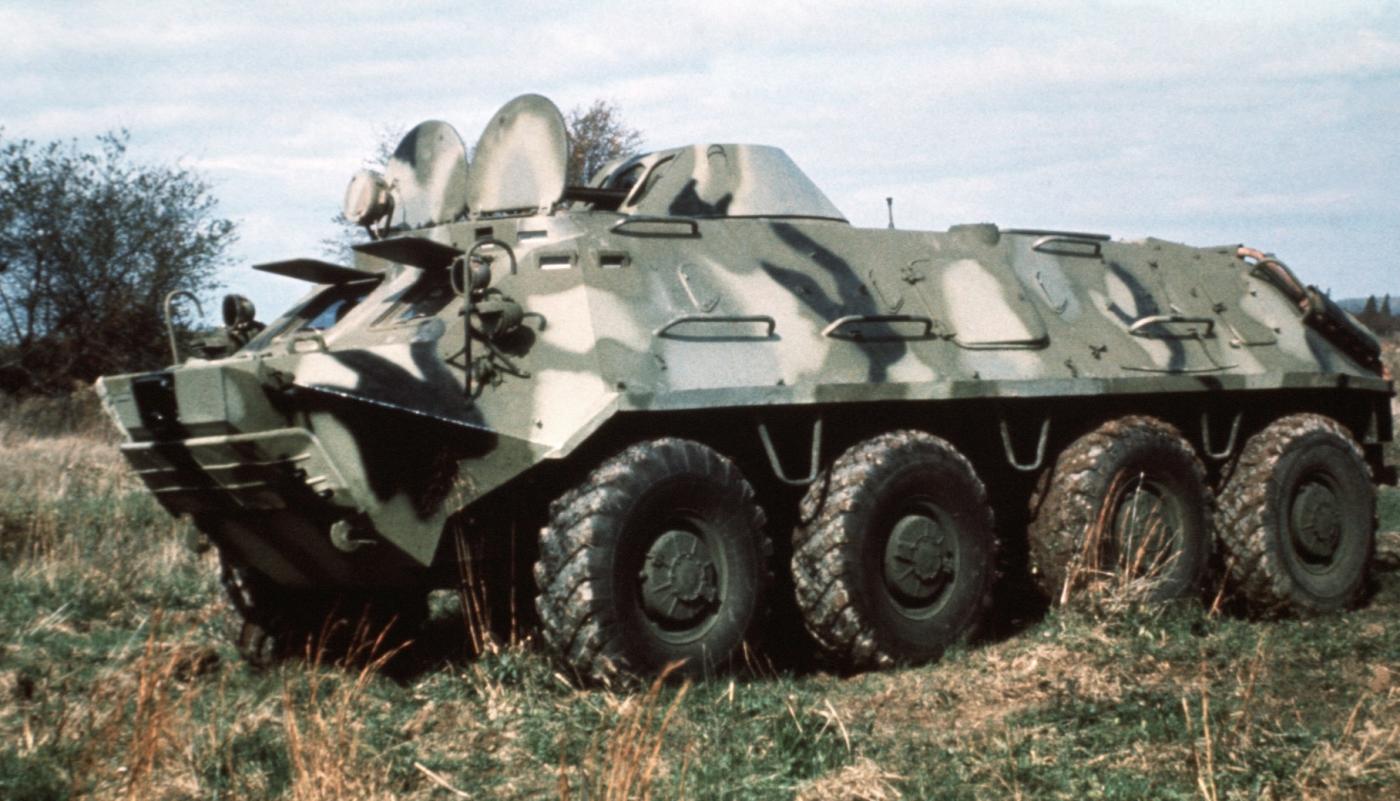
The BTR-60 was the first vehicle in a long line of eight-wheeled Soviet armored personnel carriers and became one of the most recognizable Cold War troop transports. It was conceived to replace earlier tracked APCs with a faster and more mobile wheeled design that could serve motor rifle units across the USSR and its allies. Development began in the mid-1950s, and the design work was carried out by the design bureau of Gorky Automobile Plant (GAZ), under chief designer A. A. Lipgart and later V. A. Dedkov. GAZ also served as the primary manufacturer, mass-producing the vehicle from 1959 into the late 1970s.
Production numbers are difficult to pinpoint precisely because of Soviet record secrecy, but most historical analyses estimate that more than 10,000 were manufactured across all versions, including the BTR-60P, BTR-60PA, and the widely exported BTR-60PB. Its widespread availability and relatively simple construction helped ensure it remained in service with dozens of armed forces long after production ended.
The crew of a standard BTR-60 consisted of two or three personnel depending on the variant: typically a driver, a commander, and in turret-equipped versions such as the BTR-60PB, a gunner. In addition to the crew, the vehicle could transport up to 14 fully equipped infantry soldiers, though actual capacity varied slightly by model. Troops embarked and disembarked through side doors or over the hull, as early models lacked top-mounted hatches, a feature that drew criticism and led to improvements in later versions.
One of the most unusual characteristics of the BTR-60 was its powerplant arrangement. To achieve the required mobility with available technology, designers equipped the vehicle with twin gasoline engines. Early variants used a pair of GAZ-49B 6-cylinder petrol engines producing a combined output of roughly 180 horsepower. Later versions, including the BTR-60PB, used the more powerful GAZ-40P engines. Each engine powered one side of the drivetrain, an arrangement that made the mechanical layout simpler in some ways but also created maintenance and synchronization challenges in the field. The use of gasoline engines, while common in the era, increased the risk of fire and contributed to the vehicle’s reputation for vulnerability.
The BTR-60 had fully amphibious capability thanks to its boat-shaped hull and rear water-jet propulsion system. On land, all eight wheels were powered, giving the vehicle good mobility over rough ground and snow. The suspension and central tire-pressure regulation system allowed drivers to adapt to differing terrain types. Armament varied by variant, with the BTR-60PB receiving a small conical turret mounting a 14.5 mm KPVT heavy machine gun and a 7.62 mm PKT coaxial machine gun, providing significant firepower compared to Western APCs of the same period.
Operational history of the BTR-60 is extensive. It was employed by the Soviet Army throughout the Cold War and saw use in major conflicts including the Soviet–Afghan War, where it served mostly in second-line and patrol roles due to its vulnerability to mines and ambushes. It was exported widely to Warsaw Pact members, Middle Eastern clients, African states, and Asian allies. The vehicle saw combat service in the Yom Kippur War, the Iran–Iraq War, the various conflicts in Angola and Mozambique, and more recently in regional conflicts across the Caucasus and Ukraine. Many countries continued using the BTR-60 well into the twenty-first century, either in modernized forms or in auxiliary roles such as command posts, ambulances, and internal security vehicles.
Additional noteworthy features include its relatively light armor, which primarily protected against small-arms fire and shell splinters. Its simplicity and rugged design made it a popular platform for conversion, and numerous variants were created for signals, reconnaissance, anti-tank, and NBC defense roles. Despite its shortcomings—limited armor, cramped troop compartment, and gasoline-powered engines—the BTR-60 remains influential as the foundation of a family that evolved into the BTR-70 and BTR-80, vehicles that continued to define Soviet and post-Soviet mechanized infantry mobility for decades.