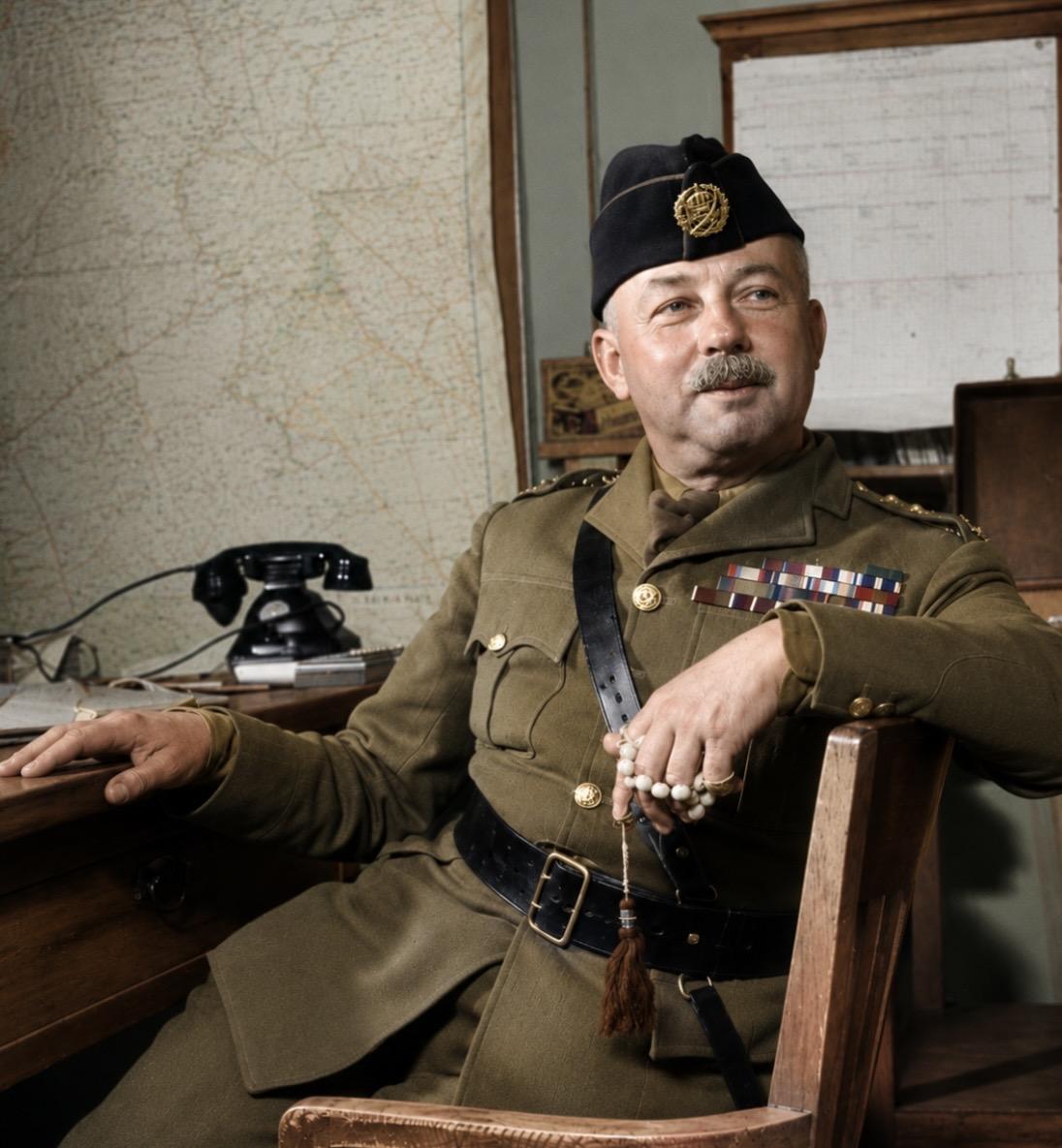
Sir John Glubb
Sir John Bagot Glubb, better known throughout the Middle East as “Glubb Pasha,” was one of the most influential British military figures of the twentieth century. Soldier, strategist, desert commander, linguist, and author, he became famous for transforming the Arab Legion of Transjordan into one of the most disciplined and respected military forces in the Arab world. His long career linked the final years of the British Empire with the turbulent politics of the modern Middle East, and his life remains closely associated with Jordan, the Bedouin tribes, and Britain’s military presence in the region.
John Bagot Glubb was born on 16 April 1897 in Preston, Lancashire, England. He came from a strongly military family. His father, Major-General Sir Frederic Manley Glubb, served with distinction in the Royal Engineers and later became one of Britain’s senior military engineers during the First World War. Growing up in such an environment naturally encouraged the young Glubb toward military service. His childhood was marked by travel and exposure to different cultures because of his father’s postings overseas, experiences that broadened his outlook from an early age.
He was educated at Cheltenham College before entering the Royal Military Academy at Woolwich in 1914, shortly after the outbreak of the First World War. In 1915 he received a commission in the Royal Engineers. As a young officer he was sent to the Western Front in France and Belgium, where he experienced the brutal realities of trench warfare. During the war he was wounded several times, including a severe injury to his jaw caused by shellfire. This injury permanently altered his appearance and later inspired his Arab nickname “Abu Hunaik,” meaning “father of the little jaw.” Despite these injuries, he continued to serve with determination and earned the Military Cross for bravery.
The First World War had a profound effect on Glubb. Like many British officers of his generation, he emerged from the conflict deeply changed. Yet unlike many others, his future career would not remain centered in Europe. In 1920 he volunteered for service in Iraq, then under British administration following the collapse of the Ottoman Empire. This decision shaped the remainder of his life. He quickly became fascinated by Arab culture, tribal society, and the vast desert landscapes of the Middle East. Rather than remaining isolated within colonial military circles, Glubb immersed himself in local customs, learned fluent Arabic, and spent long periods living among Bedouin tribes.
During his years in Iraq he worked on engineering and administrative duties, including maintaining bridges and communications across remote desert regions. He travelled extensively by horse and camel, gradually building personal relationships with tribal leaders. Unlike many British officials of the era, Glubb believed that understanding local culture and traditions was essential to successful leadership. His patience, willingness to live simply, and deep respect for Bedouin society earned him unusual trust among Arab communities.
In 1926 he resigned his regular British Army commission and accepted an administrative position under the Iraqi government. However, his reputation as an expert in desert affairs continued to grow. In 1930 he joined the Arab Legion in Transjordan, a British-supported military force commanded at the time by Frederick Peake. The Arab Legion was initially small and poorly equipped, but Glubb saw enormous potential within it.
One of his earliest and most important achievements came in 1931, when he created the Desert Patrol. This unit consisted mainly of Bedouin tribesmen and was designed to suppress tribal raiding and improve security across the desert frontiers of Transjordan. The Desert Patrol became highly effective because Glubb understood how to combine military discipline with tribal traditions and loyalties. Instead of ruling through fear alone, he worked to persuade tribes to cooperate voluntarily with the state. Within only a few years, desert raiding, which had plagued the region for generations, declined dramatically.
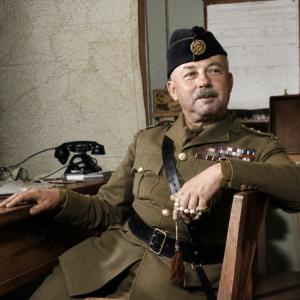
Glubb’s reputation steadily increased, and in 1939 he succeeded Frederick Peake as commander of the Arab Legion. This marked the beginning of the most famous phase of his career. Over the next seventeen years he transformed the Legion into what many regarded as the finest military force in the Arab world. He focused heavily on discipline, training, mobility, and professionalism. Although the Legion was relatively small, its soldiers were respected for their efficiency and battlefield effectiveness.
During the Second World War the Arab Legion fought alongside British and Allied forces in the Middle East. Glubb led operations against pro-Axis forces in Iraq during the Anglo-Iraqi War of 1941 and also participated in campaigns against Vichy French forces in Syria and Lebanon. These operations demonstrated the Legion’s growing military value and strengthened Glubb’s standing both in Britain and among Arab leaders.
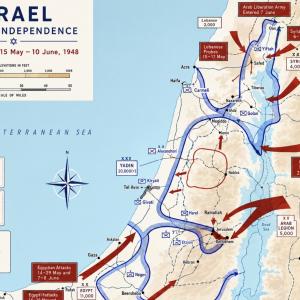
Perhaps the most controversial and historically significant chapter of Glubb’s career came during the Arab-Israeli War of 1948. Under his command, the Arab Legion became the most effective Arab force involved in the conflict. Unlike many neighboring armies, the Legion was disciplined and strategically organized. Glubb concentrated his efforts mainly on Jerusalem and the West Bank rather than attempting reckless offensives elsewhere. His forces captured East Jerusalem, including the Old City, and held the West Bank territory that later became part of Jordan. Many military historians believe that Glubb’s leadership prevented an even greater Arab defeat during the war.
Despite his military successes, Glubb occupied a difficult political position. Arab nationalism was growing rapidly after the Second World War, and many Arabs increasingly resented British influence in the region. Although Glubb genuinely admired Arab culture and enjoyed close relationships with Bedouin soldiers, critics still viewed him as a symbol of colonial interference. Tensions intensified during the 1950s as anti-British sentiment spread throughout the Middle East.
In 1956 King Hussein of Jordan unexpectedly dismissed Glubb from command of the Arab Legion and ordered him to leave the country. The decision shocked Britain and marked a major turning point in Jordanian independence from British control. Although deeply hurt by his dismissal, Glubb remained respectful toward King Hussein and retained strong affection for Jordan and its people throughout the rest of his life.
After returning to Britain, Glubb devoted much of his time to writing and lecturing. He authored numerous books and essays about the Middle East, military history, Arab culture, and the rise and fall of civilizations. Among his best-known works was The Fate of Empires and Search for Survival, in which he argued that great powers often follow predictable cycles of growth, wealth, decadence, and decline. His writings reflected both his military experience and his lifelong interest in history and society.
Glubb was widely honored during his career. He was appointed Companion of the Order of the Bath and later Knight Commander of the Order of St Michael and St George. In the Arab world he remained remembered by many veterans of the Arab Legion as a respected commander who lived closely among his soldiers and understood their traditions better than most foreign officers ever could.
Sir John Bagot Glubb died on 17 March 1986 at the age of eighty-eight. By the time of his death he had become a deeply complex historical figure. To some he represented the final era of British imperial influence in the Middle East, while to others he was a remarkable soldier-scholar who bridged cultures during a period of enormous political upheaval. His influence on Jordan’s military traditions and on modern Middle Eastern history remains significant decades after his death.