
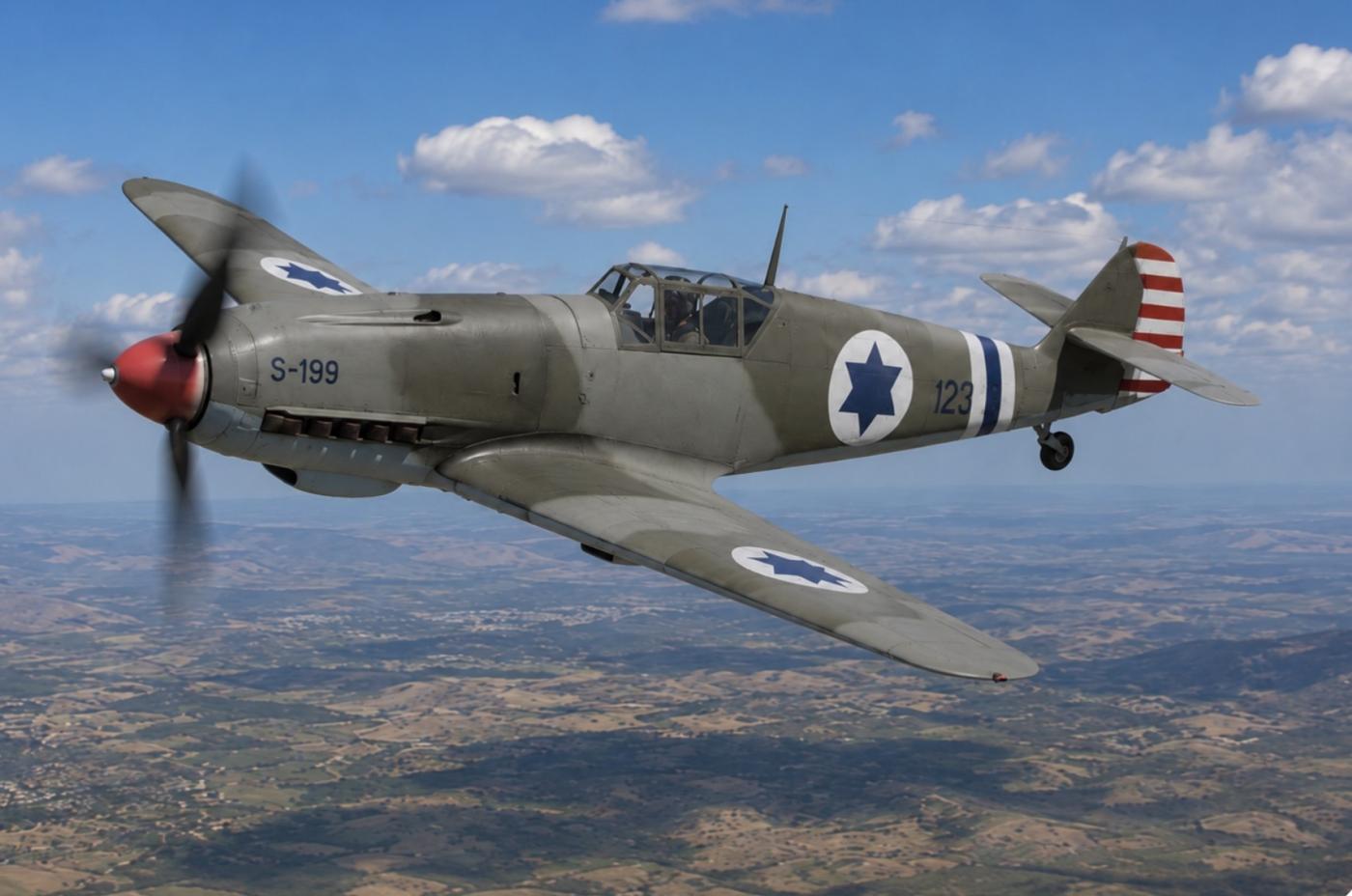
Avia S-199
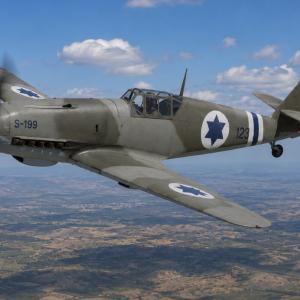
The story of the Avia S-199 is one of the strangest and most remarkable chapters in the birth of Israel. It was an aircraft that many pilots hated, mechanics cursed and historians later described as one of the worst fighters of its era — yet without it, Israel may not have survived the first desperate weeks of the 1948 war.
The Avia S-199 was really the last ghost of Nazi Germany’s wartime aviation industry. During the Second World War, Czechoslovakia had been occupied by Germany, and its factories were forced to produce aircraft for the Luftwaffe. Among the most famous of these was the Messerschmitt Bf 109, one of Germany’s deadliest fighter planes. When the war ended in 1945, the Germans were gone but the factories, tools, unfinished aircraft parts and engineering plans remained behind in Czech hands.
The Czech aviation company Avia decided not to waste what was left. At first they simply continued assembling Messerschmitt fighters almost exactly as they had been built during the war. But then disaster struck. A massive fire destroyed many of the original German Daimler-Benz fighter engines stored in a warehouse. The Czechs suddenly had airframes but no proper engines to power them.
Rather than scrap everything, engineers improvised. They fitted the aircraft with Junkers Jumo engines originally designed for German bombers instead of agile fighter planes. On paper it seemed workable. In reality it created a monster.
The aircraft became heavy in the nose, difficult to steer and dangerous to fly. Takeoffs were terrifying because the huge propeller produced violent torque that could suddenly yank the aircraft sideways. The narrow landing gear inherited from the original Messerschmitt made landings equally hazardous. Pilots often joked that surviving combat was easier than surviving takeoff and landing.
The Czech pilots nicknamed it “Mezek” — the Mule — because it was stubborn, awkward and bad-tempered. Israeli pilots later gave it another nickname, “Sakeen,” meaning “Knife,” partly because flying it felt like handling something dangerous at all times.
Some pilots genuinely feared the aircraft. The synchronization system that prevented the machine guns from firing into the propeller was unreliable. If it malfunctioned, a pilot could literally shoot his own propeller apart in mid-air. More than one flier climbed into the cockpit convinced the aircraft was trying to kill him before the enemy ever had the chance.
And yet this deeply flawed machine arrived at the single most critical moment in Israeli history.
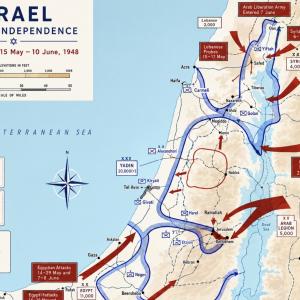
In May 1948, David Ben-Gurion declared the independence of Israel. Within hours, armies from Egypt, Transjordan, Syria, Iraq and Lebanon invaded. The newborn country faced overwhelming odds. Israel had almost no heavy weapons, almost no tanks and almost no combat aircraft. The new Israeli Air Force barely existed. Some of its “bombers” were little more than civilian transport aircraft with improvised bomb racks bolted inside.
The Arab armies, meanwhile, possessed trained forces and modern aircraft including Spitfires and bombers. Egypt in particular quickly gained air superiority. Israeli cities were bombed almost immediately. There was a real fear the country could collapse within days.
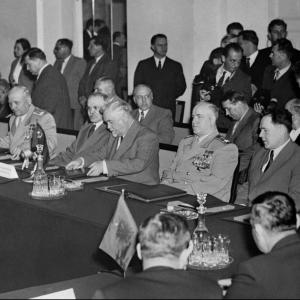
Most nations refused to sell weapons to the Jews because of international embargoes. Britain was openly hostile to Zionist military efforts and the United States also blocked major arms sales. The one country willing to help was Communist Czechoslovakia, with Soviet approval. Moscow at that moment saw a chance to weaken British influence in the Middle East and quietly allowed the arms deal to proceed.
For Israel, the Czech agreement became a lifeline.
The deal included rifles, machine guns, ammunition and aircraft — among them 25 Avia S-199 fighters. They would become Israel’s first real fighter planes.
Getting them into Israel was an adventure worthy of a spy novel. The operation was carried out in great secrecy under the codename Operation Balak. Aircraft were dismantled, hidden inside transport planes and flown across Europe despite international restrictions and the risk of interception. The secret airbase used in Czechoslovakia became one of the most important locations in the early war.
Many of the ferry pilots were foreign volunteers, veterans of the Second World War who came from America, Britain, Canada and South Africa to fight for Israel. Some had flown Spitfires or Mustangs during the war and were horrified when they first saw the S-199. Compared to the sleek Allied fighters they remembered, the Avia looked crude and badly behaved.
Still, there was no alternative.
The first aircraft arrived in Israel only days after independence. Mechanics worked frantically to assemble them while enemy armies closed in on Tel Aviv. Often the aircraft were missing parts, manuals or proper equipment. Ground crews improvised constantly just to keep a few fighters operational.
Then came one of the most dramatic moments in Israeli military history.
On 29 May 1948, only four Avia S-199s were ready for combat. An Egyptian armoured column was advancing north toward Tel Aviv and threatening to split the young state in half. Israel had almost nothing to stop them.
The four fighters took off on what was essentially a desperate gamble.
Leading the attack was Lou Lenart, an American volunteer and former US Marine pilot. Alongside him flew Modi Alon, Ezer Weizman and Eddie Cohen. The pilots roared low over the Egyptian column and attacked with bombs and machine-gun fire.
Physically, the damage was limited. But psychologically the effect was enormous.
The Egyptians had believed Israel possessed no fighter aircraft at all. Suddenly Messerschmitt-type fighters were diving out of the sky attacking their forces. The shock was enough to create confusion and hesitation. The Egyptian advance slowed, then halted.
Many historians later argued that those four ugly, dangerous aircraft may have helped save Tel Aviv and possibly the entire country.
There was also a bitter irony that nobody could ignore. Only three years after the Holocaust, Jewish pilots were now flying aircraft descended directly from Nazi Germany’s most famous fighter plane. Some of the parts had even been manufactured during the German occupation of Czechoslovakia. History had produced one of its strangest twists: Jewish pilots defending a Jewish state in aircraft built from the remains of Hitler’s war machine.
The Avia continued serving throughout the war despite constant problems. Engines failed regularly. Accidents were common. Some pilots were killed not by enemy fire but by the aircraft itself. Yet the fighters still managed to shoot down enemy aircraft and provide desperately needed air cover during critical moments.
At times only a handful remained operational. Spare parts were scarce and maintenance crews worked miracles to keep them flying. Eventually Israel began obtaining better aircraft, including Spitfires, and the S-199 slowly disappeared from frontline service.
But by then it had already earned its place in history.
In total, Israel received just over twenty of the aircraft. That may sound insignificant, but in 1948 those few fighters represented the difference between having an air force and having none at all.
Today the Avia S-199 is remembered with a strange mixture of affection and disbelief. Pilots mocked it mercilessly. Mechanics dreaded working on it. Historians often rank it among the worst postwar fighter aircraft ever built.
Yet it became one of the founding symbols of the Israeli Air Force.