Shell Shock
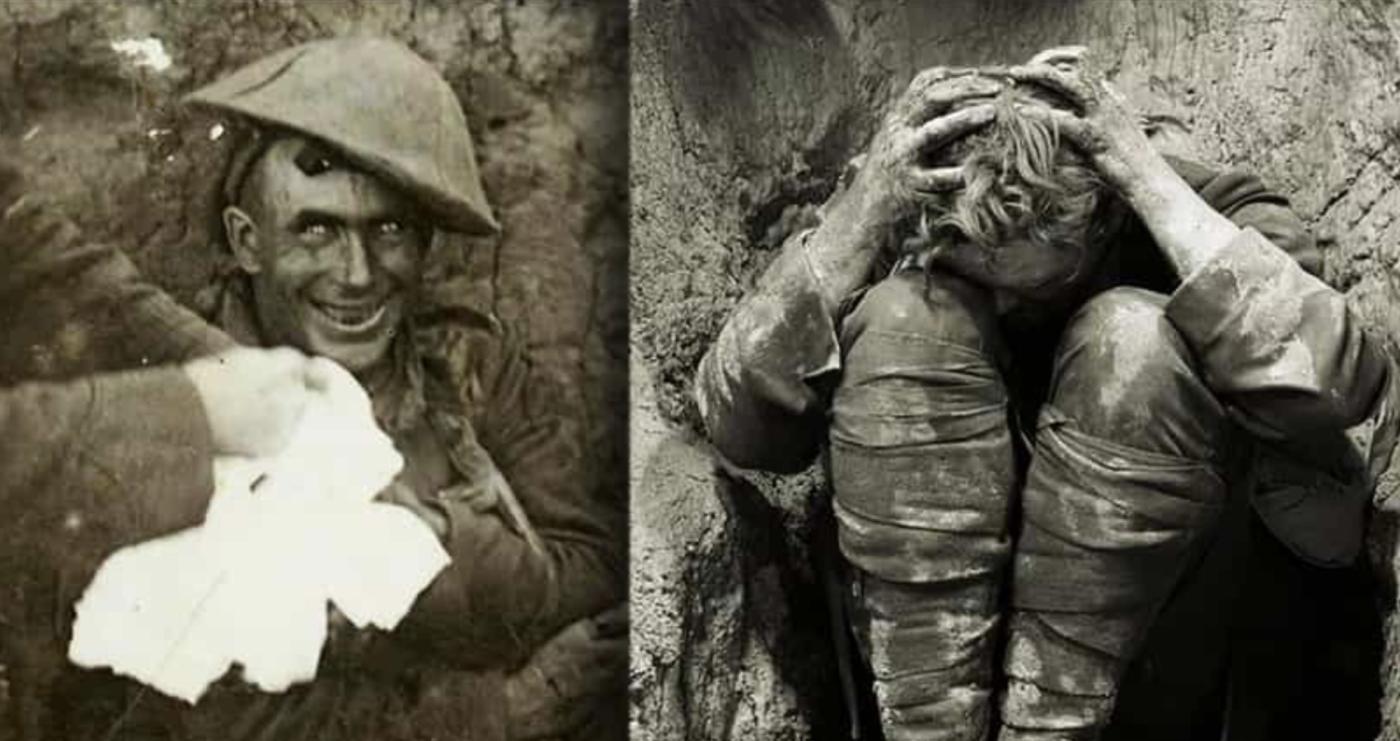
During the First World War, armies entered a type of conflict that no previous generation had experienced. Industrialised warfare meant men lived for weeks or months under constant artillery fire, surrounded by mud, corpses, rats, and the expectation of sudden death. Out of this environment emerged a condition that contemporaries struggled to understand and named “shell shock.” At first it was believed to be a physical injury caused by the blast of exploding shells, damaging the brain or nervous system even when no wound was visible. Soldiers suffering from it shook uncontrollably, could not speak, cried without warning, were paralysed, or became blind or deaf with no physical cause. As the war continued, doctors realised that many men who had never been close to an explosion showed the same symptoms, suggesting that the cause was psychological rather than purely physical.
By 1918, the British Army alone had recorded around 80,000 cases officially diagnosed as shell shock, though historians widely agree the true number was much higher. Across all armies involved in the war, estimates suggest that several hundred thousand soldiers experienced severe psychological trauma. Symptoms varied greatly. Some men suffered nightmares and flashbacks, others became emotionally numb, unable to feel fear or joy. Many could not return to the front after breakdowns, while others were sent back repeatedly until they collapsed again. Treatments ranged from rest and talking therapy to electric shock treatments designed to force men to regain speech or movement. The quality of care often depended on rank; officers were more likely to be treated sympathetically, while enlisted men were more often accused of weakness or lack of discipline.
The effects of shell shock extended far beyond the battlefield. Many veterans returned home unable to work, maintain relationships, or reintegrate into civilian life. Families struggled to understand why men who appeared physically unharmed were deeply changed. Long-term studies suggest that large numbers of First World War veterans suffered symptoms for decades, including depression, alcoholism, and social withdrawal. In an era with limited welfare systems, many traumatised veterans ended up in asylums or lived in poverty. The emotional cost of the war was therefore not confined to the years 1914 to 1918 but shaped entire communities for a generation.
One of the most tragic consequences of misunderstanding shell shock was the punishment of soldiers who broke down under fire. Military discipline during the war was harsh, and psychological collapse was often interpreted as cowardice or desertion. Between 1914 and 1918, the British Army executed 306 soldiers, most commonly for desertion, cowardice, or disobedience. Modern analysis of court-martial records indicates that a significant proportion of these men were suffering from what would now be recognised as severe combat trauma. Many showed clear signs of mental breakdown before their offences, including confusion, memory loss, and uncontrollable fear. At the time, however, the concept that a soldier could be incapacitated by psychological injury was not fully accepted, especially during major offensives when maintaining discipline was seen as essential.
It was only decades later that shell shock began to be understood in a broader medical context. During and after the Second World War, similar symptoms were observed under different names such as “battle fatigue” and “combat stress reaction.” In 1980, these experiences were formally recognised in psychiatric medicine with the introduction of post-traumatic stress disorder as a diagnosis. PTSD acknowledged that exposure to traumatic events could produce long-lasting psychological injury without any physical wound. The symptoms described closely matched those of shell shock, including intrusive memories, hypervigilance, emotional numbness, and avoidance of reminders of trauma.
The recognition of PTSD led to a reassessment of how First World War soldiers had been treated. In 2006, the British government issued posthumous pardons to the 306 executed soldiers, acknowledging that many had been victims of trauma rather than criminals. This act symbolised a wider shift in understanding, recognising that courage and mental resilience have limits, even among well-trained soldiers. Today, shell shock is seen not as a failure of character but as an early, tragic chapter in the history of combat psychology.