Saddam captured
The capture of Saddam Hussein took place on 13 December 2003, ending one of the most intense manhunts in modern military history. After the fall of Baghdad in April 2003, Saddam vanished from public view, forcing coalition forces to rely on intercepted communications, informants, and clues traced through his family and tribal networks. For months he remained elusive, moving between safe houses and relying on loyalists from his hometown region around Tikrit.
The breakthrough came from intelligence pointing toward a small group of trusted aides who had been helping him hide. By tracking these individuals and narrowing their movements, the 4th Infantry Division alongside the elite special operations unit Task Force 121 was able to pinpoint a rural farm outside the town of ad-Dawr, near Tikrit. The operation to capture him was code-named Red Dawn, a reference to the 1984 film, and the specific target sites within the area were identified as Wolverine 1 and Wolverine 2.
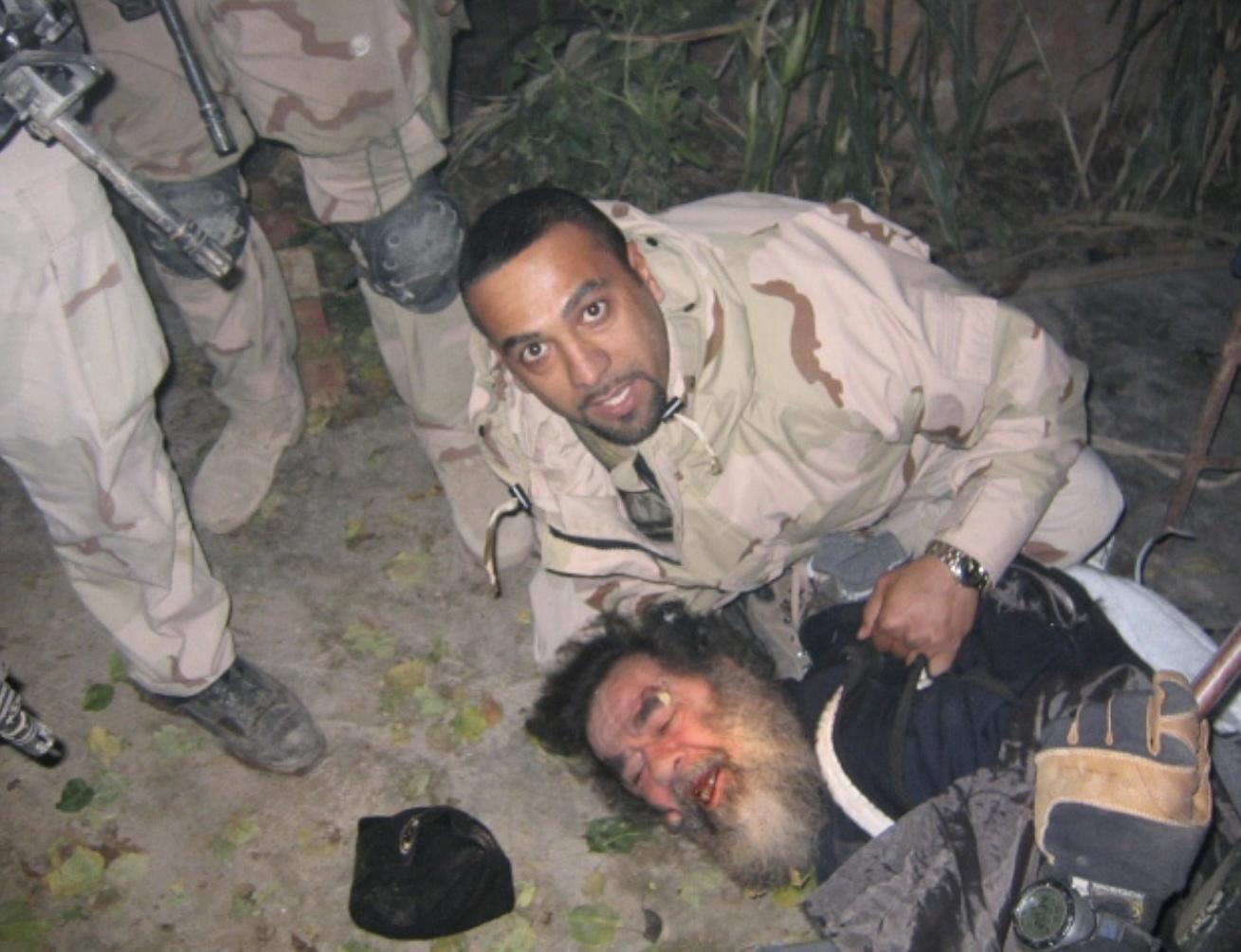
Saddam was discovered not inside a building but concealed underground in a cramped dirt hideaway often referred to as a spider hole. The hiding place measured roughly six to eight feet deep, covered by Styrofoam and dirt to blend into the ground. Inside, he had basic supplies, including water, chocolate, and a small amount of cash. He carried a pistol but offered no resistance when soldiers opened the hatch. According to those present, Saddam appeared disheveled, with a long beard and unkempt hair, a stark contrast to his powerful former image. One soldier is widely credited with finding him: Sgt. 1st Class Eric Maddox’s intelligence work contributed significantly, and the physical discovery was made by soldiers of the 1st Brigade Combat Team during the raid.
Once extracted from the hole, Saddam underwent an immediate identity confirmation, including a distinctive tribal tattoo and medical checks. Soldiers famously reported that he repeated the phrase “I am Saddam Hussein, President of Iraq, and I want to negotiate,” though no negotiation was offered. After the capture, he was transported to a secure location near Tikrit and then to Baghdad International Airport, where he was held at a coalition detention facility. Eventually he was transferred to an Iraqi government-run prison known as Camp Cropper for interrogation and legal proceedings.
Saddam had been on the run for about eight months, from April 2003 to December 2003. Despite initial speculation that he was directing organized resistance against coalition forces, later assessments suggested he had limited ability to coordinate insurgent operations while on the move. His isolation underground and dependence on a shrinking circle of loyalists indicated that survival, rather than command, had become his primary concern.
Among the most interesting aspects of his capture was the extent of the manhunt. Coalition forces conducted thousands of raids and interrogations leading up to Red Dawn. Another surprising detail was how rudimentary his final hiding place was. Rather than living in an elaborate bunker or being protected by a large group of loyal fighters, Saddam relied on a simple pit covered with debris, a far cry from the reinforced compounds and lavish palaces he once inhabited.