Russian Tank Tractor
In the summer and autumn of 1941 the Soviet Union faced a crisis that no pre-war production plan had truly anticipated. The opening blows of Operation Barbarossa shattered large parts of the Red Army’s armoured forces, while many of the factories capable of building modern tanks were either under direct threat or in the middle of chaotic evacuations to the east. In this gap between catastrophic losses and the slow restart of full-scale tank production, Soviet industry turned to the fastest substitute it could find: tracked agricultural tractors.
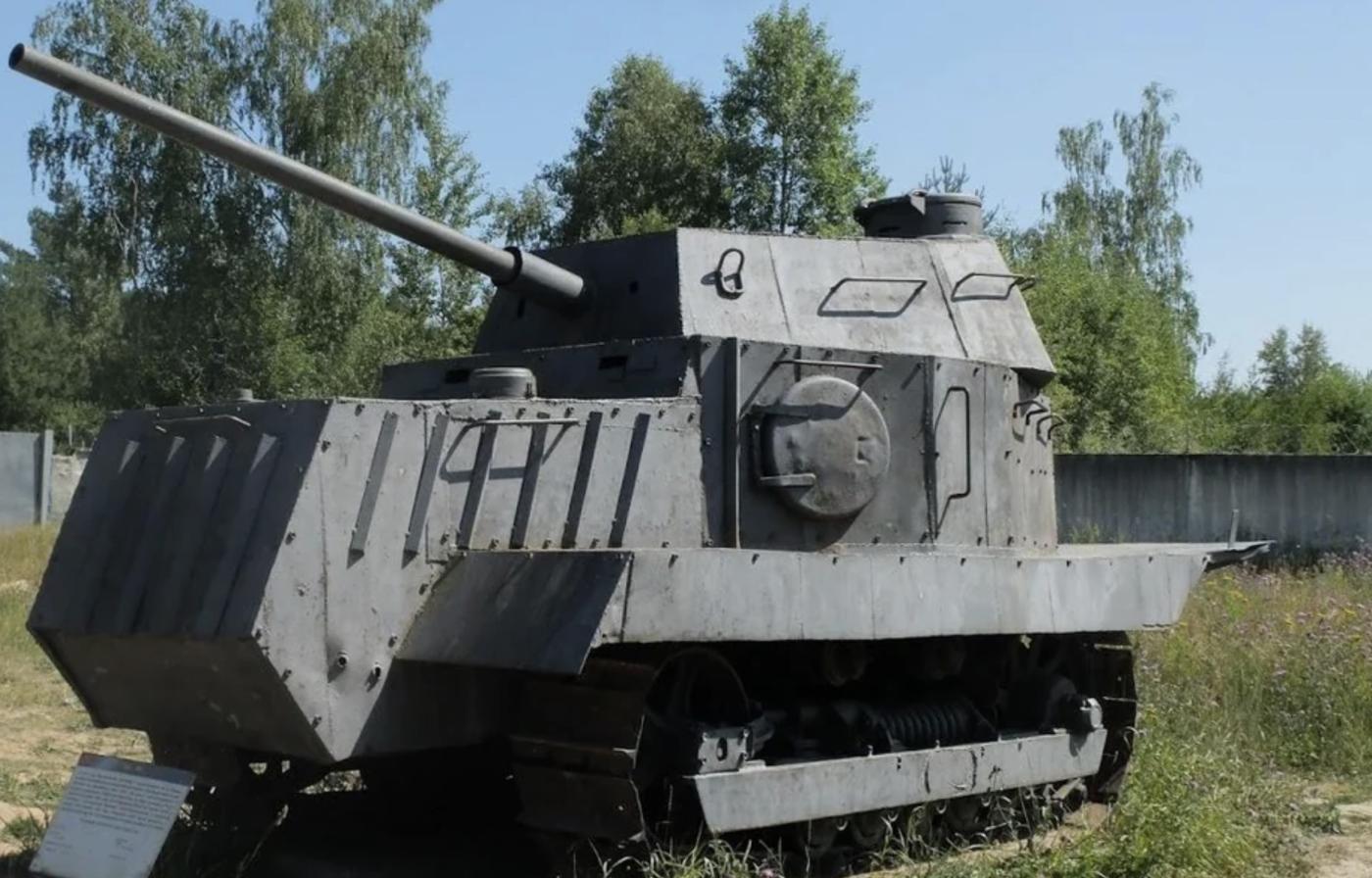
The most famous of these emergency machines was the KhTZ-16, produced at the Kharkiv Tractor Plant. The idea behind it was brutally simple. Tractors already existed in large numbers, were designed to work off-road, and were built in factories that could be adapted far more quickly than a tank plant starting from scratch. By enclosing a tractor chassis in armour and mounting a tank gun, the Soviets hoped to create a stopgap armoured fighting vehicle that could be rushed straight into combat.
Although often imagined as crude, almost homemade machines, the KhTZ-16 was the result of a rushed but genuine design effort. The basic agricultural tractor was heavily modified: the engine installation was altered, the internal layout reworked to create space for a fighting compartment, and a welded armoured hull designed around whatever steel plate could realistically be obtained. Armour thickness varied depending on availability, but even at its best it was thin by tank standards. Protection was strongest at the front and weakest on the sides and rear, reflecting both shortages of material and the expectation that these vehicles would mainly fight from frontal defensive positions.
The usual armament was the 45 mm tank gun that equipped many early-war Soviet light tanks, supplemented by a machine gun. Against lightly armoured German vehicles this weapon could still be effective in 1941, but its limited traverse meant the KhTZ-16 often had to turn its entire hull to aim. Combined with the tractor’s low speed and clumsy handling, this made the vehicle poorly suited to mobile combat. Crews worked in cramped conditions with limited visibility, and mechanical reliability suffered as civilian machinery was pushed far beyond its intended limits.
Production figures highlight just how desperate the situation was. On paper, Soviet authorities demanded hundreds or even thousands of armoured tractors, but reality quickly intervened. Armour plate was in short supply, weapon deliveries were inconsistent, and Kharkiv itself soon came under direct threat from advancing German forces. In practice, only a few dozen KhTZ-16s were completed before evacuation disrupted production. Depending on how incomplete vehicles and later assemblies are counted, the total number built is usually estimated at around seventy to ninety. The vast gap between the ambitious plans and the small number actually produced underlines the chaos of Soviet industry in late 1941.
In combat, the KhTZ-16 was a stopgap rather than a true solution. It could not stand up to German anti-tank guns in open terrain and was quickly lost when used like a real tank. Most were destroyed during the desperate defensive fighting of 1941, often committed in small groups wherever armour was urgently needed. However, in urban combat or prepared defensive positions, the vehicle could still be useful. Acting as a mobile gun platform, supporting infantry, or guarding roadblocks, it provided armoured firepower where none might otherwise have existed. A handful even appear to have survived long enough to be used again during fighting around Kharkov in 1942.
Beyond their limited battlefield effectiveness, these tractor-based tanks had an important psychological value. For Soviet troops retreating under relentless pressure, the presence of any armoured vehicle could lift morale. For the enemy, encountering armoured resistance built from unexpected sources could cause confusion and hesitation. The KhTZ-16 and similar improvised machines were not symbols of technological strength, but of improvisation under extreme pressure.