Bravo 2 Zero
In late January 1991, during the opening phase of the First Gulf War, an eight-man patrol from B Squadron, 22 SAS was inserted by helicopter deep into western Iraq. The patrol’s call sign was Bravo Two Zero. Their task formed part of a wider effort to counter Iraq’s mobile Scud missile threat, which was politically and militarily significant because Scud launches against Israel risked widening the war. The SAS patrols operating in this region were expected to move covertly, establish observation positions, monitor likely Scud launch areas or supply routes, and report targets so that air power could destroy them. Exactly how aggressive Bravo Two Zero’s mission was intended to be has been debated ever since, because later books by surviving members describe the aim either as locating and destroying Scud launchers directly or as long-term surveillance and intelligence gathering.
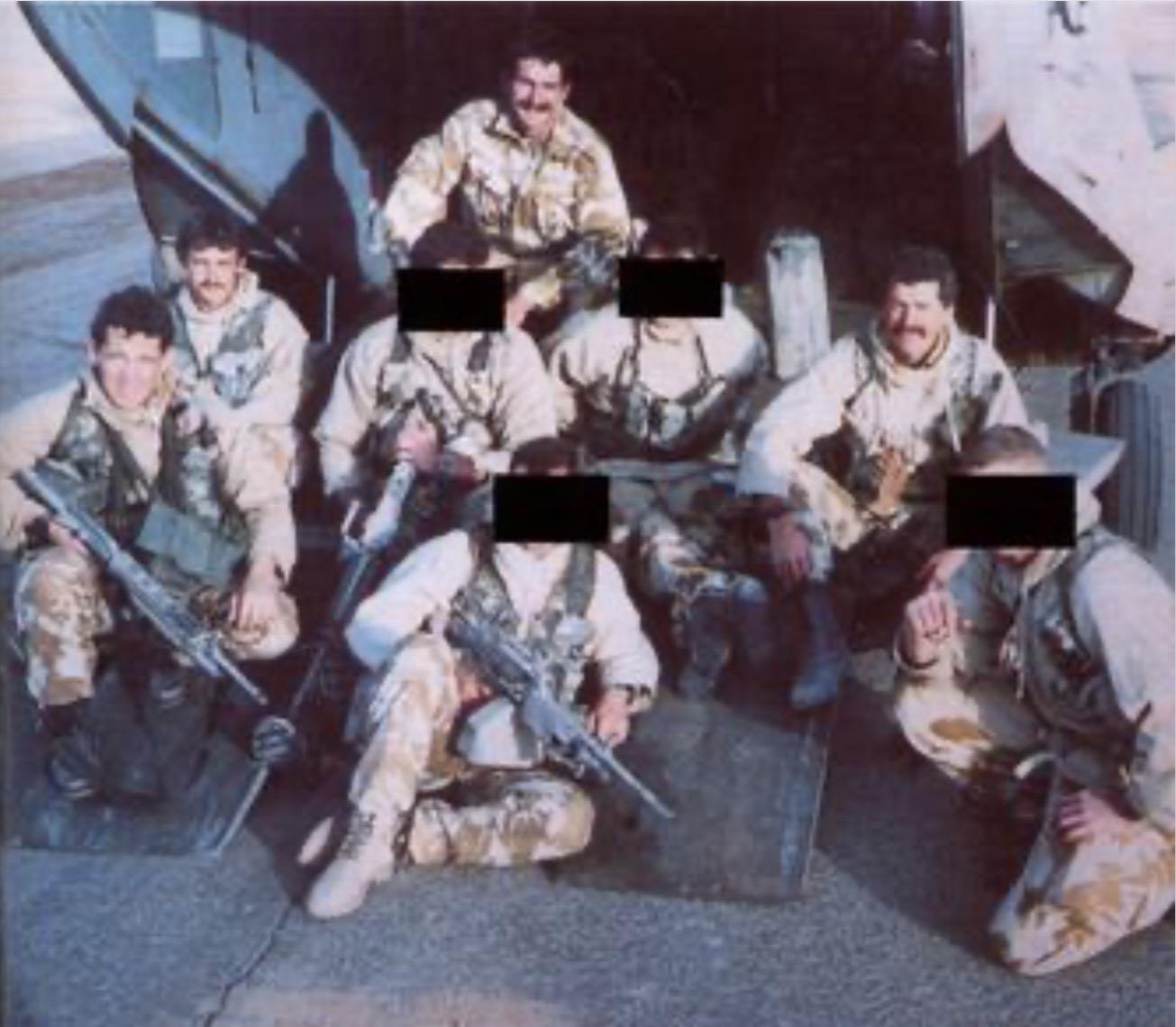
The patrol consisted of eight men. The commander was Sergeant Steven Billy Mitchell, who later wrote under the name Andy McNab. The second-in-command was Sergeant Vincent David Phillips. The remaining members were Corporal Colin Armstrong, later known publicly as Chris Ryan; Lance Corporal Ian “Dinger” Pring; Trooper Robert Consiglio; Trooper Steven “Legs” Lane; Trooper Malcolm MacGown; and Trooper Mike Coburn, often referred to as “Mark the Kiwi”. All were experienced soldiers, but like many long-range patrols they were operating at extreme distance from support, in hostile terrain, during winter.
Insertion took place on the night of 22–23 January 1991 by RAF Chinook helicopter. Almost immediately the patrol faced difficulties. The landing zone was rough, and once on the ground the men were burdened with very heavy loads, including weapons, radios, batteries, water, food, and cold-weather gear. Soon after moving away from the landing area, problems with radio communications became apparent. According to later accounts, the patrol struggled to receive messages from headquarters, and there were disagreements afterward about whether incorrect frequencies had been issued, radios were faulty, or procedures were not followed properly. Whatever the cause, the effect was serious: the patrol did not have the reliable communications that long-range SAS operations depended on.
Within a short time of establishing themselves, the patrol believed they had been compromised. Accounts differ on the precise trigger. Some versions describe a local shepherd boy stumbling across the patrol; others describe a vehicle driver, sometimes said to be operating construction equipment, who spotted them and raised the alarm. What is consistent across all versions is that the patrol concluded that local Iraqis were now aware of their presence, and that Iraqi forces could be alerted quickly. Once compromised, the mission could no longer continue as planned.
The patrol attempted to withdraw and move toward an emergency extraction plan. During this phase they were engaged by Iraqi forces. Again, accounts differ in detail, particularly regarding the scale of the enemy response, but there is agreement that there was at least one firefight and that the patrol came under sustained pressure. In the confusion, some equipment was discarded to improve mobility, which further reduced their ability to communicate and survive long term.
A critical moment came when the patrol attempted to reach a designated emergency rendezvous point where a helicopter was supposed to attempt a brief landing if contact had been lost. The patrol reached the area, but no helicopter arrived. Later explanations suggested that conditions, navigation issues, or concerns about enemy presence prevented the aircraft from landing. At the time, however, the men on the ground had no way of knowing this, and the failure of the extraction forced them into a worst-case scenario: escape and evasion on foot through enemy-controlled territory.
From this point on, the operation became a survival ordeal. The weather was brutally cold, far colder than many people associate with Iraq, and the men were exhausted, short of water, and increasingly separated from one another. Sergeant Vince Phillips deteriorated rapidly, becoming confused and physically incapable of continuing. On 25 January 1991 he died of hypothermia during the escape attempt. His death had a profound effect on the remaining members, both practically and psychologically.
As the patrol continued moving, it fragmented into smaller groups. This was not planned, but rather the result of exhaustion, darkness, enemy pressure, and differing physical conditions among the men. Trooper Steven “Legs” Lane also succumbed to hypothermia and died on 27 January 1991. On the same day, Trooper Robert Consiglio was killed during contact with Iraqi forces, becoming the only member of the patrol confirmed to have died as a direct result of enemy fire.
The remaining men were eventually captured or escaped. Four members of the patrol were taken prisoner by Iraqi forces. During captivity they were interrogated and subjected to physical abuse before being moved through a series of detention facilities and ultimately ending the war as prisoners. Their later descriptions of captivity include beatings, stress positions, and harsh conditions, though the intensity and duration of mistreatment vary between accounts.
One man escaped. Corporal Colin Armstrong, later known as Chris Ryan, carried out what became one of the most famous escapes of the war. Alone, injured, and severely short of food and water, he made his way north on foot over roughly eight days, covering an estimated 300 kilometres. He avoided towns and patrols where possible, scavenged water from unsafe sources, and survived multiple close encounters with Iraqi forces and civilians. On 31 January 1991 he crossed the border into Syria. Shortly afterward, in early February 1991, he was handed over to British officials at the British embassy, bringing his escape to an end.
In total, three men from Bravo Two Zero died: Vince Phillips and Steven Lane from hypothermia, and Robert Consiglio in combat. Four were captured and survived the war as prisoners. One escaped successfully. In the years that followed, the operation became one of the most controversial and debated episodes in modern British military history. Andy McNab’s book Bravo Two Zero and Chris Ryan’s book The One That Got Away presented overlapping but sometimes sharply conflicting versions of events, including disagreements over mission intent, leadership decisions, the scale of enemy contact, and responsibility for failures in planning and communication. Later books and interviews by other participants added further variations.
As a result, Bravo Two Zero is remembered not only as a story of endurance, courage, and loss, but also as a case study in how covert operations can unravel when communications fail,