On this day in military history…
This incident marked the first German aircraft of the Second World War to be shot down, an event that gave it a unique place in early wartime history. On 3rd February 1940 the war arrived abruptly over the North Yorkshire coast, bringing the small seaside town of Whitby into the growing air conflict between Britain and Germany. Winter conditions prevailed when a German bomber crossed the coastline on an early operational sortie, part of the probing missions being flown against Britain only months after war had been declared.
The intruding aircraft was intercepted by the Royal Air Force, and the pilot who engaged it was Flight Lieutenant Peter Townsend. Townsend was flying a Hawker Hurricane, one of Fighter Command’s key aircraft at the time. He sighted the bomber as it approached the coast and attacked decisively, pressing home his assault despite defensive fire from the German gunners.
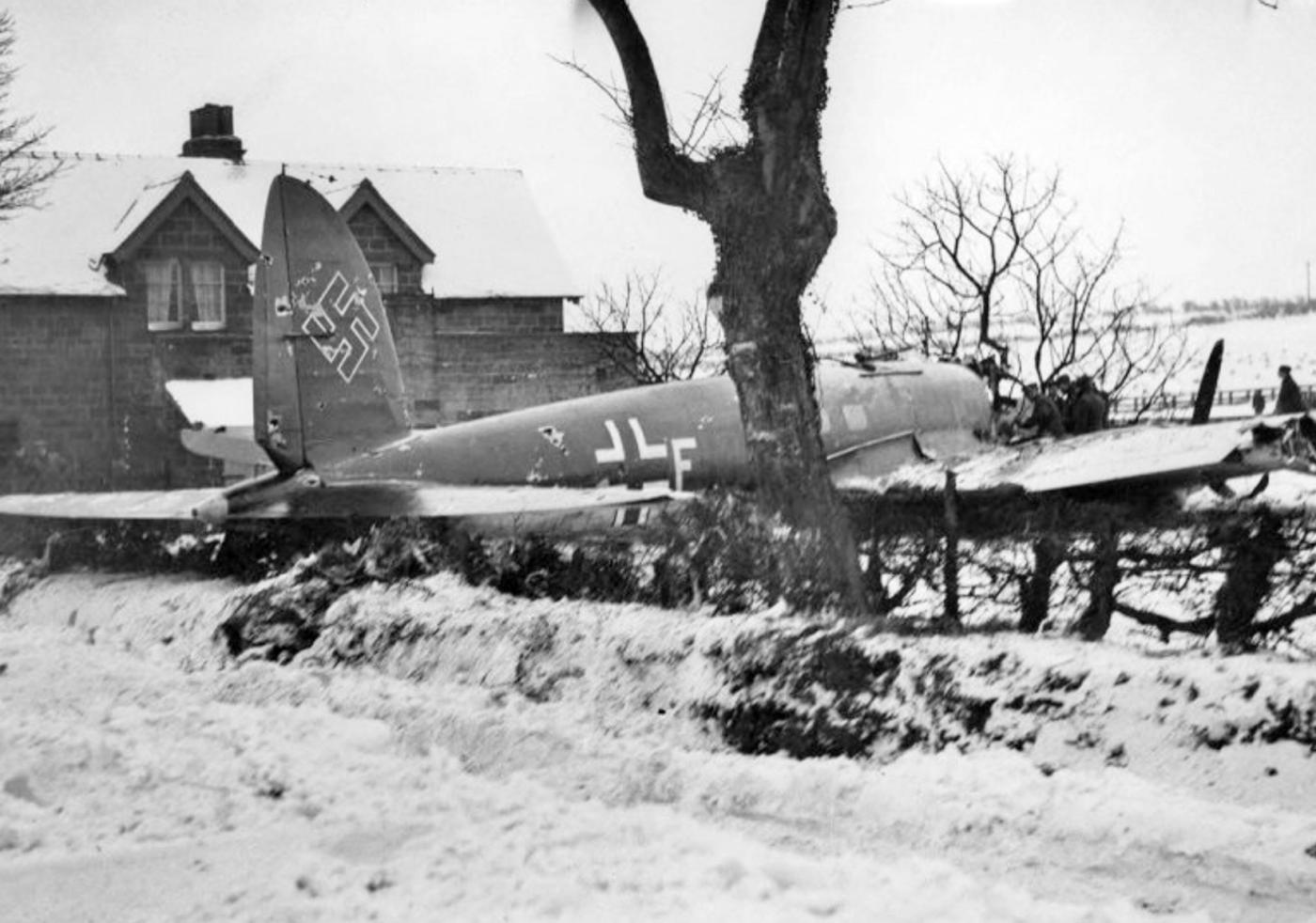
The enemy aircraft was a Heinkel He 111 of Kampfgeschwader 26, carrying the Luftwaffe code 1H+JA on its fuselage. At the controls was Unteroffizier Fritz Gromotka, an experienced bomber pilot flying with a full crew. Townsend’s gunfire struck the aircraft repeatedly, damaging its engines and control systems. Losing height rapidly, the Heinkel came down near Whitby and was destroyed. Its loss is regarded as the first Luftwaffe aircraft of the Second World War to be shot down, giving the action significance far beyond its local impact.
The fate of the German crew reflected the harsh realities of early air combat. Some of the crew were killed in the crash, while others survived and were taken prisoner by British authorities, becoming among the earliest Luftwaffe airmen captured on British soil. Wreckage from the aircraft was scattered across nearby land and along the shoreline, drawing crowds of curious local people until the site was secured. Larger sections were removed for intelligence examination, while smaller fragments inevitably found their way into private hands as grim reminders of the war’s arrival.
For Townsend, the engagement was an early success in what would become a distinguished wartime career. He went on to rise in rank, later becoming a squadron leader during the Battle of Britain, and was credited with multiple aerial victories. Calm under pressure and respected by his peers, he emerged from the war as one of the Royal Air Force’s notable fighter pilots.
His post-war life brought him public attention of a very different kind. In the early 1950s he entered into a relationship with Princess Margaret that captured the imagination of the public but ultimately ended in disappointment. Royal convention and political pressure prevented their marriage, and Townsend was posted abroad, effectively ending the relationship. He later remarried and pursued a career in writing and diplomacy.
When Peter Townsend died in 1995, he was remembered both for his achievements in the air and for the personal sacrifice imposed by his ill-fated romance. In Whitby, however, his name remains closely tied to that cold February day in 1940, when a single Hurricane met a lone Heinkel and the first German aircraft of the war fell from the winter sky.