Pilots React
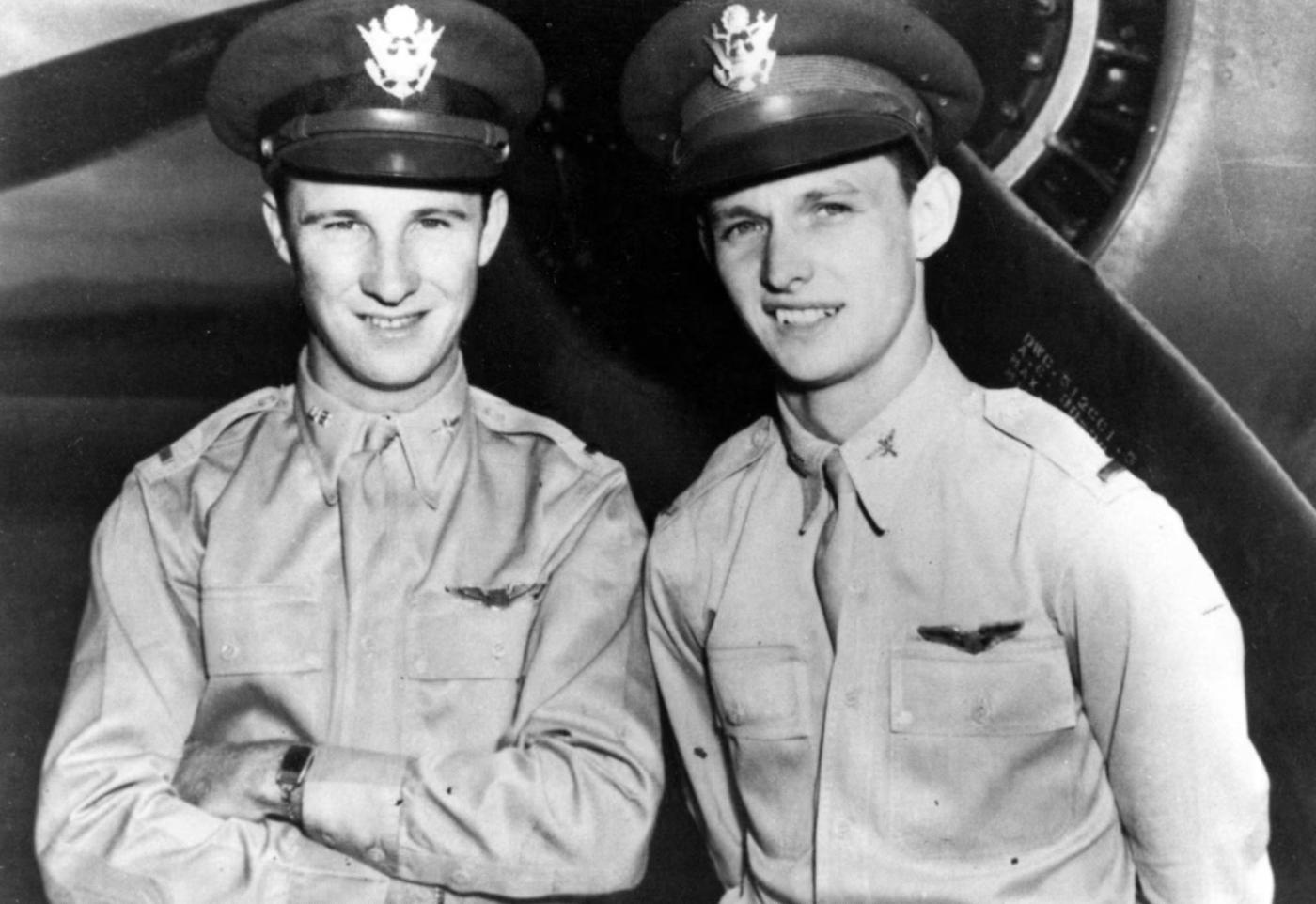
When Japanese naval aircraft struck Pearl Harbor on the morning of December 7, 1941, only a handful of American pilots managed to get airborne to fight back. Among them, the most famous were two young Army Air Corps second lieutenants: George Welch and Kenneth Taylor.
At Wheeler Field, Welch and Taylor were jolted awake by the roar of aircraft engines and violent explosions. Rushing outside, they saw Japanese planes swarming across the sky, bombing and strafing military installations as smoke billowed over Pearl Harbor. Both men were less than a year out of pilot training, and, like most personnel in Hawaii, had never expected to find themselves suddenly thrust into war.
But even as Wheeler and Hickam Air Fields burned, Taylor remembered that a number of P-40 fighters from the 47th Pursuit Squadron were parked at the remote grass airstrip at Haleiwa, ten miles from Honolulu, where the squadron had been conducting target practice.
Without orders, Taylor phoned Haleiwa and instructed ground crews to arm two P-40s immediately. Welch ran to fetch Taylor’s new Buick, and the pair—still wearing the tuxedo trousers from the previous night’s party—sped toward the airstrip, surviving a strafing attack along the way. They found the field untouched and ready.
With no knowledge of the tactical situation and only their .30-caliber machine guns loaded, Welch and Taylor took off.
Near the Marine Corps airfield at Ewa, they intercepted a formation of Japanese Aichi D3A “Val” dive bombers that was strafing the base. Despite having only three of his four guns functioning, Welch shot down one bomber; Taylor downed another. When Welch maneuvered to attack a second Japanese aircraft, his P-40 was hit by defensive fire, forcing him to duck into a cloud bank to assess the damage. The two pilots then returned to the Pearl Harbor area, where each downed a second enemy plane.
Low on ammunition, they landed at Wheeler to rearm. Taylor, wounded by shrapnel, was bleeding, yet while the ground crews serviced the aircraft, a senior officer reprimanded him for taking off without orders. The lecture ended abruptly when Japanese aircraft swept in for a second attack on Wheeler Field. The crowd scattered, and Welch and Taylor took off again.
Taylor's P-40 clipped several ammunition carts as it lifted off, but he managed to become airborne and rejoin the fight. As they climbed, a formation of enemy bombers escorted by Mitsubishi A6M2 Zero fighters passed overhead. Welch shot a Zero off Taylor’s tail and downed another attacking aircraft before returning to Haleiwa to rearm once more.
By the time the two young pilots got back into the air, the Japanese strike force—about 350 aircraft—had already departed for their carriers. They left behind a shattered Pacific Fleet and hundreds of destroyed or damaged American aircraft, most of which had been parked wingtip-to-wingtip in preparation for possible sabotage, not aerial assault.
Only two pursuit squadrons, the 46th and 47th, managed to get fighters into the sky. Welch is widely credited with scoring the first American aerial victory of the Pacific War, followed moments later by Taylor’s first kill.
Both men received the Distinguished Service Cross for their actions. Welch was later honored at the White House by President Franklin D. Roosevelt. Official records credit Welch with four confirmed victories on that day, while Taylor was officially credited with two, though he may have downed two more aircraft that went unobserved amid the chaos.
The Japanese lost 29 aircraft in the attack; American losses totaled 188 planes destroyed and 159 damaged.