Operation Shingle
The landings at Anzio on 22 January 1944 were among the most controversial and consequential operations of the Italian campaign, combining bold strategic intent with costly hesitation on the ground. Known to the Allies as Operation Shingle, the assault aimed to break the deadlock south of Rome by striking behind German lines, forcing a withdrawal from the formidable Gustav Line and opening the road to the Italian capital. The operation unfolded along the coast at Anzio and nearby Nettuno, roughly thirty miles south of Rome, and its outcome would shape the course of the war in Italy for months.
By early 1944 the Allied advance up the Italian peninsula had stalled against the Gustav Line, anchored on rugged terrain and heavily fortified positions around Monte Cassino. Repeated frontal assaults had proved costly and inconclusive. Allied planners proposed an amphibious landing deep in the German rear to unhinge the defence. The idea was to land a mobile force at Anzio, rapidly seize the Alban Hills that dominated the approaches to Rome, and compel the German Tenth Army to retreat or risk encirclement. Political pressure to capture Rome and demonstrate progress to a war-weary public also played a significant role in the decision to proceed.
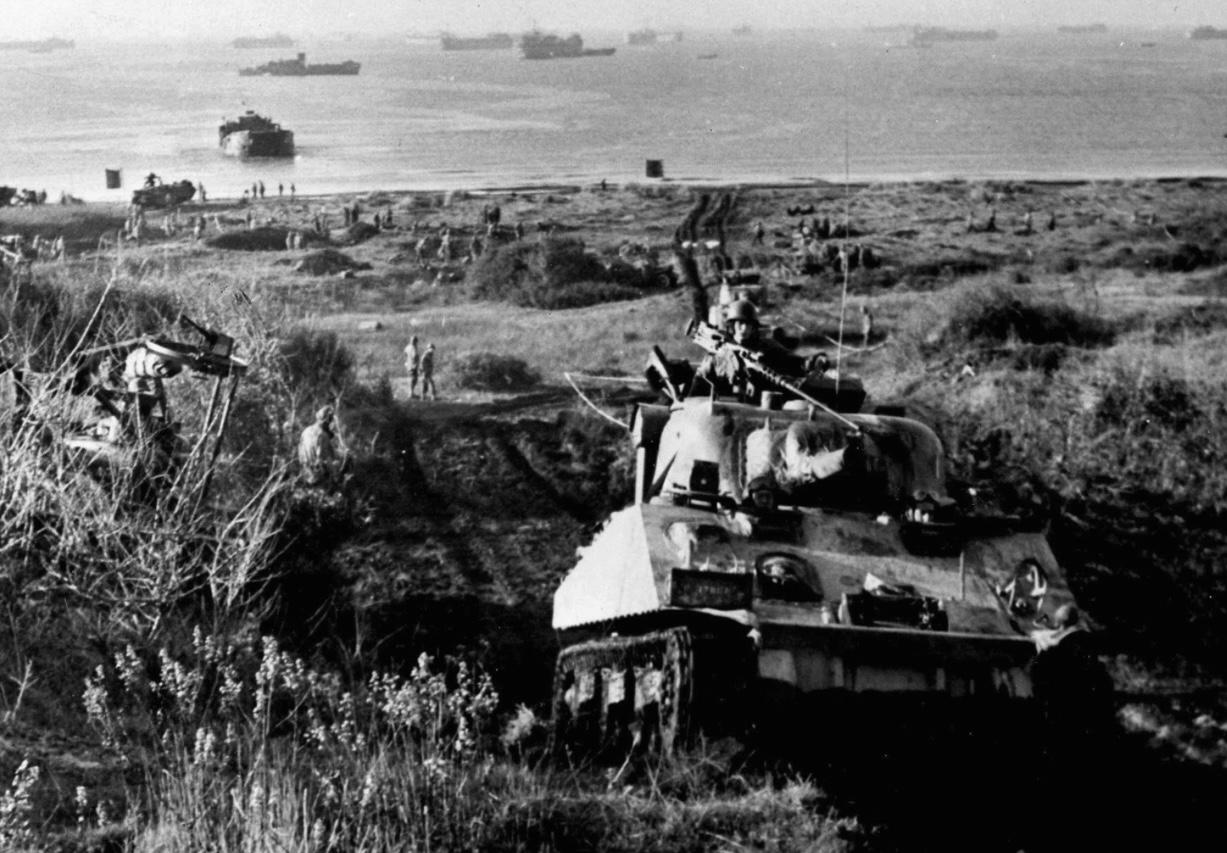
The assault force was commanded by Major General John P. Lucas and consisted of American and British divisions supported by Rangers, Commandos, armour, artillery, and strong naval and air forces. In the early hours of 22 January the landings achieved complete tactical surprise. German coastal defences were weak, and within hours the Allies had established a secure beachhead with relatively light casualties. Ports, roads, and key terrain were seized, and thousands of men and vehicles were landed with remarkable efficiency. At this stage the operation appeared to be a clear success.
The crucial moment, however, soon passed. Rather than driving rapidly inland to seize the high ground and cut German communications, the Allied commander chose to consolidate the beachhead. This caution reflected fears of overextension, limited troop strength, and memories of earlier amphibious disasters, but it allowed the German command time to react. Under Field Marshal Albert Kesselring, German forces were rushed to the area from across Italy and beyond. Within days the Allies at Anzio found themselves contained by a growing concentration of experienced German troops, artillery, and tanks.
What followed was a brutal and exhausting stalemate. In February the Germans launched a series of fierce counter-attacks intended to drive the Allied forces back into the sea. The fighting took place across flat, exposed farmland cut by drainage ditches, offering little natural cover and leaving troops vulnerable to constant artillery fire. Conditions were dreadful. Winter rains flooded foxholes, disease spread, and casualties mounted steadily. Although the Allies managed to hold their ground with the help of naval gunfire and air support, the hope of a swift advance on Rome had vanished.
Despite the apparent failure to achieve its original objectives, the Anzio operation had important strategic consequences. It forced the Germans to commit large numbers of troops to contain the beachhead, troops that could otherwise have been used to strengthen the Gustav Line or deployed to other fronts. In this way, Anzio contributed to the wider Allied war effort by draining German manpower and resources, even as the fighting ground on at great human cost.
The deadlock was finally broken in late May 1944, when a major Allied offensive shattered the Gustav Line and coordinated attacks from the Anzio beachhead drove the Germans back. The advance led directly to the liberation of Rome on 4 June 1944. However, decisions made during the breakout allowed many German units to escape northward, enabling them to establish new defensive lines and prolong the campaign in Italy for many more months.