Port of Granville Raid
On the night of 8–9 March 1945, with Germany already collapsing across Europe and the Channel Islands isolated behind Allied lines, German naval and commando forces launched one of the last offensive operations carried out by German troops in Western Europe. The raid on the French port of Granville was planned and executed from the occupied Channel Islands, principally Jersey, and was intended as a combined naval and commando strike to damage Allied shipping, secure vital supplies, and free German prisoners of war. The operation was remarkable not only for its timing so late in the war but also for its audacity, as German forces were by then largely confined to defensive operations.
The raid was organised under the command of Kapitänleutnant Carl-Friedrich Mohr of the Kriegsmarine, who commanded German naval forces based in the Channel Islands. Overall direction came from the German naval command on Jersey, working in cooperation with the German Army garrison authorities responsible for the islands’ defence. The striking force consisted of approximately 150 to 180 men, drawn primarily from Kriegsmarine units stationed in Jersey and Guernsey. These included crews from minesweeper flotillas, marine artillery detachments, and a specially selected naval commando party trained for close-quarters combat and demolition work. A small number of army personnel from fortress infantry units stationed in the islands were also attached to assist with ground operations in the port.
The naval component of the force comprised several small vessels, mostly minesweepers and armed patrol craft that had been operating from the Channel Islands as part of German coastal defence and anti-shipping efforts. These vessels included minesweepers and auxiliary patrol boats capable of transporting assault troops and carrying demolition charges. The Germans also made use of fast artillery ferries and harbour craft suitable for navigating shallow coastal waters. Because of Allied naval and air superiority, the force had to travel by night and rely on surprise and careful navigation to reach Granville undetected.
The mission assigned to the raiding force had several objectives. First, the Germans intended to destroy Allied shipping in the harbour of Granville, particularly coal ships and supply vessels whose cargoes were badly needed by the German garrisons isolated in the Channel Islands. By early 1945 the islands were suffering severe shortages of fuel, food, and raw materials, and German commanders hoped to capture coal and other supplies to sustain their forces. Second, they aimed to destroy port facilities, including cranes, warehouses, and harbour installations, in order to disrupt Allied coastal logistics. Third, and of great symbolic importance, they intended to free German prisoners of war held in Granville. Intelligence suggested that a number of captured German sailors and possibly U-boat crewmen were being detained there, and their liberation would provide both manpower and a morale boost. Finally, the raid was expected to demonstrate that German forces in the Channel Islands remained capable of offensive action despite their isolation.
The operation began on the evening of 8 March 1945 when the raiding force departed from Jersey under cover of darkness. The vessels sailed in formation across the Channel, maintaining radio silence and strict navigation discipline to avoid detection by Allied patrols. Weather conditions were cold and dark but favourable enough for the crossing. The Germans relied heavily on surprise, timing their approach to coincide with the early hours of the morning when harbour defences were expected to be at their least alert.
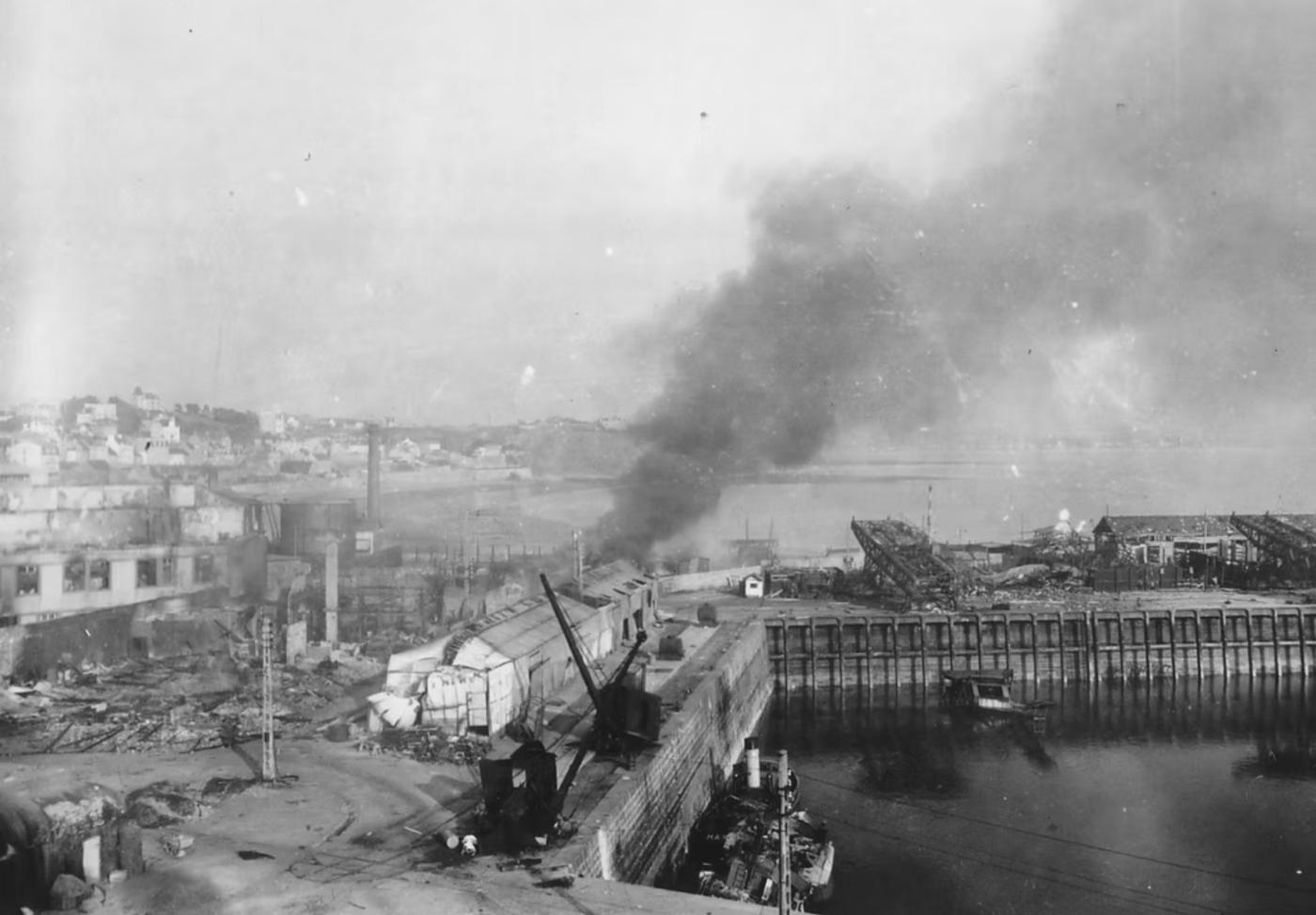
In the early hours of 9 March the German vessels entered the harbour of Granville. Achieving a high degree of surprise, they were able to close with their targets before a coherent Allied response could be organised. Commando parties landed quickly and moved to their assigned objectives. Demolition teams placed charges on docked vessels and harbour installations, while other groups sought out the prison holding German POWs. Several Allied ships in the harbour were boarded or attacked with explosive charges and gunfire. Fires broke out among shipping and port facilities as the Germans carried out their demolition tasks.
The German commandos succeeded in freeing a number of German prisoners of war from the local prison. These men were hurried aboard the raiding vessels to be taken back to the Channel Islands. At the same time, German forces seized whatever coal and supplies they could rapidly load. However, time was limited, and the raiders had to work quickly before Allied forces could mount an effective counterattack.
As the raid progressed, Allied coastal defences and nearby units began to respond. Shore batteries and defensive positions opened fire on the German vessels in the harbour, and local Allied troops engaged the raiding parties. Fighting occurred in and around the docks, with exchanges of small-arms and machine-gun fire. Despite growing resistance, the German force managed to complete much of its mission within a short period.
Several ships in the harbour were sunk or severely damaged by the German demolition teams and naval gunfire. Fires and explosions caused significant disruption in the port area. After completing their primary objectives, the German raiders began withdrawing from Granville before daylight, knowing that remaining any longer would expose them to overwhelming Allied air and naval power.
During the withdrawal, one or more German vessels encountered difficulties navigating out of the harbour, and some damage was sustained from Allied fire. A small number of German personnel were killed during the fighting, and some were left behind or captured when they could not reach the departing vessels. Most of the raiding force, however, successfully returned to Jersey with the freed prisoners and captured supplies.
Casualties on the Allied side included both military personnel and possibly civilian harbour workers. Several Allied servicemen were killed or wounded during the fighting and the destruction of ships and installations. Estimates vary, but around twenty Allied personnel were killed in the raid, with others wounded. The Germans took a number of Allied prisoners during the operation, including sailors and port personnel, who were transported back to the Channel Islands. These prisoners were later held by German forces until the final surrender of the islands in May 1945.
German casualties were relatively light compared with the scale of the operation, reflecting the success of surprise. A handful of German raiders were killed and several wounded, and a small number were captured after becoming separated from the main force. The Germans succeeded in freeing dozens of their own prisoners and returning them to the Channel Islands, along with captured coal and supplies.
The raid on Granville stands as one of the last German offensive actions in Western Europe during the Second World War. It demonstrated that even in the final months of the conflict, isolated German garrisons retained the ability to mount complex combined operations involving naval and commando elements. While the material impact of the raid was limited in the broader context of the war, it provided a temporary boost to the German garrison in the Channel Islands and remains a notable example of late-war special operations conducted under desperate circumstances.