Operation Crossbow Starts .
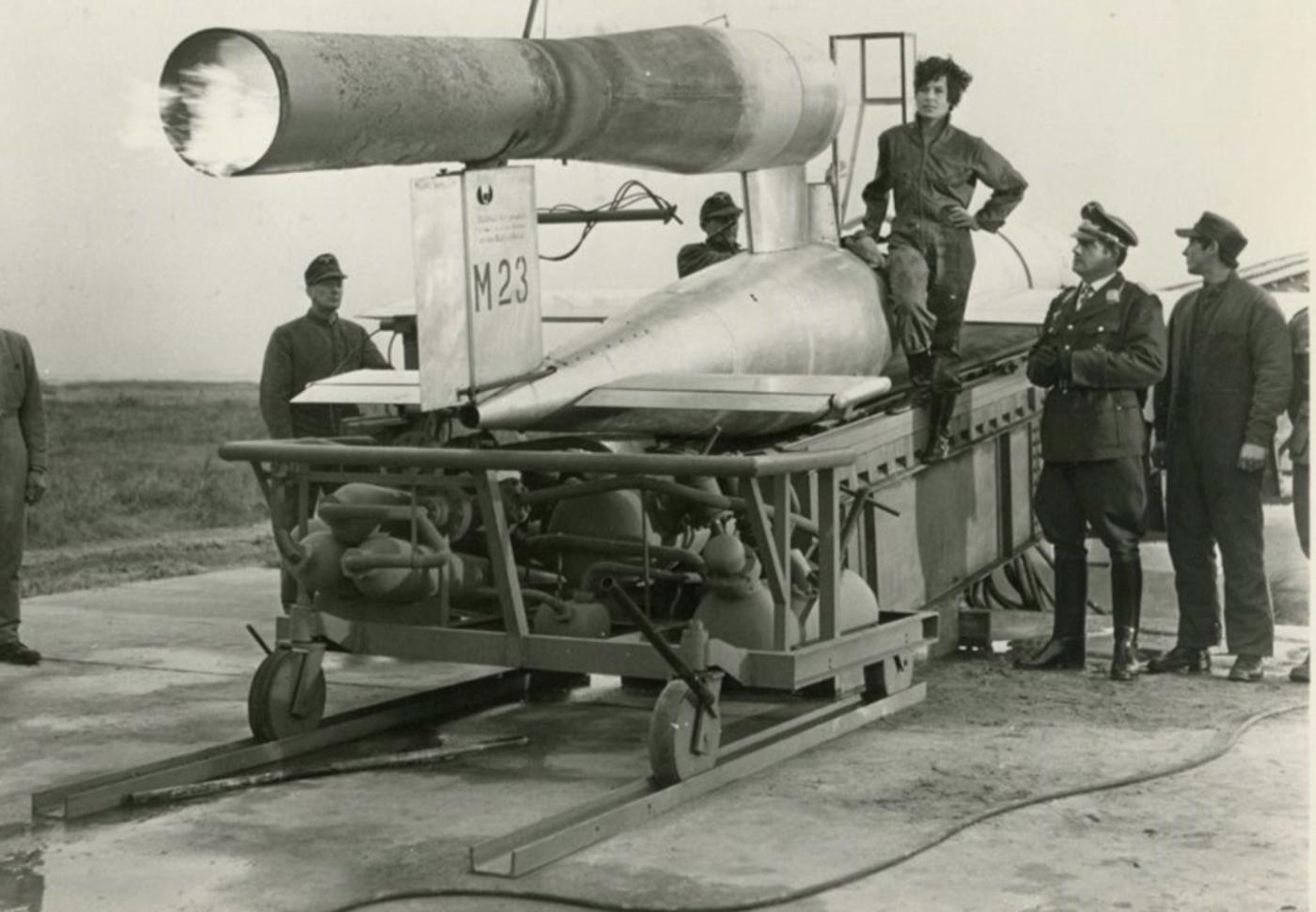
Operation Crossbow was the Allied campaign during the Second World War aimed at countering Germany’s rapidly developing long-range weapon program. By 1943 Allied intelligence had begun piecing together alarming evidence that the Germans were constructing a series of secret sites in northern France and occupied Europe. Aerial reconnaissance photographs, resistance reports, and intercepted communications revealed vast concrete structures, rail-fed bunkers, and unusual launch installations. These were eventually identified as facilities intended for the V-1 flying bomb and the far more destructive V-2 rocket. Intelligence analysts feared that once operational these weapons could be launched in the hundreds or even thousands against Britain. There were very real concerns that the Germans might one day fit the rockets with chemical warheads, which made the threat appear existential. As a result an urgent offensive was set in motion to find, target, and destroy the sites before they became fully active.
The initial strategy relied heavily on night bombing, particularly by RAF Bomber Command, which had established itself as the primary night striking force. However, the V-weapon sites proved extremely difficult targets. The bunkers were heavily reinforced with concrete and often built into hillsides or shielded by earthworks. Weather, darkness, and German camouflage further obscured them, meaning RAF crews frequently bombed approximate locations rather than clearly visible structures. The inaccuracy of night attacks quickly became obvious: many bombs fell wide of their targets, and reconnaissance flights afterward showed that the sites remained largely intact. This failure placed pressure on Allied planners to change tactics before the rockets could be unleashed in large numbers.
A pivotal figure in shaping the offensive was Air Chief Marshal Sir Roderic Hill, who became one of the leading authorities on the V-weapon threat and played a key role in directing the counter-measures. His coordination involved British intelligence, RAF Bomber Command, and the specially formed Crossbow Committee, which evaluated intelligence material and drew up bombing priorities. It was on his urging that the Allies shifted from reliance on night operations to the more dangerous but potentially more effective daylight bombing strategy. American Eighth Air Force heavy bomber groups were brought into the campaign because their precision daylight bombing methods offered a better chance of hitting small, hardened targets. Their B-17s and B-24s, equipped with the Norden bombsight, were able to strike with far greater accuracy than night raiders despite facing strong German air defenses.
The daylight missions were grueling and costly. Many of the V-1 and V-2 facilities were protected by anti-aircraft guns, and German fighters frequently engaged the bomber formations. Nevertheless, a combination of relentless attacks and improved intelligence began to reduce the threat. The Allies targeted not only the launch sites but also storage depots, research centers such as Peenemünde, and the transport networks feeding the installations. The Peenemünde raid in August 1943 was particularly significant: it killed key scientists, displaced the program, and delayed full-scale deployment of the rockets. Later attacks focused on the immense concrete structures at places like Wizernes and Mimoyecques, where the Germans had planned to launch sustained bombardments against British cities. In several cases the bombing was strong enough to cause collapses or bury critical infrastructure, rendering the installations unusable even before they were completed.
Operation Crossbow did not eliminate the V-weapon threat entirely. Thousands of V-1 flying bombs were launched beginning in June 1944, and the first operational V-2 rockets struck London later that year. But the campaign dramatically reduced the scale and timing of the attacks. Many sites were destroyed before they could be completed, and others were damaged so severely that only a fraction of their planned rockets were ever launched. The combination of sustained bombing, intelligence breakthroughs, and the eventual liberation of northern France brought the rocket campaign to a halt.
The operation stands as one of the most complex intelligence and bombing efforts of the war, involving coordination across multiple services and nations. It demonstrated the importance of aerial reconnaissance, photo analysis, deception interpretation, and high-risk precision bombing. Without Operation Crossbow the V-weapon campaign would likely have been far more devastating, and Britain could have faced a level of bombardment that might have altered the course of the conflict.