
New design hand grenade
The latest development drawing attention in infantry modernization is a new generation of scalable hand grenade intended for use by regular infantry and special operations forces operating in today’s complex combat environments. Rather than being designed to maximize destructive power, the system is meant to give soldiers a controlled and predictable tool that can be adapted to different tactical situations using a single, familiar device. Recent testing has focused on reliability, safety, and practicality, with the goal of introducing the grenade into service in the near future.
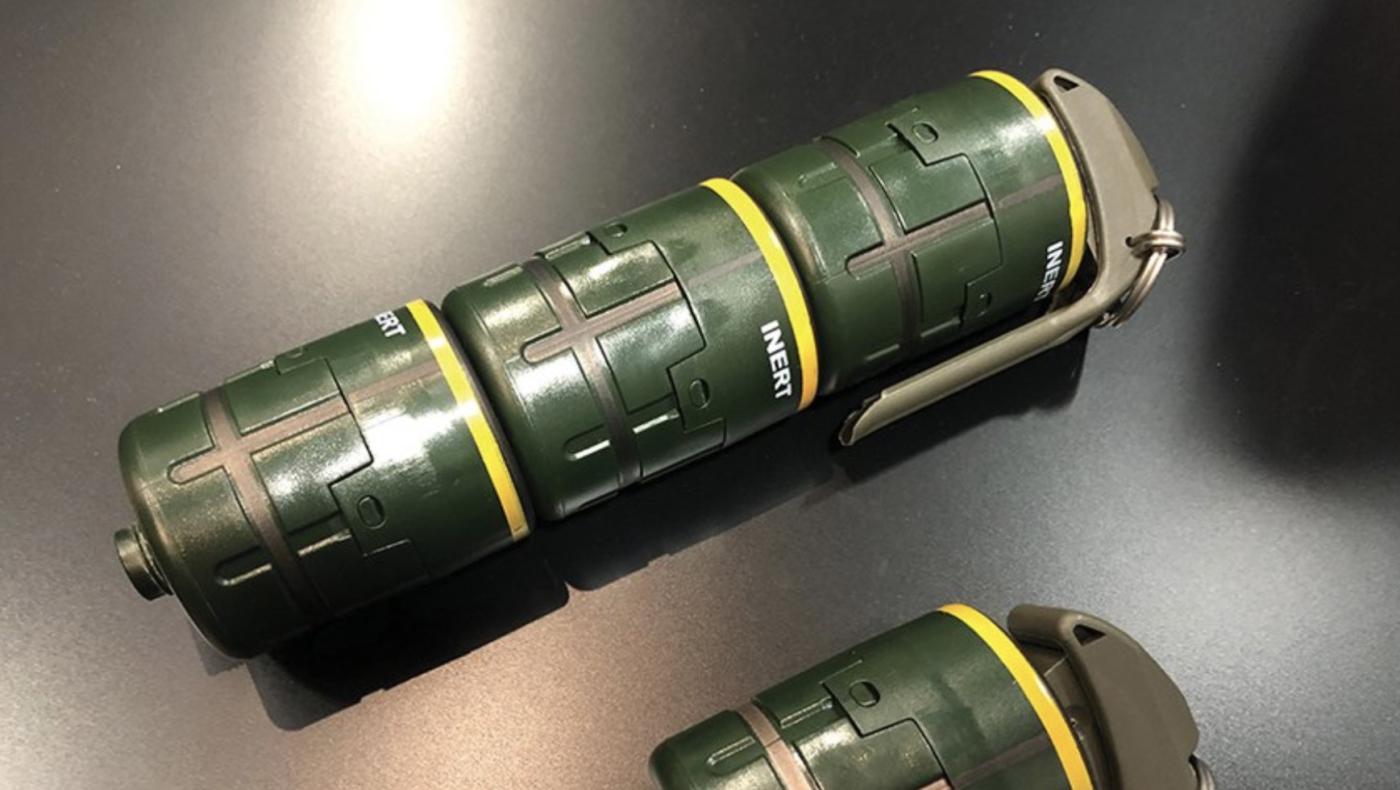
At the core of the concept is a clearly defined form of scalability that is built into the grenade’s structure rather than improvised in the field. The grenade uses a standardized core body that contains the fuze and primary safety mechanisms, combined with interchangeable, factory-sealed effect modules. These modules determine the strength and nature of the grenade’s output, such as the amount of blast energy or fragmentation produced. By changing the module fitted to the grenade before a mission, units can scale the effect up or down while keeping the same handling, throwing characteristics, and activation method.
This approach is fundamentally different from traditional grenades, which are manufactured with a fixed effect and must be selected from different models to achieve different results. In the scalable system, the “how it works” is deliberately simple from the user’s perspective: the grenade always functions the same way when thrown, but the internal configuration governs how much energy is released and how it is distributed. Because the modules are sealed and standardized, there is no field adjustment of explosive components, reducing risk and preventing misuse.
The need for this kind of scalability comes directly from how modern warfare is conducted. Operations are increasingly carried out in dense urban terrain, inside buildings, and among civilian populations where the consequences of excessive force can be severe. A grenade that delivers a fixed, high-intensity effect may be effective against entrenched enemies, but it can be inappropriate or dangerous in confined spaces or low-intensity encounters. The scalable grenade allows forces to plan for this variability in advance, selecting an effect level that matches the expected threat while retaining the option to deploy higher-effect variants when required.
In practical terms, this makes the grenade suitable for a wide range of missions, including room clearing, defensive positions, counterinsurgency patrols, and close-quarters engagements. A lower-effect configuration can be used where control and limited damage are essential, while a higher-effect configuration supports conventional combat tasks. The scalability is therefore not about creating a single grenade that can be altered mid-action, but about giving units a flexible system that supports proportional force across different scenarios without changing equipment or doctrine.
From a design and safety perspective, scalability has been implemented without adding complexity for the individual soldier. The grenade’s weight, balance, and external controls remain consistent regardless of configuration, helping ensure predictable use under stress. Safety systems have been engineered so that the grenade remains inert until deliberately activated, and testing has emphasized consistent performance so that the selected configuration behaves as expected every time.
The concept also aligns with modern military doctrine, which increasingly places responsibility and decision-making at the lowest tactical level. Soldiers are expected to assess situations rapidly and act within strict rules of engagement, often with strategic implications. A scalable grenade supports this reality by offering a single, adaptable munition that can be matched to mission requirements during planning, rather than forcing reliance on either underpowered tools or unnecessarily destructive ones.
Logistical efficiency is another key reason for its development. Using a common grenade body with different effect modules reduces the number of distinct munitions that must be supplied, stored, and transported. This simplifies supply chains and reduces the physical burden on troops, while remaining compatible with existing load-carrying equipment and training systems.