Major General Eric Bols
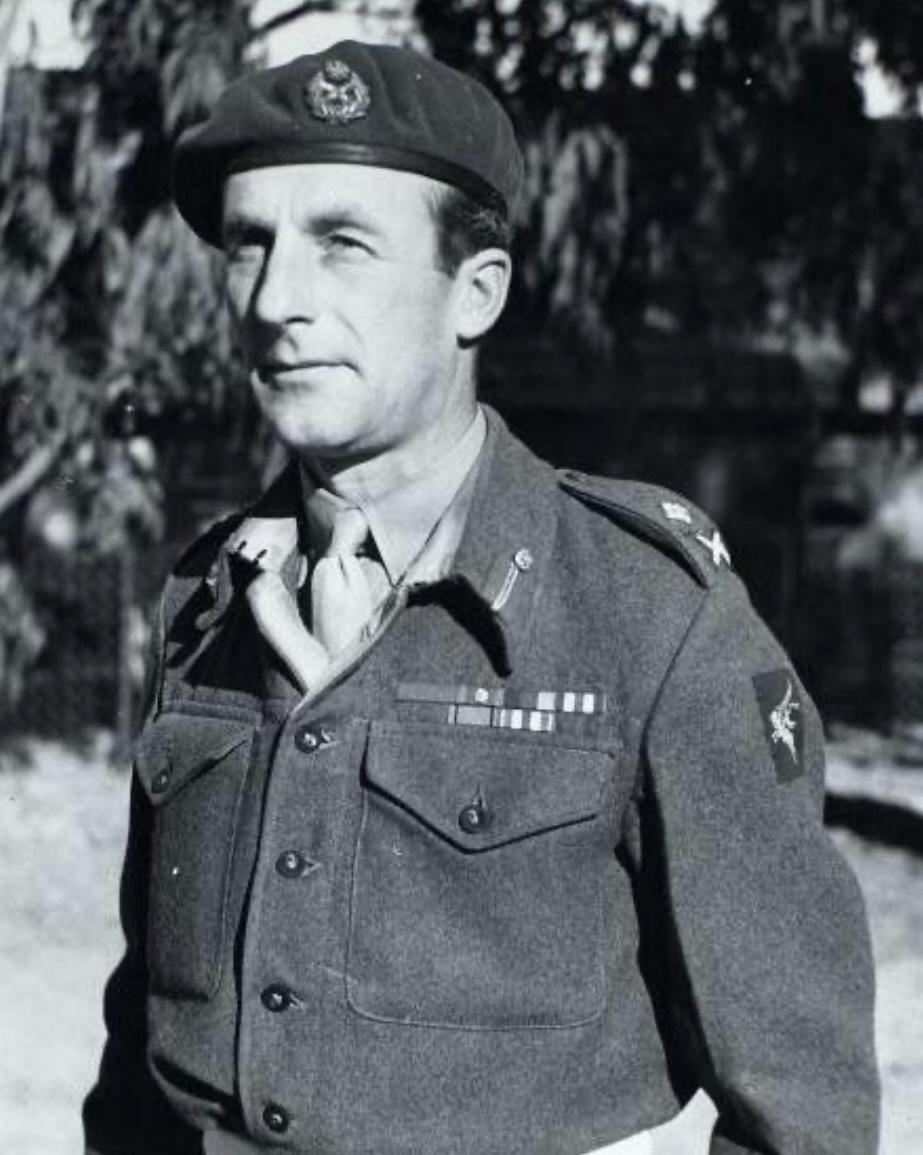
Major-General Eric Bols was one of the quieter but highly capable senior commanders of the British Army in the Second World War, best remembered for leading the 6th Airborne Division during its final and most demanding campaigns. He was born on 8 June 1904 at Camberley in Surrey into a family where military service was part of everyday life. His father, Louis Jean Bols, was already a senior officer who would go on to serve at the highest levels of command during the First World War. This background meant that a career in uniform was almost expected, but Eric Bols still had to prove himself on his own merits.
He was educated at Lancing College and then entered the Royal Military College at Sandhurst, where he was commissioned into the Devonshire Regiment in 1924. Like many young officers of the inter-war British Army, his early years were spent moving between overseas postings and professional courses. He served in China with the Shanghai Defence Force and later in Malta, gaining experience of garrison life, diplomacy, and the realities of imperial defence. He also showed an early aptitude for teaching and staff work, becoming an instructor and later attending the Staff College at Camberley, a key step for any officer with higher command potential. During this period he transferred to the King’s (Liverpool) Regiment, largely for practical career reasons, and continued to build a reputation as a thoughtful and reliable officer.
When the Second World War began, Bols was serving overseas but soon returned to Britain. Rather than going straight into combat, he was used where the army most needed him, training and preparing others. He worked as an instructor at the Staff College and then as a staff officer with the 51st (Highland) Division before taking command of the 3rd Reconnaissance Regiment. These roles sharpened his understanding of modern warfare, particularly the coordination of armour, infantry, and mobility, skills that would later prove invaluable. By the later stages of the war he was deeply involved in training formations for the invasion of northwest Europe and in planning the complex operations that followed the Normandy landings.
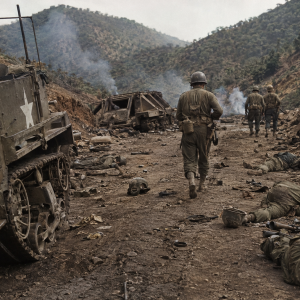
In 1944 he was given command of the 185th Infantry Brigade of the 3rd Infantry Division and led it through hard fighting in France and the Netherlands. His calm handling of difficult river crossings and fluid battlefield situations earned him the Distinguished Service Order. In December 1944, at a critical moment in the war, he was promoted to acting major-general and appointed to command the 6th Airborne Division, succeeding the much-admired Richard Gale. Taking over such an elite formation was no small responsibility, especially with the division about to be committed to emergency operations during the German Ardennes offensive. Under Bols, the division was rushed to the front and helped stabilise a dangerous situation alongside American forces.
His most famous moment as a commander came in March 1945 during Operation Varsity, the great airborne crossing of the Rhine. Bols chose to land by glider with his headquarters so that he could command the division from the ground, a decision that placed him directly in harm’s way. The operation was costly but successful, and the Rhine was crossed in strength. For his leadership he received a bar to his Distinguished Service Order as well as the United States Silver Star. In the final weeks of the war his division advanced rapidly across northern Germany, reaching the Baltic coast at Wismar. There Bols found himself in a tense standoff with advancing Soviet forces, firmly holding the town until higher-level agreements were reached, a small but symbolic episode at the very end of the European war.
After Germany’s surrender, Bols remained in command as the 6th Airborne Division shifted from combat to occupation and imperial duties. The division became part of Britain’s post-war strategic reserve and was deployed to Palestine, where it carried out internal security tasks during a period of growing unrest. This was a very different kind of soldiering, politically sensitive and often frustrating, but Bols guided the division through the transition until the late 1940s.
He retired from the army in January 1948 with the honorary rank of major-general. Unlike some wartime commanders, he did not seek public attention or a political career. He settled in Sussex, married later in life, and enjoyed a quiet retirement centred on home and garden. Eric Bols died in June 1985 at the age of eighty-one. Though never a household name, he was respected by those who served under him as a steady, intelligent commander whose leadership helped carry Britain’s airborne forces through their final and most decisive battles of the war.