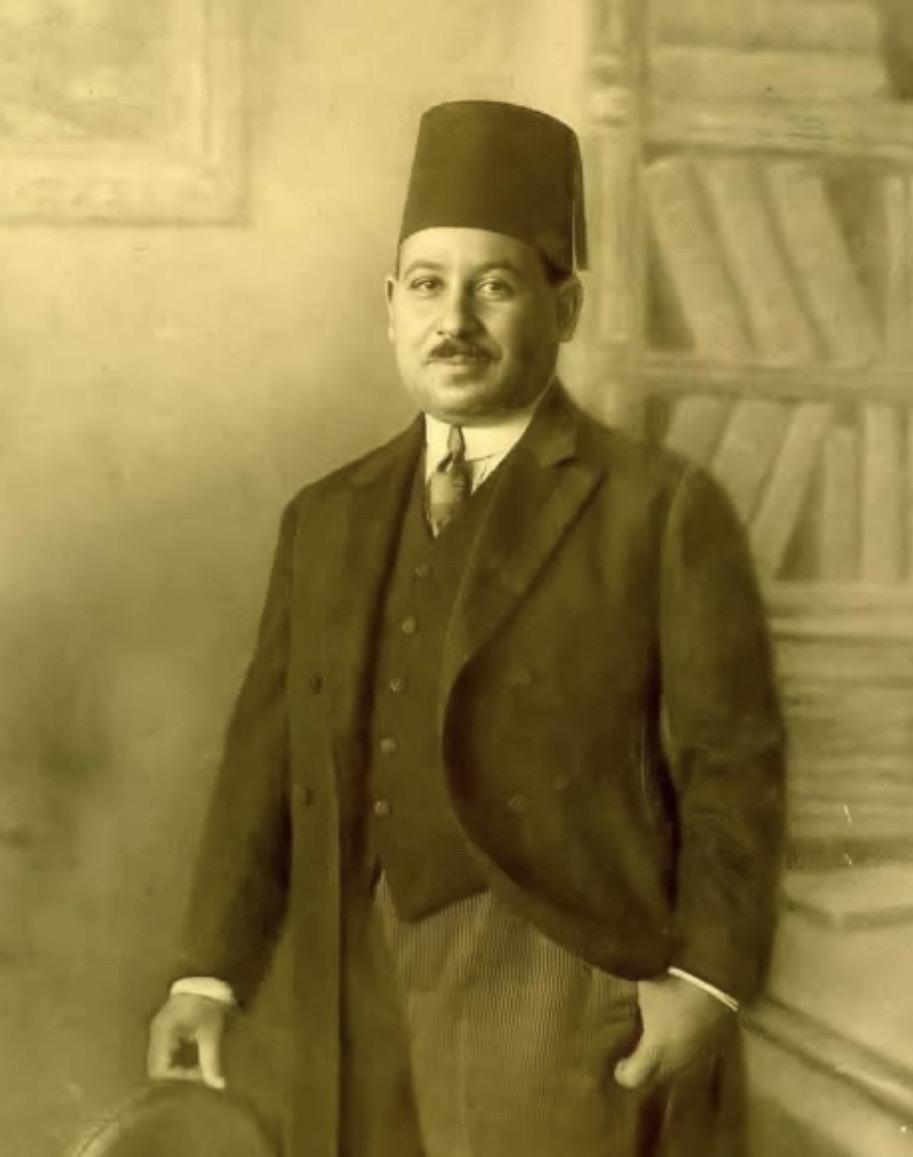
Egyptian Prime Minister assassinated
The assassination of Ahmed Maher Pasha, Egypt’s prime minister during the final phase of the Second World War, took place on 24 February 1945 and was one of the most dramatic political killings in modern Egyptian history. It occurred immediately after he announced that Egypt would formally declare war on the Axis powers, a move that would allow the country to participate in the founding of the United Nations and strengthen its international standing at the war’s end.
Ahmed Maher Pasha had served multiple times in Egyptian governments and was a leading figure in the conservative Saadist Institutional Party. By early 1945, World War II was nearing its conclusion. Egypt had technically been under British influence and occupation for decades, and although British forces had used Egyptian territory throughout the war, Egypt itself had not formally declared war on Germany or Japan. With the conflict clearly turning in favor of the Allies, the Egyptian government decided to make a formal declaration of war in order to secure a place among the victorious nations and to be eligible for membership in the forthcoming United Nations organization.
On the morning of 24 February 1945, Ahmed Maher appeared before the Egyptian parliament in Cairo to present the government’s decision. The parliament building, located in central Cairo, was filled with deputies and officials. Maher delivered his speech and secured parliamentary approval for Egypt’s declaration of war against Germany and Japan. The vote passed, and the announcement marked Egypt’s official entry into the conflict on the Allied side, albeit very late in the war.
Moments after the session concluded, as Maher walked through the parliament building toward an exit corridor, he was approached by a young man named Mahmoud El-Essawi (often spelled Mahmoud El-Isawi), a 28-year-old law student and political activist. El-Essawi had reportedly gained access to the building by posing as a parliamentary messenger or by exploiting the confusion following the session. He approached Maher at close range and fired several shots with a pistol, striking the prime minister in the chest.
Maher collapsed immediately and died shortly afterward from his wounds. The assassination took place within the parliament building itself, only minutes after the historic declaration of war had been approved. Security personnel and bystanders quickly subdued El-Essawi at the scene before he could escape. He was arrested on the spot and taken into custody for interrogation.
The motives behind the assassination were rooted in Egypt’s turbulent domestic politics. El-Essawi was associated with nationalist and anti-government circles and was believed to oppose both British influence in Egypt and the ruling political establishment. Some accounts suggest he was linked to the National Party, a nationalist group that rejected cooperation with the British and opposed what they saw as a compliant government. To such activists, Maher’s declaration of war in alignment with Britain and the Allies symbolized continued subservience to foreign power rather than true independence.
Following the assassination, Egypt was thrown into political shock. The killing of a sitting prime minister inside parliament exposed deep divisions within Egyptian society and highlighted the instability of the country’s political system during the late monarchy period under King Farouk.
After Maher’s death, the king moved quickly to ensure continuity of government. The new prime minister appointed was Mahmoud Fahmi El Nokrashy Pasha, a seasoned politician who had previously held the premiership and would later serve again in Egyptian politics. Nokrashy continued the government’s policies, including maintaining Egypt’s declaration of war against the Axis and positioning the country among the Allied nations in the closing months of World War II.
As for the assassin, Mahmoud El-Essawi was subjected to a swift and highly publicized trial. The authorities treated the case as a major act of political terrorism. Evidence against him was overwhelming, as he had been captured at the scene with the weapon. During the trial he reportedly admitted to the killing and justified his actions on political grounds, presenting himself as acting in the interests of Egyptian nationalism.
The court convicted El-Essawi of murder and sentenced him to death. Later in 1945, he was executed by hanging. The government hoped that the execution would serve as a warning against further political violence, though Egypt continued to experience instability and assassinations in the years leading up to the 1952 revolution that ultimately overthrew the monarchy.