Sherwood Foresters Regiment
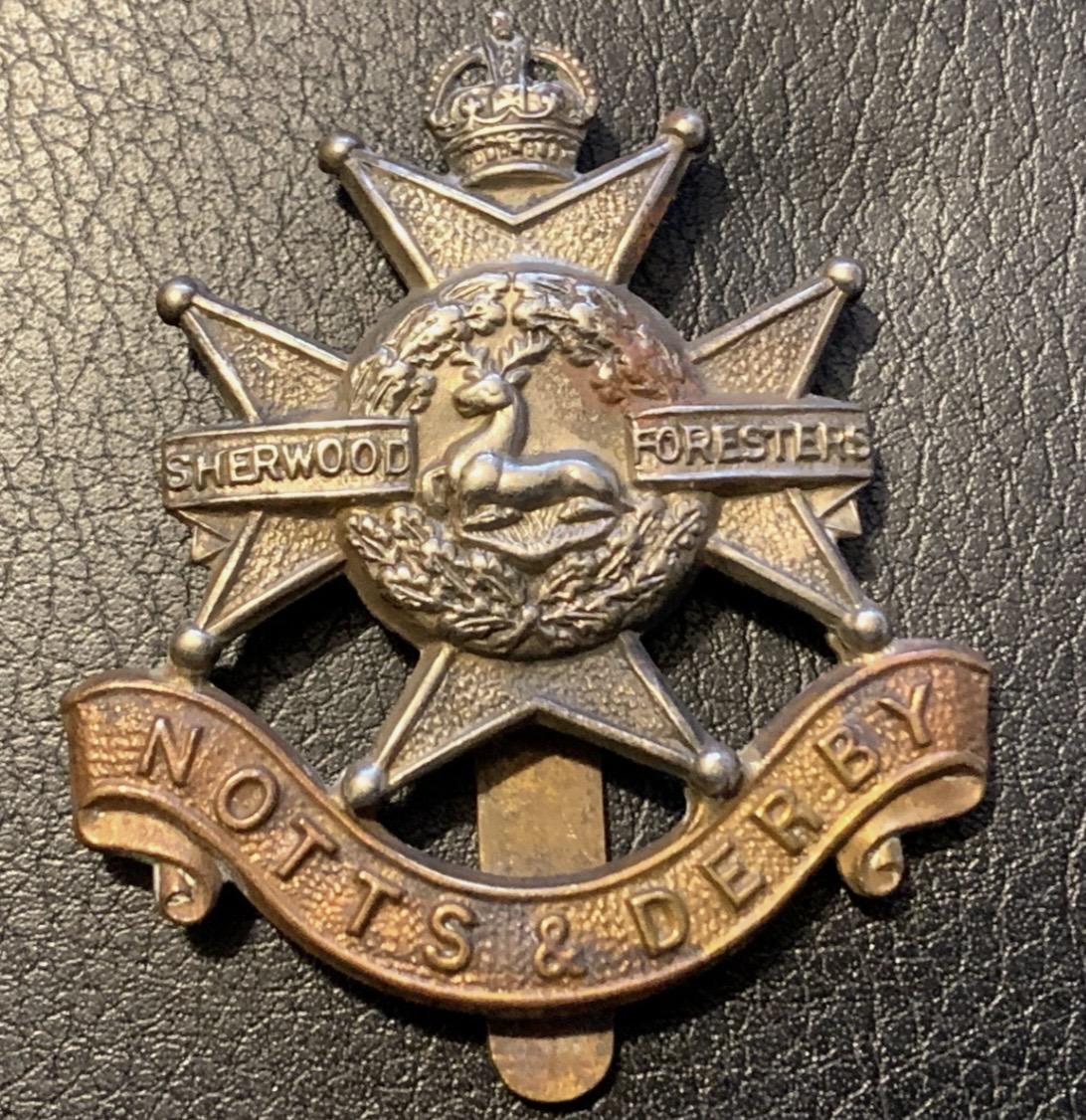
The Sherwood Foresters, formally titled The Sherwood Foresters (Nottinghamshire and Derbyshire Regiment), was an infantry regiment of the British Army formed in 1881 as part of the Childers Reforms, which reorganised the infantry of the British Army into county regiments. It was created by amalgamating the 45th (Nottinghamshire) Regiment of Foot and the 95th (Derbyshire) Regiment of Foot. These two regiments brought with them long traditions of service across the British Empire and Europe, and their merger created a county regiment responsible for recruiting primarily from Nottinghamshire and Derbyshire. The name “Sherwood Foresters” reflected the famous Sherwood Forest of Nottinghamshire and the local identity of the men who served within it.
At its formation in 1881 the regiment consisted of two regular battalions, a militia battalion and volunteer battalions. A British infantry battalion at full strength during the late nineteenth century typically comprised between 800 and 1,000 officers and men, meaning the regular component of the regiment alone would have numbered around 1,600 to 2,000 soldiers in peacetime, with additional militia and volunteer forces raising the total strength significantly. As the years passed and especially during wartime, the regiment expanded far beyond this. During the First World War the Sherwood Foresters raised over thirty battalions, including service, territorial and reserve units, bringing tens of thousands of men under its colours over the course of the conflict.
Recruitment into the regiment was strongly local. Men enlisted from towns and villages across Nottinghamshire and Derbyshire including Nottingham, Derby, Mansfield, Chesterfield, Worksop, Ilkeston and many mining communities of the East Midlands. Recruiting offices operated in major towns, and the regimental depot was based at Normanton Barracks in Derby, which served as the main training and administrative centre. Many soldiers were miners, labourers and industrial workers who joined either as regular soldiers or territorials. During major wars, particularly the First World War, large numbers of volunteers enlisted through local recruitment drives, often joining “Pals” style battalions where men served alongside friends and relatives from the same community.
The Sherwood Foresters inherited battle honours from both predecessor regiments and earned many more during its existence. From earlier campaigns these included honours such as Peninsula, Waterloo, Ava, Meeanee and various Indian and colonial engagements. After formation in 1881 the regiment gained further honours in Egypt in 1882, the Sudan campaigns and the Second Boer War between 1899 and 1902, where battalions served in South Africa and participated in actions such as Paardeberg and operations across the Transvaal and Orange Free State.
During the First World War the regiment served with distinction on multiple fronts. Battalions fought on the Western Front in France and Belgium, at Gallipoli, in Italy and in the Middle East. On the Western Front Sherwood Foresters battalions took part in major battles including the Battle of the Somme in 1916, the Battle of Passchendaele in 1917, Arras, Ypres and the final Hundred Days offensive of 1918. At Gallipoli, the 1/6th and 1/8th battalions of the Territorial Force landed and fought in the harsh conditions of trench warfare and disease. Other battalions served in Italy after 1917, participating in the fighting along the Piave River. The regiment suffered heavy casualties during the war but gained a reputation for resilience and steadfastness.
Between the wars the regiment continued imperial service, with battalions stationed in various parts of the British Empire including India, Ireland and the Middle East. When the Second World War began in 1939 the Sherwood Foresters again expanded. Its battalions fought in the early campaigns in France in 1940, the North African campaign, the Italian campaign and in North-West Europe following the D-Day landings in 1944. The 2nd Battalion was part of the British Expeditionary Force in France and later fought in North Africa and Italy. Other battalions served with distinction in Tunisia, at Anzio and in the advance through Italy, while additional units fought in the Normandy campaign and the liberation of Western Europe.
Across its history the regiment amassed a significant number of battle honours reflecting service across Europe, Africa, Asia and the Middle East. These honours included Egypt 1882, South Africa 1899–1902, Mons, Ypres, Somme, Arras, Gallipoli, Italy 1917–18, North Africa 1940–43, Anzio, Italy 1943–45 and North-West Europe 1944–45 among many others. The regiment’s colours and traditions recorded these honours as a testament to its long and active service.
The Sherwood Foresters were awarded a total of twenty Victoria Crosses, the highest award for gallantry in the face of the enemy available to British and Commonwealth forces. These awards were earned across various conflicts, particularly during the First World War when acts of extraordinary bravery were frequent. Recipients included officers and enlisted men who displayed exceptional courage under fire, often at great personal risk or cost. The regiment took great pride in this high number of Victoria Crosses, which reflected the bravery of its soldiers.
In terms of bases within the United Kingdom, the regimental depot remained at Normanton Barracks in Derby for much of its existence after 1877, serving as the training centre for recruits from Nottinghamshire and Derbyshire. Nottingham also played an important role in recruitment and regimental identity. Territorial battalions were based in drill halls across the two counties, allowing local men to serve part time while maintaining civilian employment. After the Second World War the regiment saw reductions as the British Army contracted, but it continued to maintain its East Midlands identity.
In 1970 the Sherwood Foresters were amalgamated with the Worcestershire Regiment to form the Worcestershire and Sherwood Foresters Regiment. This new regiment later became part of the Mercian Regiment in 2007, ensuring that the traditions and battle honours of the Sherwood Foresters continue within the modern British Army. The regiment remains an important part of the military heritage of Nottinghamshire and Derbyshire, remembered for its local character, extensive service across the world and distinguished record of bravery.