M18 Hellcat Tank Destroyer
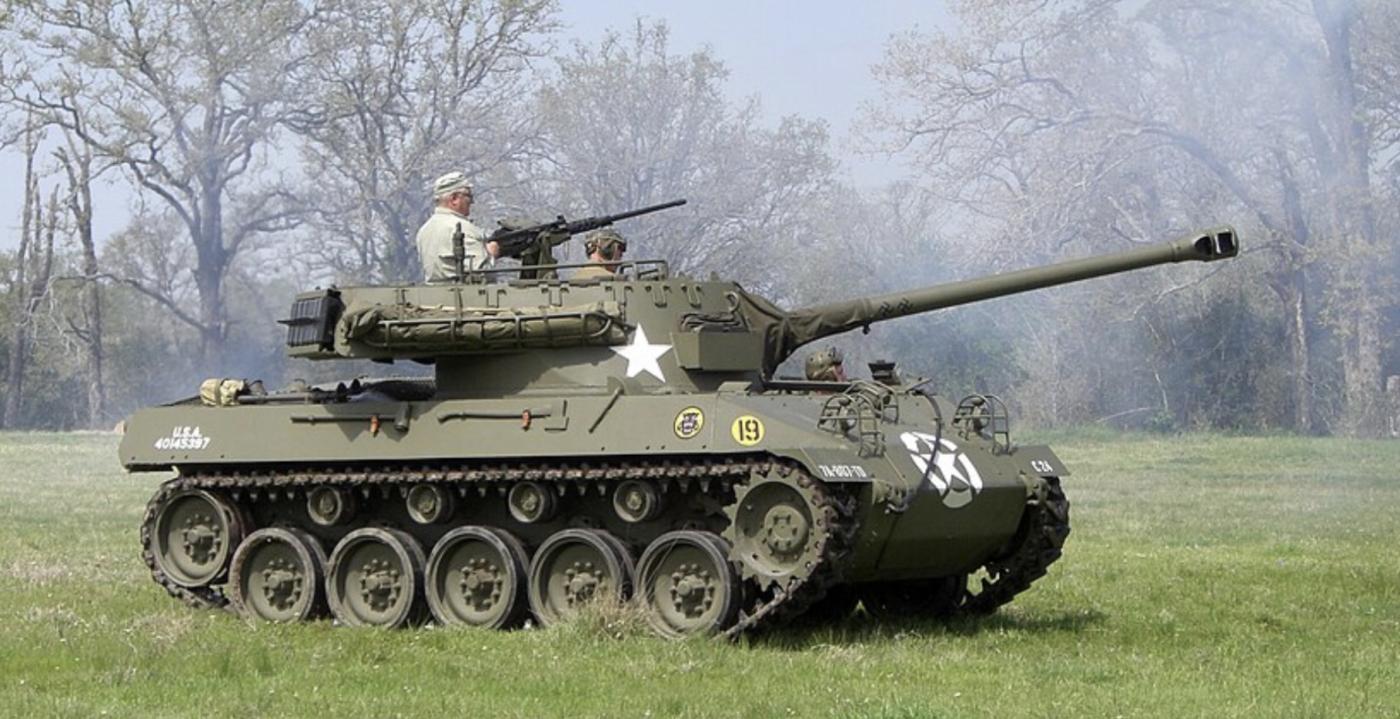
The American M18 Hellcat was one of the most remarkable armored vehicles of the Second World War, combining speed, firepower, and tactical agility in a way that no other tank destroyer of the era quite matched. Developed for the U.S. Army by the Buick division of General Motors, and designed under the direction of engineer Harold E. Woodward, the Hellcat was the result of an effort to create a fast, lightweight vehicle that embodied the tank-destroyer doctrine: strike hard, relocate quickly, and avoid prolonged slugging matches with heavier enemy armor. Between July 1943 and October 1944, a total of 2,507 M18s were produced, making it the most numerous American tank destroyer built on a dedicated chassis.
The designers achieved the Hellcat’s celebrated mobility by aggressively reducing weight. Instead of heavy armor, the vehicle used thin welded steel plating—just enough to stop small arms and shell fragments—and relied on speed as its main defense. The engineers equipped it with a Wright R-975 radial aircraft engine, giving it rapid acceleration and an extraordinary top road speed approaching 55 mph (about 88 km/h). This made the Hellcat the fastest tracked armored fighting vehicle of World War II, a title it still effectively holds. Its torsion-bar suspension, unusual for American vehicles at the time, gave it a smooth, stable ride even at high speeds.
Despite its light construction, the M18 carried potent firepower. Its main armament, the 76 mm M1A1 or M1A2 gun, used the same high-velocity rounds found in upgraded Sherman tanks and could penetrate the frontal armor of most German tanks when using specialized ammunition like HVAP. A .50 caliber machine gun mounted on a ring atop the turret gave the crew a way to defend themselves against infantry or aircraft. The turret was fully rotating and open-topped, which improved visibility and communication but left the crew vulnerable to shrapnel, snipers, and bad weather. A standard crew consisted of five men: commander, gunner, loader, driver, and assistant driver/radio operator.
The Hellcat’s most famous contribution came during the Battle of the Bulge in December 1944. In the chaos of the German surprise offensive, M18 units used their mobility to strike advancing enemy armor, then quickly reposition before German guns could retaliate. One of the most notable actions occurred with the 705th Tank Destroyer Battalion at Bastogne, where Hellcats helped hold off repeated armored assaults while the surrounded defenders waited for relief. Their ability to dash between defensive positions allowed small numbers of vehicles to create the illusion of stronger forces and inflict significant damage on German tanks attempting to break through.
Aside from its battlefield achievements, several interesting details highlight the character of the Hellcat. Crews often reported that the vehicle handled like a sports car compared to other tracked machines, and many enjoyed the sense of speed and maneuverability. Because the engine was originally from an aircraft design, the Hellcat produced a distinctive high-pitched whine during acceleration that became part of its battlefield identity. The thin armor also had a practical upside: the vehicle was light enough to be more easily recovered, transported, or repaired than heavier tanks. After the war, the M18 served with several nations, and in some countries—even as late as the 1990s—Hellcats were still in limited reserve or training roles, a testament to the durability of the original design.
The M18 Hellcat ultimately stands out because it did exactly what it was created to do. It was never meant to trade blows with German heavy armor; instead, it was built to outmaneuver, outflank, and outthink the enemy. Its blend of speed, firepower, and tactical effectiveness made it one of the most memorable American armored vehicles of the war and a machine whose reputation endures long after its final combat missions.