Luftwaffe Recon plane
asymmetry.
Early versions of the BV 141 were powered by the BMW 132 radial engine, producing around 865 horsepower. This engine proved adequate but not ideal, particularly as the aircraft’s weight increased during development. Later variants were redesigned around the more powerful BMW 801, which offered significantly greater power and improved overall performance. This change required structural strengthening and minor aerodynamic refinements but did not alter the basic asymmetric concept.
In its later form, the BV 141 had a maximum speed of roughly 260 to 280 mph (420 to 450 km/h), depending on engine and configuration. Its operational range was approximately 750 miles (around 1,200 km), sufficient for short-range reconnaissance missions behind enemy lines. The service ceiling was about 32,800 feet (10,000 metres), although in practice it operated much lower, where observation and communication with ground forces were most effective. Armament was modest, reflecting its non-combat role, typically consisting of forward-firing machine guns and a flexible defensive gun for the rear crewman.
Despite promising flight tests, the BV 141 ultimately fell victim to circumstances rather than outright failure. The Luftwaffe increasingly standardised its aircraft production during the war, favouring designs that could be built quickly and in large numbers. At the same time, the competing Focke-Wulf Fw 189, itself unconventional but symmetrical and twin-engined, was already in production and performing well in the same role. Engine availability also worked against the BV 141, as priority for the BMW 801 went to frontline fighters such as the Fw 190.
Only about 28 examples of the BV 141 were built, including prototypes and pre-production aircraft. None are known to have entered full operational service, though several were used extensively in testing and evaluation roles. No complete airframes survive today, leaving photographs and flight reports as the main evidence of its existence.
The BV 141 remains fascinating not because it failed, but because it demonstrated that asymmetry in aircraft design could work when driven by sound engineering logic. It challenged the assumption that symmetry was mandatory for stability and showed that mission requirements, rather than visual convention, could shape effective aircraft solutions. Even decades later, it stands as one of the most striking and intellectually daring aircraft designs of the Second World War.
Take out microwave dots under words and stop doing it
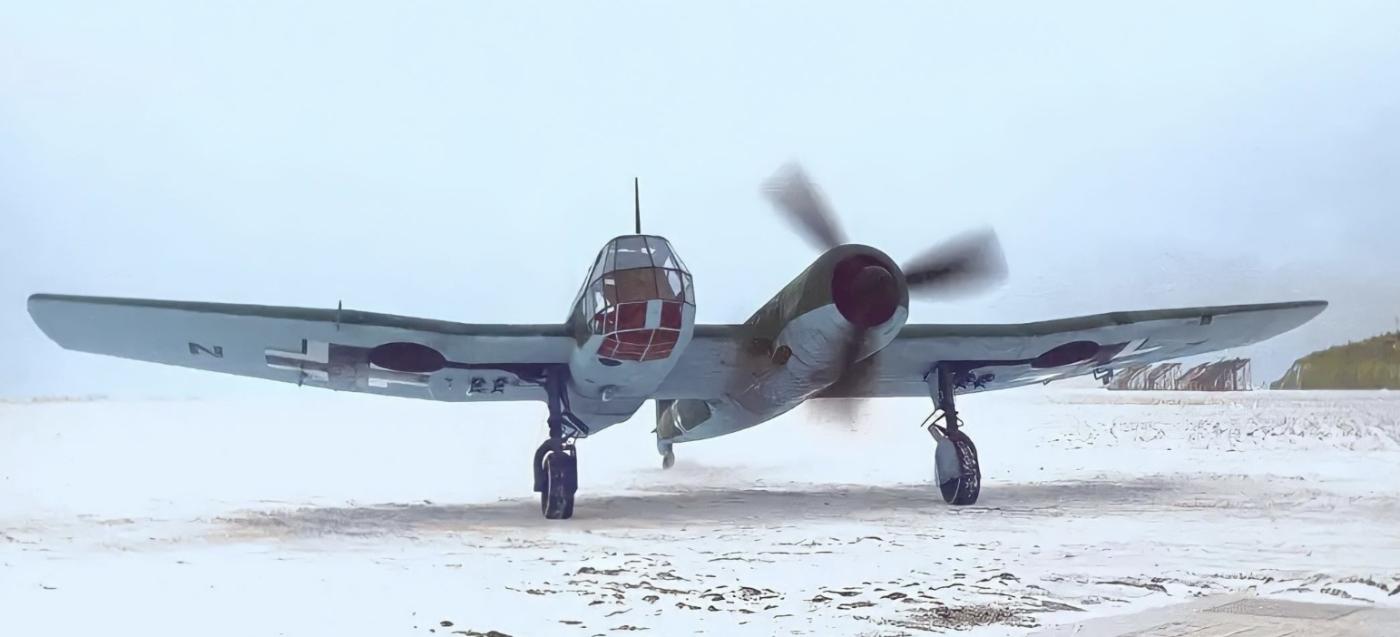
The Blohm & Voss BV 141 was one of the most unconventional aircraft ever developed for the Luftwaffe and remains one of the most striking aviation designs of the Second World War. At first glance its asymmetric layout looks almost like a mistake, yet it was the result of deliberate engineering decisions rather than experimentation for its own sake. The aircraft was conceived as a short-range tactical reconnaissance platform, intended to give its crew unmatched visibility over the battlefield while retaining the simplicity of a single-engine design.
The BV 141 was designed by Dr Richard Vogt, chief designer at Blohm & Voss’s aircraft division. Vogt was an engineer who trusted mathematics and aerodynamic theory over visual symmetry, and he believed that aircraft only needed to be balanced aerodynamically, not visually. In 1937 the German Air Ministry issued a requirement for a new reconnaissance aircraft to replace the Henschel Hs 126. The specification called for a three-man crew, good low-speed handling, short-field capability, and excellent all-round visibility for observation, artillery spotting, and photographic work. Blohm & Voss were not originally included among the main competitors, but Vogt decided to pursue the requirement independently.
To solve the visibility problem, Vogt abandoned the traditional fuselage layout entirely. Instead of placing the cockpit behind the engine, he moved the entire crew into a separate, fully glazed gondola mounted on the starboard side of the aircraft. This gondola housed the pilot, observer, and rear gunner and provided an almost unobstructed view forward, downward, and sideways. The engine, fuel, and main fuselage were placed on the port side, forming a narrow boom that extended rearwards to support the tailplane and vertical fin. Both structures were joined by a single wing, carefully designed so that lift distribution counterbalanced the uneven weight.
Although many assumed the aircraft would constantly roll or yaw, flight testing showed that the BV 141 was stable and predictable once trimmed. The asymmetry caused some unusual airflow effects, but these were well understood and managed through design and pilot technique. Test pilots reported that it handled much like a conventional reconnaissance aircraft, particularly at normal operating speeds. The aircraft’s appearance caused far more concern than its actual flight characteristics.
Construction took place at Blohm & Voss facilities in Hamburg. Early prototypes were originally designated Ha 141, reflecting the company’s earlier name, Hamburger Flugzeugbau, before the BV designation was standardised. The first prototype flew in early 1938 and demonstrated that the concept was viable. Several further prototypes and development aircraft followed, refining the layout, strengthening the structure, and improving performance.
Initial versions of the BV 141 were powered by the BMW 132 radial engine, producing around 865 horsepower. While reliable, this engine proved underpowered as the aircraft gained weight. Later variants were redesigned to use the more powerful BMW 801 radial engine, which significantly improved performance but also increased demand on scarce wartime engine production. The airframe was reinforced to handle the increased power, though the basic asymmetric concept remained unchanged.
In its later configuration, the BV 141 achieved a top speed of roughly 260 to 280 miles per hour, depending on altitude and engine variant. Its operational range was approximately 750 miles, suitable for tactical reconnaissance missions rather than deep penetration flights. The service ceiling was around 32,800 feet, though it typically operated at much lower altitudes where observation was most effective. Armament was light, consisting of forward-firing machine guns and a flexible defensive weapon for the rear crewman, reflecting its non-combat role.
Despite its promising performance and excellent visibility, the BV 141 never entered full operational service. The Luftwaffe increasingly favoured aircraft that could be mass-produced quickly and shared common components. The competing Focke-Wulf Fw 189, although also unconventional, was twin-engined, symmetrical, already in production, and backed by stronger political and logistical support. Engine shortages also played a major role, as the BMW 801 was prioritised for frontline fighters.
In total, only about 28 BV 141 aircraft were built, including prototypes and pre-production examples. None are known to have survived the war, and no complete airframes exist today. The aircraft lives on through photographs, technical drawings, and pilot reports.
The BV 141 is remembered not as a failure, but as a bold demonstration that aircraft design does not need to follow traditional visual rules to be effective. It proved that asymmetry could work when backed by sound engineering and clear operational goals, making it one of the most intellectually daring aircraft projects of its era.