Long Range Desert Group
The Long Range Desert Group was formed in 1940 in the early stages of the North African campaign. Its creator was Major Ralph Bagnold of the British Army, an explorer who had spent years studying the Libyan Desert before the war. Bagnold understood the terrain, the climate and the navigation challenges better than almost anyone alive, and his experiences directly shaped the unit’s structure, equipment and methods. He proposed an organisation that could move deep behind enemy lines, gather intelligence and disrupt Axis operations in vast areas where traditional units could not operate effectively.
The group originally consisted of around 150 men, though its strength grew to about 350 as the war progressed. Its personnel came from a diverse mix of backgrounds but were mainly drawn from New Zealanders, Rhodesians, British volunteers and other Commonwealth troops. Many were farmers, bushmen or men with desert or remote-area experience, chosen for their resilience, independence and practical skills rather than for formal military attributes. They were expected to navigate, maintain their vehicles, survive in extreme conditions and make decisions in small, isolated patrols operating hundreds of miles from support.
The purpose of the LRDG was not to fight set-piece battles but to act as the eyes and ears of the Allied forces across the desert. Their missions included reconnaissance, mapping uncharted regions, raiding enemy airfields, ambushing supply convoys, guiding other special forces such as the SAS, and reporting on enemy troop movements. Their ability to travel far into Axis-held territory without being detected made them invaluable. In many cases the LRDG opened routes through the desert that no military force had used before, allowing Allied operations to bypass conventional front lines.
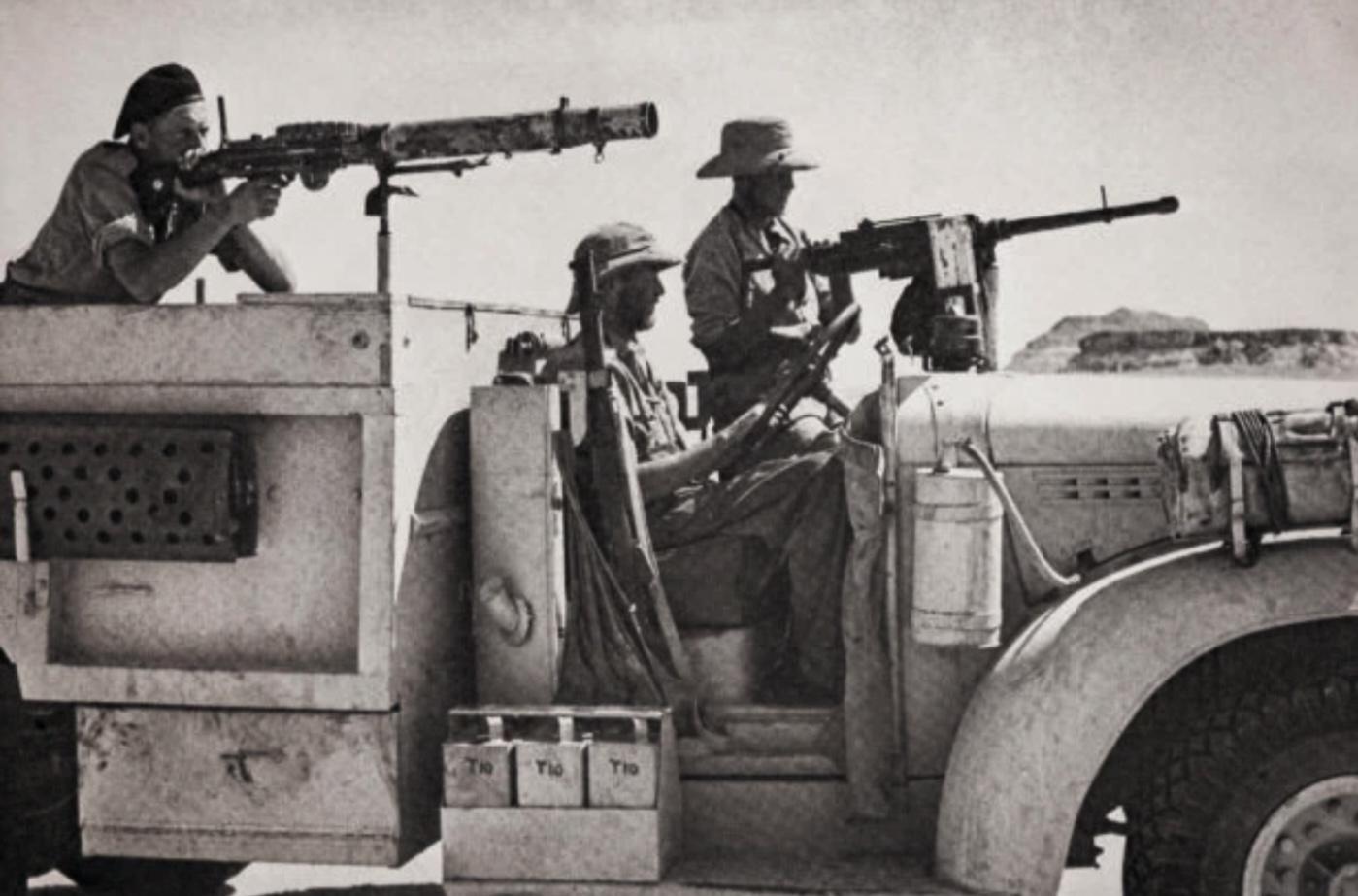
Their equipment was selected for reliability and endurance rather than speed or armour. The backbone of the group was the Chevrolet WB or CMP 30-cwt truck, stripped of unnecessary weight, fitted with extra sand channels, water and fuel tanks, and often customised by the men themselves. Each vehicle carried weapons such as Lewis guns, Vickers K guns, Boys anti-tank rifles early in the war, and later Brens and captured Italian or German machine guns. They relied heavily on sun compasses because magnetic compasses were unreliable in the desert, and they carried large stocks of food, fuel and spare parts to sustain weeks of operations without resupply. Their navigation skills became legendary, particularly through the use of Bagnold’s own desert navigation techniques.
The LRDG operated almost entirely at night when necessary, camouflaged during the day and constantly shifting positions. They prided themselves on discipline in movement and radio silence, using wireless sets only when essential. They often collected intelligence simply by watching enemy activity for days from hidden observation posts, recording every detail and then disappearing back into the desert. Their information shaped Allied planning, including preparations for Operation Compass and later operations involving the Eighth Army.
One of the more interesting aspects of the group’s history is that it rarely suffered heavy casualties despite working in extremely hazardous conditions. Their success depended on avoiding unnecessary combat, and they were respected even by enemy forces for their professionalism. They also cooperated closely with other special units; for example, the SAS relied on the LRDG for navigation and transport in its early years, and many of the SAS’s most effective early raids were made possible by LRDG patrols.
The LRDG was eventually disbanded in 1945 after the North African and Aegean campaigns had ended. Although it was a relatively small unit, its influence on later special forces doctrine was profound. Its emphasis on mobility, self-reliance, unconventional tactics and deep reconnaissance laid the groundwork for many special operations units that followed.