Lieutenant General Arthur Percival
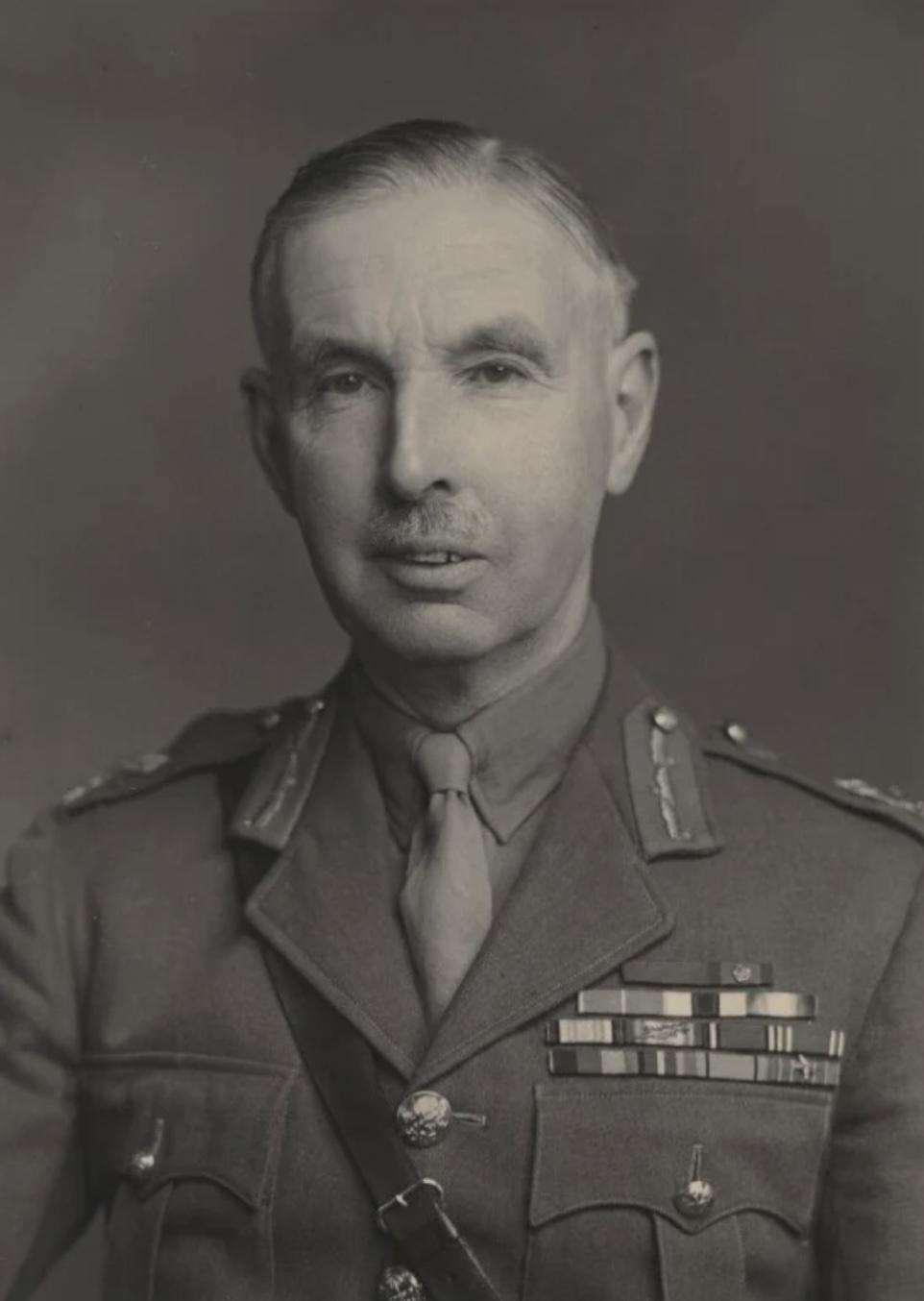
Lieutenant General Arthur Percival remains one of the most debated British commanders of the Second World War, chiefly remembered as the officer who presided over the surrender of Singapore in February 1942. While his name is often associated with defeat, Percival’s life and career were more complex, shaped by long service, administrative competence, and the limitations of imperial strategy in the face of modern warfare.
Arthur Ernest Percival was born on 26 December 1887 in Aspenden, Hertfordshire, into a middle-class English family. He was educated at Rugby School and later at the Royal Military College, Sandhurst, reflecting a conventional path into the officer class of the British Army. Commissioned into the Essex Regiment in 1906, Percival began his career in an army still shaped by imperial policing and colonial garrison duty rather than large-scale continental war. These early postings emphasised discipline, organisation, and administration, skills that would define much of his later reputation.
The First World War marked a turning point in Percival’s professional life. Serving on the Western Front, he proved himself an able staff officer rather than a flamboyant battlefield commander. He was wounded several times and earned a reputation for diligence and bravery under fire, receiving the Distinguished Service Order and the Military Cross. His wartime experience reinforced his belief in careful planning and methodical defence, traits valued within the interwar British Army, which increasingly relied on staff expertise to compensate for reduced manpower and budgets.
During the interwar years, Percival’s career advanced steadily. He attended the Staff College at Camberley and held a series of instructional and staff appointments, including work on intelligence and training. One notable episode was his role in suppressing the Irish War of Independence, where he became involved in counter-insurgency operations and was later targeted in an assassination attempt by the IRA. This experience deepened his understanding of internal security and irregular warfare, but it also contributed to his reputation as a stern, rule-bound officer rather than an inspirational leader.
By the late 1930s, Percival had risen to senior rank and was regarded as reliable and professional, if uncharismatic. In 1941, with Britain already at war, he was appointed General Officer Commanding Malaya, responsible for the defence of British territories in Southeast Asia against the growing threat from Japan. The strategic situation he inherited was deeply flawed. Forces were understrength, air power was inadequate, and planning was based on outdated assumptions that any Japanese attack would be slow, limited, and easily contained.
When Japanese forces invaded Malaya in December 1941, they rapidly overturned these assumptions. Using speed, surprise, and combined arms tactics, Japanese units advanced down the peninsula with remarkable efficiency. Percival’s forces, composed of British, Australian, Indian, and local troops, were repeatedly outflanked and forced to retreat. Percival himself favoured a cautious, defensive approach, but the pace of the Japanese advance left little opportunity to establish firm defensive lines.
The campaign culminated in the siege of Singapore in February 1942. Despite the island’s reputation as an impregnable fortress, its defences were oriented toward naval attack rather than land assault. With water supplies threatened, airfields lost, and civilian casualties mounting, Percival concluded that further resistance would lead to unnecessary destruction without realistic hope of relief. On 15 February 1942, he surrendered Singapore to Japanese General Tomoyuki Yamashita, marking the largest surrender of British-led forces in history and a profound shock to imperial prestige.
Percival spent the remainder of the war as a prisoner of war, first in Singapore and later in camps in Taiwan and Japan. His captivity was harsh, marked by malnutrition and illness, though he survived in part due to support from fellow prisoners. Interestingly, Percival was present aboard the USS Missouri in September 1945 for the formal Japanese surrender, a symbolic moment that contrasted sharply with his own surrender three years earlier.
After the war, Percival retired from the army and lived quietly in England. He was not court-martialled or formally censured, reflecting the recognition among senior British leaders that the fall of Singapore was a systemic failure rather than the fault of one man. Nonetheless, public opinion often treated him as a scapegoat for imperial unpreparedness and strategic misjudgement. Percival himself defended his actions in memoirs and interviews, arguing that he had done the best he could with inadequate resources and flawed strategic guidance.
In his later years, Percival worked with veterans’ organisations and supported former prisoners of war, drawing on his own experiences of captivity. He died in 1966, still a controversial figure. Historians today tend to view him as a competent but limited commander, shaped by an army and an empire unprepared for the realities of modern, fast-moving warfare. His story illustrates how individual leadership can be overwhelmed by strategic neglect, and how the legacy of a commander can become inseparable from the wider failures of the system he served.