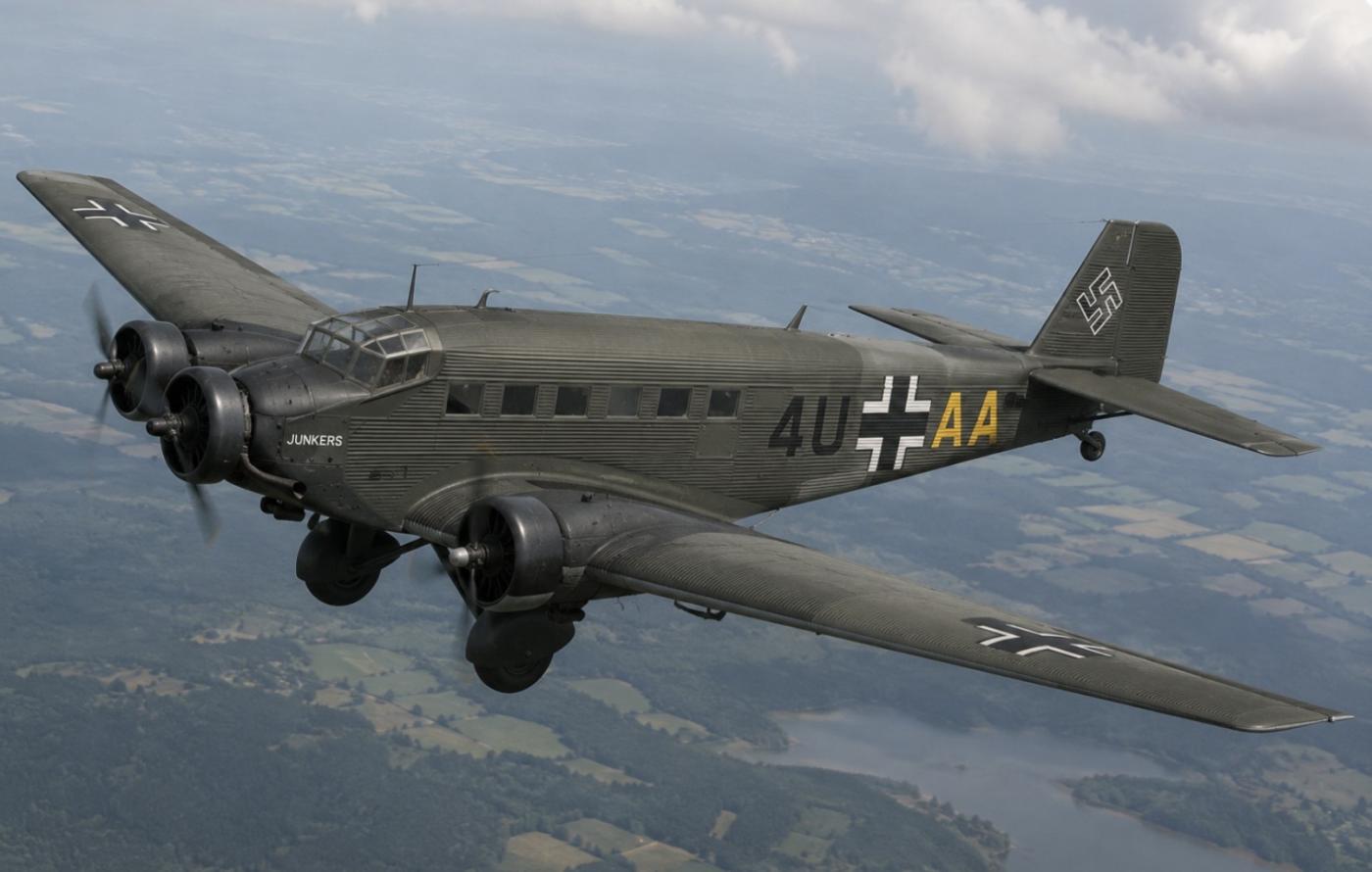
JU 52
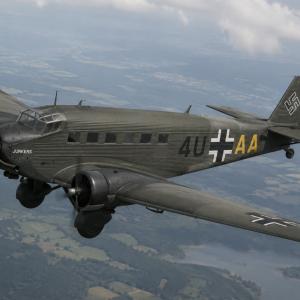
The German Junkers Ju 52 was one of the most important transport aircraft of the Second World War and became closely associated with German airborne operations. Nicknamed “Tante Ju” or “Aunt Ju” by its crews because of its reliability, the aircraft served across Europe, North Africa, and the Soviet Union. Originally designed during the early 1930s as a civilian airliner and cargo aircraft, it was later adapted into a military transport and became a key part of the Luftwaffe’s logistics system.
The aircraft was designed by Ernst Zindel for Junkers. The prototype first flew in 1930. Early versions used a single engine, but this proved inadequate, leading to the famous three-engine design that entered full production. Around 4,800 aircraft were built between 1931 and 1945 in Germany and occupied Europe.
One of its most distinctive features was the corrugated metal skin covering the airframe. This ribbed construction made it extremely strong and durable, though less aerodynamic than smoother aircraft. Its fixed landing gear and rugged structure allowed operations from rough airfields and difficult terrain.
Most wartime versions were powered by three BMW 132 radial engines producing about 725 horsepower each. The three-engine arrangement improved safety and reliability because the aircraft could often continue flying even after losing one engine.
The transport normally carried a crew of three and could transport 17 to 18 soldiers or around a dozen paratroopers with full equipment. Cargo capacity was roughly 1,500 kilograms, and medical evacuation versions could carry wounded personnel on stretchers.
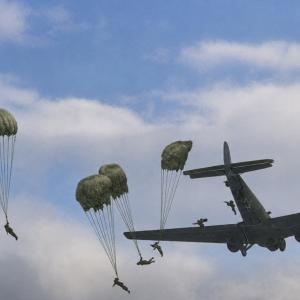
The aircraft became famous for carrying German Fallschirmjäger paratroopers during early Blitzkrieg campaigns. It played a major role in the invasions of Norway, the Netherlands, and Belgium in 1940, and later during the airborne assault on Crete in 1941. During these operations, paratroopers jumped from side doors while the transports flew in low formation.
Its maximum speed was about 265 kilometres per hour, which made it slow compared with later wartime aircraft. However, it had excellent low-speed handling and could take off and land on short runways. Operational range was usually between 800 and 900 kilometres depending on cargo load.
Throughout the war it carried troops, fuel, ammunition, food, and medical supplies. It also towed military gliders and evacuated wounded soldiers. In North Africa it supported the forces of Erwin Rommel, while on the Eastern Front it supplied isolated German units during severe winter fighting.
One of its most difficult operations came during the Battle of Stalingrad in 1942–43, when Germany attempted to supply the trapped Sixth Army by air. Heavy losses from Soviet fighters, anti-aircraft fire, and harsh weather showed the limits of Germany’s transport fleet.
Defensive armament usually consisted of a small number of machine guns mounted in dorsal and side positions. Even with added guns on later models, it remained vulnerable to enemy fighters because it was designed primarily as a transport rather than a combat aircraft.
Although outdated by the middle of the war, the aircraft stayed in service because Germany lacked enough modern replacements. Its dependability and versatility kept it flying until the final months of the conflict.
After the war, surviving examples continued operating with civilian airlines and foreign air forces for many years. Several survive today in museums and flying condition, remembered as one of the most recognizable transport aircraft of the Second World War.