M31 Cutlery Set
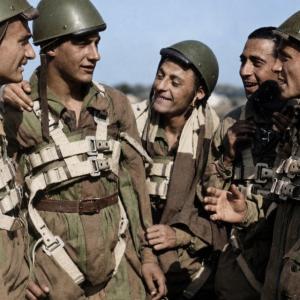
The German World War Two field cutlery set is one of the most recognizable and practical pieces of Wehrmacht personal equipment. Known among collectors as the “Essbesteck” or “M31 field cutlery set,” it combined several eating utensils into a compact nested system that could easily be carried inside a bread bag, mess kit, or tunic pocket. The set reflected the German military preference for functional, durable engineering and became a standard item associated with frontline life from Poland in 1939 through the final battles in 1945.
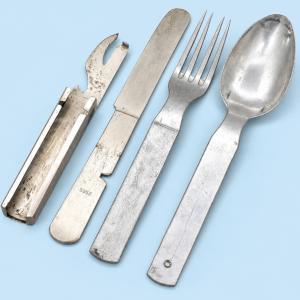
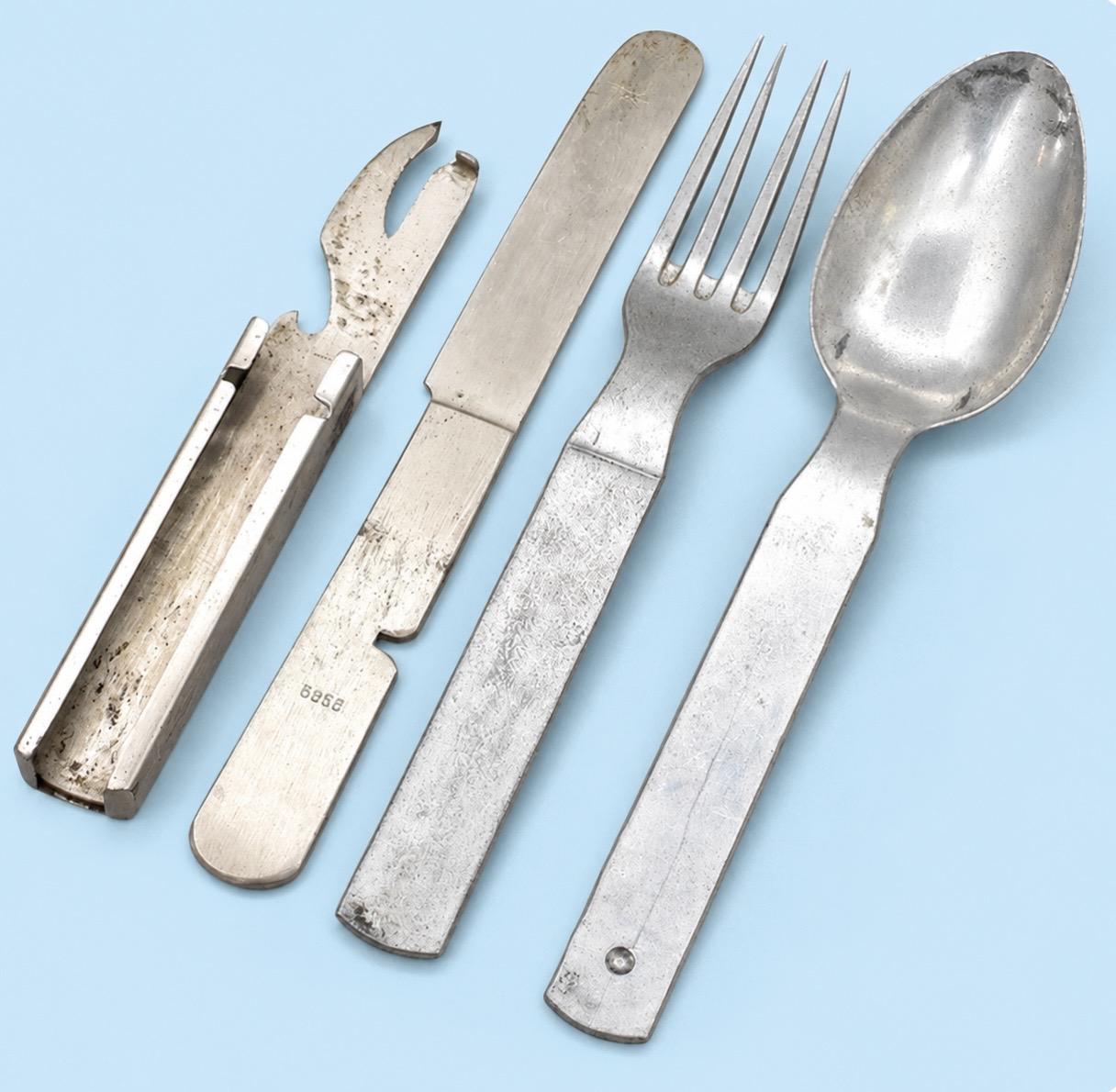
The standard wartime set normally consisted of four pieces: a knife, fork, spoon, and a combined can opener and bottle opener that also acted as the outer retaining frame. All four components slid together into a single compact unit. The bottle opener section locked the other pieces in place so they would not rattle during movement. German soldiers valued this feature because noise discipline in combat zones was important, especially during night operations or patrols.
The design was ingenious in its simplicity. The can opener and bottle opener had a long slotted body. The knife, fork, and spoon handles slid into this body from alternating directions until the entire assembly formed a neat rectangular package. Once assembled, the utensil set was small enough to fit in the palm of a hand. This compact engineering reflected the broader German military philosophy of maximizing utility while reducing unnecessary bulk.
Unlike the famous Swiss Army knife, there is no single documented inventor credited with designing the Wehrmacht field cutlery set. The design evolved from earlier German Imperial Army and civilian camping utensils used before the First World War. Germany already had a strong tradition of folding and compact eating tools in hunting, hiking, and military culture during the late nineteenth century. The Wehrmacht standardized the concept during the 1930s as part of its wider equipment modernization program. The final wartime configuration emerged from military procurement offices rather than from a famous industrial designer. The system emphasized mass production and practicality rather than aesthetics.
A large number of German companies manufactured these sets during the war. Most were cutlery firms located in Solingen, the famous German blade-making center often called the “City of Blades.” Solingen had centuries of experience producing knives, swords, and metal utensils, making it the ideal industrial center for military field cutlery production. Common manufacturers included Carl Eickhorn, J.A. Henckels, Anton Wingen Jr., Eduard Wüsthof, and Carl Prinz AG. Some sets were marked with abbreviated factory codes rather than full company names in order to simplify military contracts and wartime logistics.
Many wartime sets carry dates stamped directly into the metal handles, allowing collectors to identify the production year. Typical markings include the manufacturer’s initials, the year, and occasionally Waffenamt inspection marks. Some elite or special-issue examples also bear SS runes or Wehrmacht eagles with swastikas, although these are much rarer and heavily reproduced today.
The bottle opener component is especially interesting because it served multiple purposes. Besides opening beer bottles, it also functioned as a can opener for ration tins. German field rations often included canned meats, vegetables, and preserved foods. Soldiers depended heavily on canned supplies during campaigns in Russia and North Africa where fresh food was difficult to obtain. The integrated opener therefore became essential equipment rather than merely a convenience.
Beer remained culturally important to German troops even during wartime, and captured Allied accounts often mention Wehrmacht soldiers carrying beer bottles during periods away from the front. The inclusion of a bottle opener reflects both practicality and German social habits. It also demonstrates how military equipment designers considered everyday morale and comfort alongside battlefield requirements.
Most sets were manufactured from steel, often nickel-plated or chemically treated to resist rust. Early-war production generally displayed higher quality finishing, smoother machining, and better plating. By the later war years, material shortages and industrial strain caused a decline in quality. Late-war sets may appear rougher, thinner, or less carefully polished. Some late examples used simplified finishes or omitted decorative markings entirely.
The knife blade itself was usually plain-edged with a rounded tip, intended more for eating than combat. Unlike trench knives or bayonets, the field cutlery knife was purely utilitarian. The spoon and fork were stamped from sheet steel and designed for easy cleaning in field conditions. German soldiers frequently ate from the standard M31 mess tin, and the compact cutlery set paired perfectly with it.
An interesting aspect of the German field cutlery set is how often soldiers personalized or modified them. Many surviving examples have initials scratched into the handles, unit markings, or improvised repairs. Frontline troops sometimes wrapped cloth around the handles in winter to prevent metal from freezing against bare skin during operations on the Eastern Front.
Collectors today place enormous value on complete matching sets where all four pieces share the same maker code and year. Mixed sets are common because soldiers often lost individual pieces and replaced them from other manufacturers. Fully matching Waffen-SS marked sets are particularly rare and expensive because of their historical association and limited production.
The field cutlery set became one of the most commonly captured German souvenirs by Allied soldiers. American, British, and Soviet troops frequently brought them home after the war because they were practical, compact, and distinctly German in appearance. Many veterans continued using them for camping and fishing trips for decades afterward. Museums and private collections around the world now preserve thousands of examples.
The design proved so successful that it survived the collapse of Nazi Germany. Postwar West Germany’s Bundeswehr adopted very similar nested field cutlery systems, usually marked “BW” or “BUND.” The basic engineering concept remained largely unchanged because it worked so well in military conditions. Modern camping cutlery sold today still often follows the same nesting principle pioneered in German military sets.
There is also an interesting connection between German military cutlery culture and the broader European tradition of multifunction eating tools. Switzerland, Scandinavia, and other countries produced comparable compact military utensils. The Swiss Army knife itself incorporated bottle openers and can openers into folding military tools during the late nineteenth century. However, the German Wehrmacht set differed because it separated the utensils into full-sized eating implements while still maintaining compact storage.
Original wartime examples are now highly collectible militaria items. Collectors study manufacturing marks, steel quality, and wartime dates to authenticate them. Reproductions are widespread, especially fake SS-marked versions. Genuine examples usually show natural wear patterns, age-consistent oxidation, and correct wartime maker stamps. Sets with provenance connecting them to specific soldiers or battlefields command especially high prices.