John C.Meyer
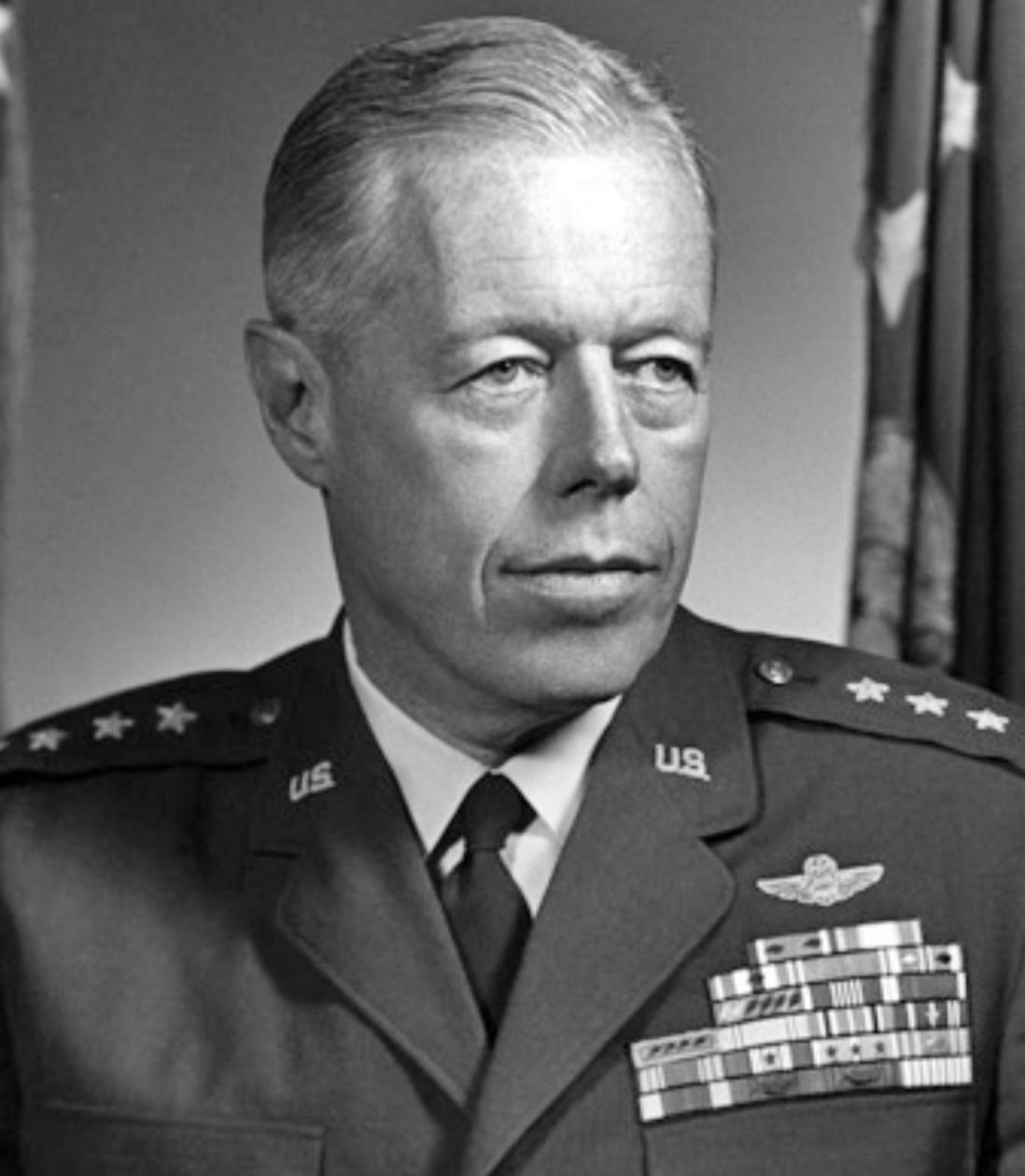
John C. Meyer was one of the most accomplished and influential officers in the history of the United States Air Force, remembered for his exceptional combat record, his leadership during the formative years of the independent Air Force, and his pivotal role in shaping Cold War air strategy. Born on April 3, 1919, in Brooklyn, New York, Meyer grew up during a period when aviation was still young and adventurous. His interest in flight emerged early, inspired by the exploits of pioneering aviators and the growing cultural fascination with airpower. After completing his schooling, he attended Dartmouth College, where he excelled academically and athletically. His disciplined mindset and natural leadership ability quickly became apparent, traits that would later define his military career.
Meyer entered the Army Air Corps as a flying cadet in 1940, driven by a desire to serve and an enthusiasm for aviation. He received his wings and commission in 1941, just as the United States was edging closer to involvement in the Second World War. Assigned to the 352nd Fighter Group, Meyer soon proved himself an extraordinary pilot. Flying the P-47 Thunderbolt and later the P-51 Mustang, he amassed an impressive combat record in the European Theater. Meyer distinguished himself as an aggressive and precise fighter pilot, ultimately achieving ace status with 24 aerial victories. His leadership ability also came to the forefront as he rose to command the 487th Fighter Squadron. One of the most famous actions of his combat career occurred on January 1, 1945, during Operation Bodenplatte, when he led a small group of fighters in a rapid and decisive response to a surprise German attack, destroying multiple enemy aircraft and rallying American defenses. By the end of the war, Meyer had become one of the highest-scoring American aces in the European campaign and had earned decorations including the Distinguished Service Cross and the Silver Star.
Following World War II, Meyer remained in the service during a time of rapid transformation. With the creation of the independent U.S. Air Force in 1947, there was great need for experienced combat leaders who could guide strategy and organization. Meyer transitioned naturally into this environment. During the Korean War, he again flew combat missions, this time in jets, becoming one of the rare pilots to achieve aerial victories in both propeller-driven and jet aircraft. He also held key staff and command positions that helped shape jet fighter tactics and the operational structure of the Air Force in the early Cold War era.
As he rose through the ranks, Meyer became deeply involved in the development and oversight of Strategic Air Command (SAC). Under the leadership of Curtis LeMay, SAC became the backbone of America’s nuclear deterrence strategy, and Meyer was one of the officers entrusted with ensuring its readiness, discipline, and operational sophistication. His reputation for precision and his no-nonsense approach to leadership made him an ideal fit for an organization defined by high alert standards and exacting procedures. In 1964 he became Vice Commander in Chief of SAC, and in 1966, he assumed command of the Eighth Air Force, one of SAC’s major operational arms.
Meyer reached the pinnacle of his career in 1970 when he was appointed Commander in Chief of Strategic Air Command and promoted to four-star general. In this role, he oversaw the entirety of America’s strategic bomber and intercontinental ballistic missile forces during a tense period of the Cold War. His responsibilities included maintaining constant readiness, managing rapid technological advancements in nuclear delivery systems, and coordinating with national leadership on strategic policy. One interesting and often-noted aspect of his tenure was his strong advocacy for professionalism and discipline within SAC. Meyer believed deeply in the deterrent value of absolute preparedness, and he implemented and reinforced rigorous training and evaluation standards. Many who served under him remembered him as demanding but deeply committed to the welfare and effectiveness of the force.
After retiring from the Air Force in 1974, Meyer remained connected to aviation and defense circles. He worked in private industry and contributed his expertise to organizations concerned with national security and military history. Despite his high rank and long list of accomplishments, he was known for being thoughtful, articulate, and reflective about the role of airpower in global affairs. His wartime experiences stayed with him, and he occasionally spoke about the psychological and moral dimensions of air combat and command responsibility.
John C. Meyer died on December 2, 1975, at the age of fifty-six, leaving behind a legacy defined by courage, innovation, and service. His career spanned from the era of early fighter aviation through the nuclear age, and he played an important role in shaping both tactical air combat and the strategic posture of the United States during critical decades. Meyer is remembered not only as a decorated fighter ace, but also as one of the architects of the modern U.S. Air Force, a leader whose influence can still be felt in the service’s culture, doctrine, and strategic vision.