Japanese war diet
During the Second World War, the everyday diet of people in Japan was transformed from a modest but stable food culture into a regime of scarcity shaped almost entirely by the needs of total war. From the late 1930s onward, food was no longer treated primarily as sustenance for the population but as a strategic resource to be directed toward soldiers, factories, and imperial expansion. As the conflict widened and Japan’s access to imports collapsed, a growing proportion of the nation’s usable food supply was absorbed by the military, leaving civilians to survive on shrinking rations and improvised substitutes.
Before the war reached its most destructive phase, the Japanese diet was centered on rice, supplemented by vegetables, fish, and soy-based foods such as tofu and miso. Meat consumption was limited, but protein needs were usually met through seafood and soybeans. This pattern, while frugal, was nutritionally sound and deeply rooted in daily life. Rice in particular was more than food; it was a cultural symbol of stability and prosperity. That symbolic value made rice especially important once war began, because it was seen as the ideal fuel for soldiers and workers.
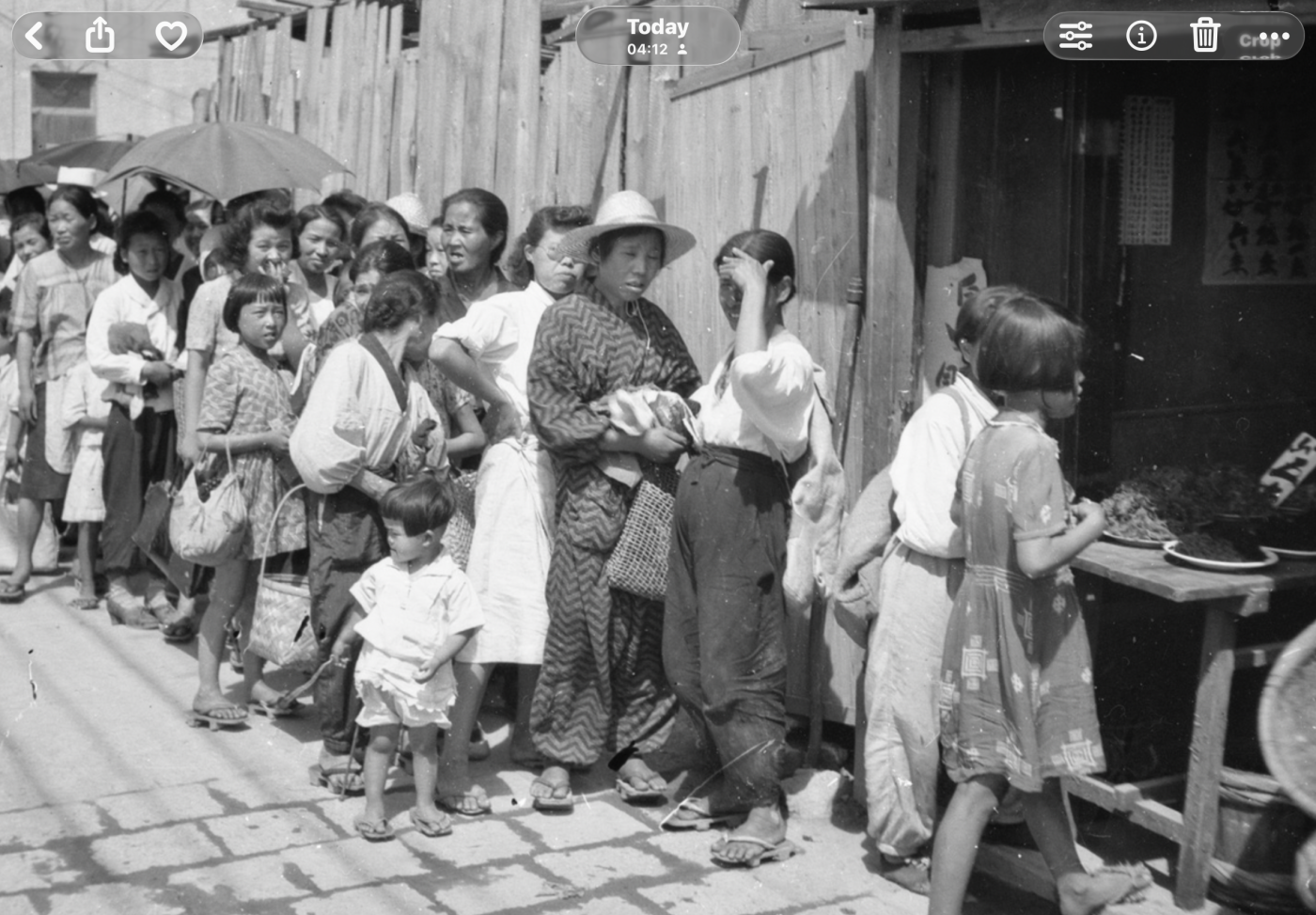
As Japan mobilized for prolonged conflict, rice production and distribution came under strict state control. The military received first priority, especially units deployed in China, Southeast Asia, and the Pacific. Civilians were placed on ration cards, with official allocations that steadily declined as the war dragged on. By the early 1940s, many households were already receiving less rice than before the war, and by 1944 the reduction had become severe. Rice was increasingly diluted with barley, millet, or other grains, and in many cases disappeared almost entirely from civilian meals. Sweet potatoes, which could be grown quickly and in poor soil, became the dominant staple for much of the population.
The rationing system was overseen by state agencies such as the Japanese Ministry of Agriculture and Forestry, which attempted to manage dwindling supplies through centralized planning. On paper, official civilian rations were often presented as sufficient to sustain health, but these figures rarely matched reality. Transportation breakdowns, corruption, air raids, and the simple fact of insufficient production meant that actual food received was often far below the announced levels. In urban areas, daily caloric intake frequently fell to levels associated with chronic malnutrition, particularly in the final year of the war.
Protein shortages were especially damaging. Fishing fleets suffered from fuel shortages and naval losses, sharply reducing the availability of fish. Meat was almost unobtainable for civilians, and even soybeans were increasingly diverted to military use or industrial processing. Tofu, once a common food, became rare, and many people relied on soy pulp or residue left over from oil extraction. Government guidance encouraged citizens to consume unconventional sources of nutrition, including wild grasses, roots, and leaves that had previously been considered animal feed or famine food.
Vegetables remained an important part of the wartime diet, but their form changed. Home gardens appeared wherever land could be found, including schoolyards and city parks. People ate sweet potato vines, pumpkin leaves, radish tops, and other parts of plants that had once been discarded. Official pamphlets promoted so-called national defense cooking, which emphasized endurance, sacrifice, and loyalty over taste or comfort. Meals were framed as a patriotic duty rather than a personal necessity.
Because official rations were rarely enough to survive on, black markets became essential to daily life. Farmers and rural families often retained more access to food, while city dwellers traded possessions, clothing, or heirlooms for rice or vegetables. This informal economy was illegal but widespread, and without it many civilians would not have survived. The gap between rural and urban nutrition widened dramatically, and social inequality became more visible as hunger deepened.
By the final year of the war, the imbalance between military and civilian consumption was stark. Soldiers continued to receive priority access to rice and preserved foods whenever supply lines allowed, while civilians endured diets dominated by sweet potatoes and coarse grains. Vitamin deficiencies were common, particularly thiamine deficiency leading to beriberi, a disease that had long plagued populations dependent on polished rice and now returned in new forms due to malnutrition. Children, the elderly, and the sick were especially vulnerable, and starvation-related deaths increased in major cities.
By 1945, the Japanese civilian diet had become a survival diet rather than a cultural one. What had once been a carefully balanced cuisine was reduced to whatever calories could be found, grown, or traded. The war effort had consumed not only resources but also the everyday rhythms of eating and living, leaving deep physical and psychological scars that persisted into the postwar years.