Tuskegee Airmen
On 19 March 1941 the United States Army Air Corps began the process that created its first all-Black flying unit. This initiative eventually produced the aviators and support personnel known as the Tuskegee Airmen. Their formation was a major moment in both military and civil rights history because the United States armed forces were still strictly segregated. Many military leaders believed Black Americans were not capable of serving as combat pilots. Establishing the unit therefore became both controversial and politically significant, driven by pressure from civil rights organisations, Black newspapers, and influential political figures who demanded opportunities for African Americans in military aviation.
The origins of the program can be traced to the late 1930s when the United States started expanding its air power as war spread across Europe and Asia. Civil rights groups such as the NAACP and the National Urban League strongly criticised discrimination in the armed forces. The Pittsburgh Courier newspaper launched a campaign calling for Black pilots in the military. At the same time the administration of President Franklin D. Roosevelt faced growing pressure from Black voters and civil rights leaders to allow greater participation in defence industries and military service.
The War Department agreed to establish a training program for Black aviators but insisted it would remain segregated. Earlier legislation in 1939 had already funded civilian pilot training at historically Black colleges. Several universities took part in the Civilian Pilot Training Program, which gave young African Americans the chance to gain early aviation experience. One of the key institutions involved was Tuskegee Institute in Alabama, whose leadership argued that it had the facilities and academic environment necessary to host military training.
New airfields and support facilities were built near the institute to support the program. One was Tuskegee Army Air Field, located several miles from the campus, which served as the main base for advanced military flight training. Another was Moton Field, used for primary flight instruction and named after Robert Russa Moton, the second president of the institute. The new installations included runways, hangars, control towers, barracks, classrooms, and maintenance areas designed to support both pilot training and technical instruction.
The first operational unit to emerge from the program was the 99th Pursuit Squadron, later renamed the 99th Fighter Squadron. It was activated in 1941 with Black enlisted personnel and eventually Black pilots, although many of the senior officers in the early period were white. The squadron initially received technical training at Chanute Field in Illinois before returning to Alabama. As the program expanded more squadrons were formed, including the 100th, 301st, and 302nd Fighter Squadrons. These later combined to form the 332nd Fighter Group.
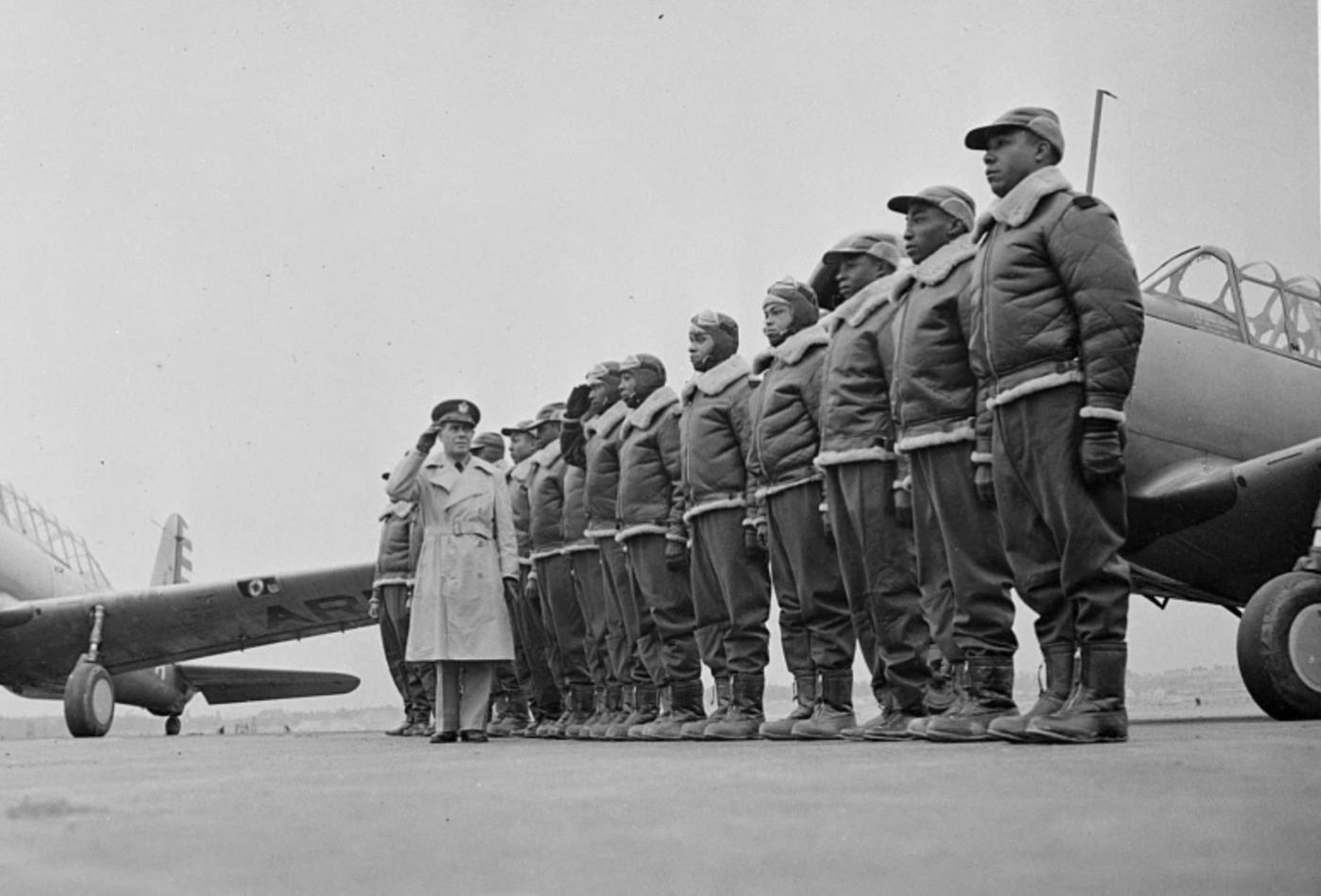
The first class of cadets began training in July 1941. Pilot training followed the same structure used for other Army Air Corps aviators but took place within the segregated system. Cadets first attended ground school before moving through primary, basic, and advanced flying stages. Early training at Moton Field used the PT-17 Stearman biplane. The next stage used the BT-13 Valiant trainer, while advanced instruction involved aircraft such as the AT-6 Texan before pilots moved on to combat fighters.
The program was demanding and highly selective. Candidates had to meet strict educational, medical, and psychological standards. Many trainees already had college education or previous civilian flight training. In addition to flying skills they studied navigation, meteorology, engineering principles, aircraft maintenance, military tactics, and aerial gunnery. The pressure was intense because many critics expected the experiment to fail, meaning the cadets carried the responsibility of proving their capability.
Between 1941 and 1946 a total of 992 Black pilots completed advanced flight training at the Alabama air base. These pilots were supported by thousands of ground personnel including mechanics, armourers, radio operators, and technicians who were also trained as part of the program. Altogether more than 14,000 Black men and women served in units connected to this aviation effort.
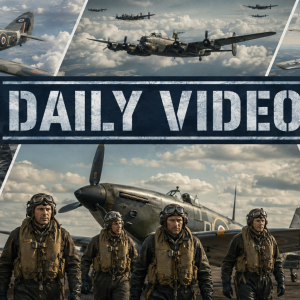
During World War II these aviators were deployed mainly in the Mediterranean theatre of operations. The 99th Fighter Squadron entered combat in North Africa in 1943 flying the P-40 Warhawk fighter. Later units flew several aircraft types including the P-39 Airacobra, P-47 Thunderbolt, and the P-51 Mustang. The Mustangs of the 332nd Fighter Group became especially well known because their aircraft tails were painted bright red, earning them the nickname “Red Tails.”
Their missions included bomber escort, ground attack operations, and air defence. One of their most important roles was protecting American heavy bombers such as the B-17 Flying Fortress and B-24 Liberator during missions over German-controlled territory. Bomber crews valued the discipline and effectiveness of the fighter escort provided by these pilots. During the war they flew more than 15,000 combat sorties and destroyed numerous enemy aircraft both in the air and on the ground.
The importance of this aviation program extended far beyond its military achievements. It directly challenged the racist assumptions that had been used to justify segregation in the armed forces. Many officials had claimed Black soldiers lacked the intelligence, discipline, or technical skill needed to operate advanced military aircraft. The success of these aviators clearly demonstrated that those claims were false.
Their achievements helped influence a major policy change after the war. In 1948 President Harry S. Truman issued Executive Order 9981, which ordered the desegregation of the United States armed forces. Although integration took several years to fully implement, the performance of these pilots and their support personnel helped provide powerful evidence that segregation had no place in the military.
The airmen also became important symbols of determination and progress in American history. Their story showed both the barriers faced by African Americans and their ability to overcome them through skill, discipline, and perseverance. Many of the pilots later went on to successful careers in aviation, engineering, business, and public service. Decades later their service was officially recognised when they were awarded the Congressional Gold Medal in 2007.
What began on 19 March 1941 as a segregated military experiment eventually produced one of the most respected groups of aviators in the history of the United States armed forces. The training program created opportunities that had never previously existed for Black pilots and played an important role in changing attitudes within the military and across American society.