
Japanese type 90 WW2 helmet
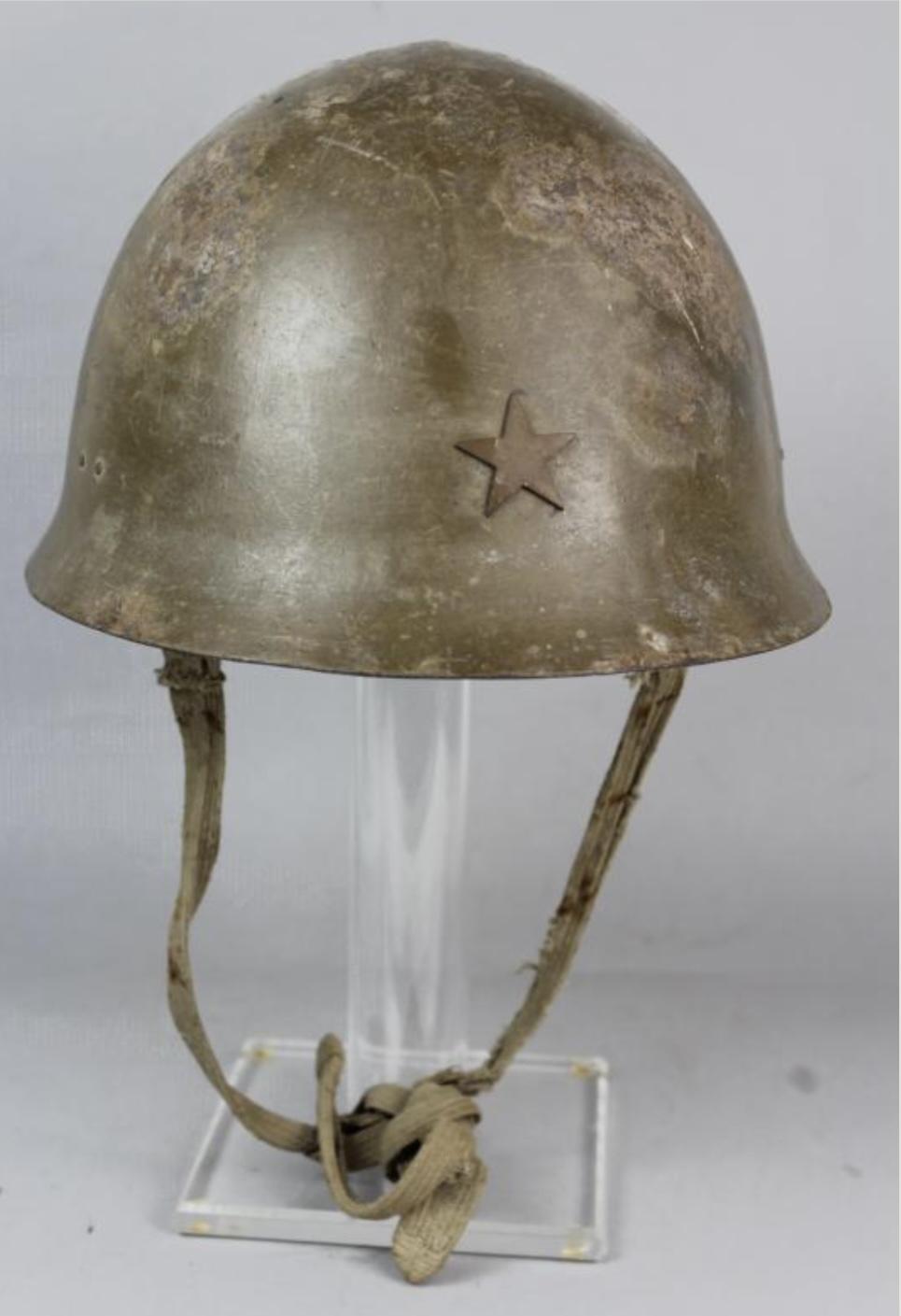
The Japanese Type 90 steel helmet was the Imperial Japanese Army’s standard combat helmet throughout the Second World War, replacing earlier experimental models and serving as the most widely used protective headgear of Japan’s wartime forces. Although often overshadowed by the more iconic shapes used by Germany or the United States, the Type 90 has a unique development story, distinctive manufacturing features, and a range of interesting variations that make it an important artifact of WWII military history.
The design of the Type 90 helmet dates to 1930, when the Japanese Army sought to standardize a steel helmet that offered better ballistic protection than the previous Type 92 prototypes. The design process was overseen by engineers within the Army Technical Bureau (Rikugun Gijutsu Honbu), rather than by a single named designer. Their goal was a helmet that balanced protection, manufacturability, and compatibility with the Japanese soldier’s field kit. The resulting helmet had a deep bowl, a modestly flared skirt, and three rivets securing the liner—features intended to protect the head and neck from shrapnel while keeping production efficient.
Manufacturing was carried out by several Japanese arsenals and subcontracted steelworks, with the largest producers being the Tokyo First Army Arsenal, the Osaka Army Arsenal, and Nagoya Arsenal. These facilities stamped the steel shells, applied the characteristic textured paint, and assembled the leather or rubberized fabric liners. Over time, especially during the height of the Pacific War, additional private factories were enlisted to keep up with demand, and as resources grew scarce, quality and consistency gradually declined. Early helmets used high-quality rolled steel and well-crafted liners, whereas late-war examples often show rougher finishes, simplified liners, and thinner chinstraps.
Exact production numbers were never publicly disclosed by the Japanese military, but surviving records and battlefield recovery estimates indicate that several million Type 90 helmets were produced between 1930 and 1945. Most historians place the figure between two and three million units, enough to equip the expanding army as it fought in China, Southeast Asia, and the Pacific islands. Despite this large production, intact early-war helmets are relatively uncommon today because many were lost in combat, repurposed after Japan’s surrender, or scavenged for steel during postwar shortages.
One interesting detail about the Type 90 is its paint. Early helmets were issued in a smooth or lightly textured mustard-brown or ochre finish. Later in the war, the Army adopted a coarser, sand-impregnated paint to reduce glare and improve camouflage. Many soldiers also hand-applied additional coverings, such as cloth nets or foliage loops, particularly in jungle environments. Another notable feature is the front insignia: a simple five-point star for the Army, or an anchor for naval landing forces. These emblems were usually painted on early, then later switched to metal badges, and finally omitted entirely as wartime shortages worsened.
The liner of the Type 90 is also a fascinating component. The standard form consisted of three leather pads attached to a cloth or leather band, each pad stuffed with cotton or kapok and adjustable with a drawstring. This design allowed ventilation in the hot climates of the Pacific. Late-war helmets sometimes used rubberized or ersatz materials due to the scarcity of leather. Chinstraps, originally of good-quality webbing or leather with metal buckles, were later simplified or replaced with cheaper substitutes.
Another interesting aspect of the Type 90 is its export and adaptation. Before WWII, Japan supplied some of its helmets to puppet states and allied forces, including Manchukuo and various collaborationist armies in China. These exported helmets sometimes carried different insignia or unique paint finishes. Additionally, during the war, Japanese marines often modified their helmets with additional padding or local camouflage to suit naval landing missions.
Collectors also note that the Type 90 helmet had a surprisingly good ballistic profile for its time. Testing after the war showed that its deep shape deflected shrapnel effectively, though it was less resistant to direct bullet impacts than some Western helmets. Its weight and balance were generally considered acceptable by Japanese soldiers, though field reports occasionally mention discomfort during long marches, especially in tropical heat.
After Japan’s surrender in 1945, many Type 90 helmets were reconditioned and used by civil defense forces, police units, and even early units of the postwar Japanese Self-Defense Forces before more modern helmets became available. Others were repurposed as cookware or scrap metal during the difficult early postwar years—a major reason why intact wartime examples are valued today.