Japanese on trial
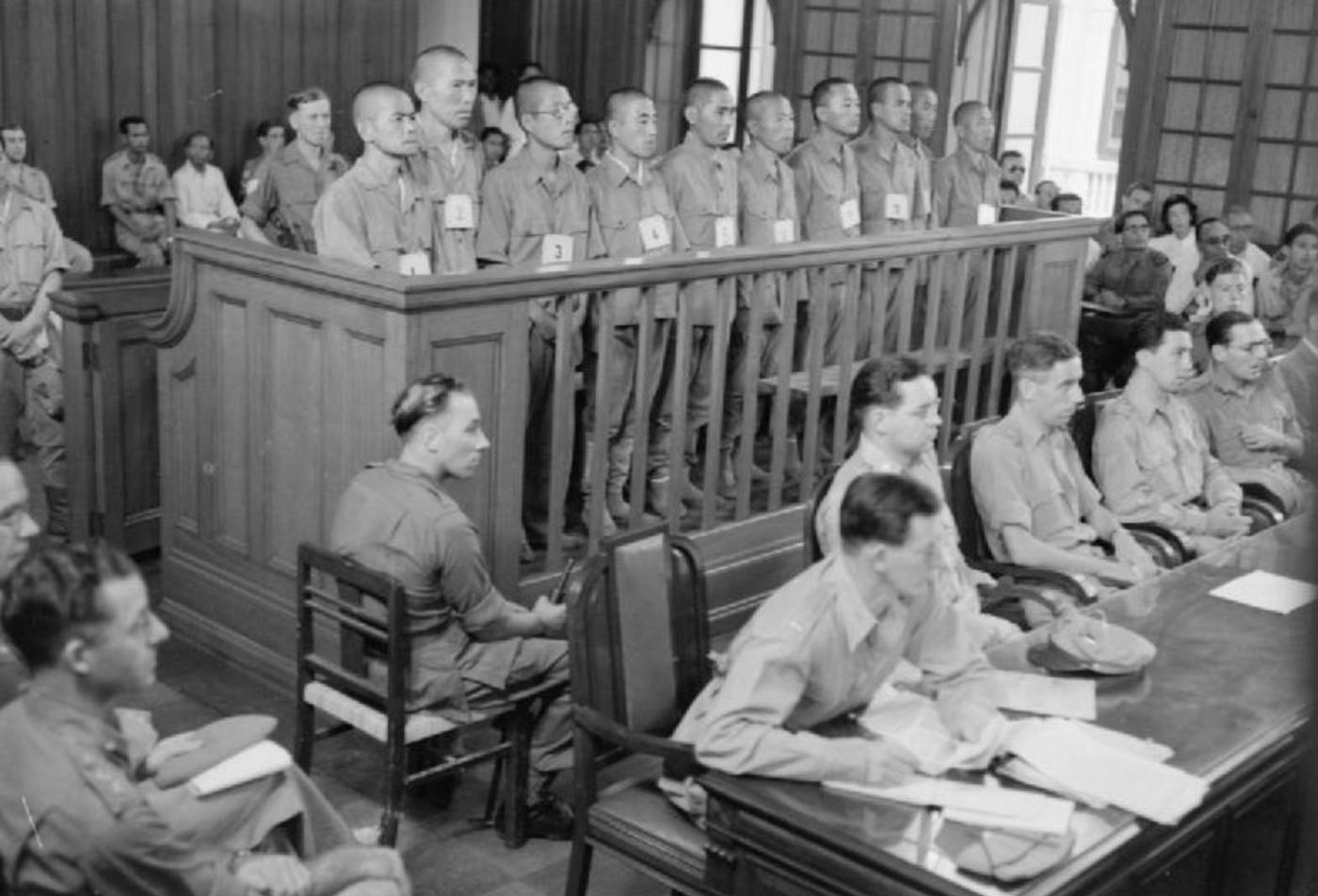
The Tokyo War Crimes Trial, formally known as the International Military Tribunal for the Far East, was convened after the end of the Second World War to bring Japan’s wartime leaders to justice. It began on 3 May 1946 and concluded on 12 November 1948, stretching far longer than the Nuremberg Trials due to the vast scope of Japanese military operations across Asia and the Pacific. In total, twenty-eight defendants were indicted for Class A war crimes, which covered crimes against peace, conspiracy, and the orchestration of aggressive warfare. One defendant, Shumei Okawa, was removed early in the proceedings after being declared mentally unfit, leaving twenty-seven to stand trial. Another, former prime minister Fumimaro Konoe, committed suicide before he could be brought into the courtroom.
By the end of the trial, twenty-five were convicted. Seven received death sentences by hanging, including former prime minister Hideki Tojo, often seen as the face of Japanese militarism during the war. Sixteen others received life imprisonment, though several were paroled in the 1950s. Two men received lesser sentences of twenty and seven years. None were acquitted. The trial was presided over by eleven judges, each from a different Allied nation. The chief president of the tribunal was Sir William Webb of Australia, whose stern yet meticulous approach shaped the tone of the proceedings. The international composition of the bench was meant to reinforce that Japan’s wartime actions had affected an entire region, not just a handful of countries.
The trial was enormous in scale. More than four hundred witnesses testified in person, and thousands of affidavits were submitted as written evidence. The sheer weight of documentation reflected both the geographical breadth of the Japanese empire and the brutality that had accompanied its expansion. Witnesses described atrocities such as the infamous Nanjing Massacre of 1937, where mass executions, systematic *blocked text*, and the killing of civilians became symbols of the army’s unchecked savagery. Survivors recalled rivers turning red with blood and corpses piled in the streets, a level of horror that left even hardened prosecutors shaken.
Other testimony focused on biological and chemical experimentation conducted by Unit 731 in Manchuria. Although the tribunal discussed the matter, the leaders of Unit 731 were not ultimately prosecuted, partially because the United States granted them immunity in exchange for their research records. Still, the accounts that surfaced described vivisections performed without anesthesia, prisoners deliberately infected with plague, and entire villages targeted with pathogen testing. These stories contributed to the understanding of why so many of the accused faced the gravest categories of international charges.
The trial also examined the torture and mistreatment of Allied prisoners of war. Survivors from the Burma–Thailand railway, often called the Death Railway, testified about beatings, starvation, and back-breaking labor that killed tens of thousands of Asian workers and thousands of Allied POWs. Former prisoners described working sixteen-hour days in monsoon rains, with disease spreading unchecked and guards administering summary executions. These accounts played a central role in the convictions of several high-ranking officers who had overseen prisoner camps.
One striking feature of the Tokyo Tribunal was the diversity of opinion among the judges themselves. The Indian judge, Radhabinod Pal, became famous for issuing a lengthy dissent arguing that the entire concept of Class A crimes was retroactive and therefore unjust. His dissent did not alter the sentences but later became a controversial symbol in postwar Japanese nationalist circles. By contrast, other judges believed the tribunal had been too lenient, particularly in failing to prosecute Emperor Hirohito, who was shielded from trial due to Allied strategic considerations.
The legacy of the Tokyo Trial remains complex. It produced a detailed documentary record of atrocities committed across Asia, established the principle that leaders could be held accountable for aggressive warfare, and contributed to the development of modern international criminal law. Yet it also left gaps, particularly regarding medical experimentation and the role of the emperor. Despite these controversies, the Tokyo Tribunal marked a turning point in the global attempt to confront wartime brutality, leaving behind a vast archive of testimony and judgment that continues to shape historical understanding of the Second World War in the Pacific.