Isle Hirsch
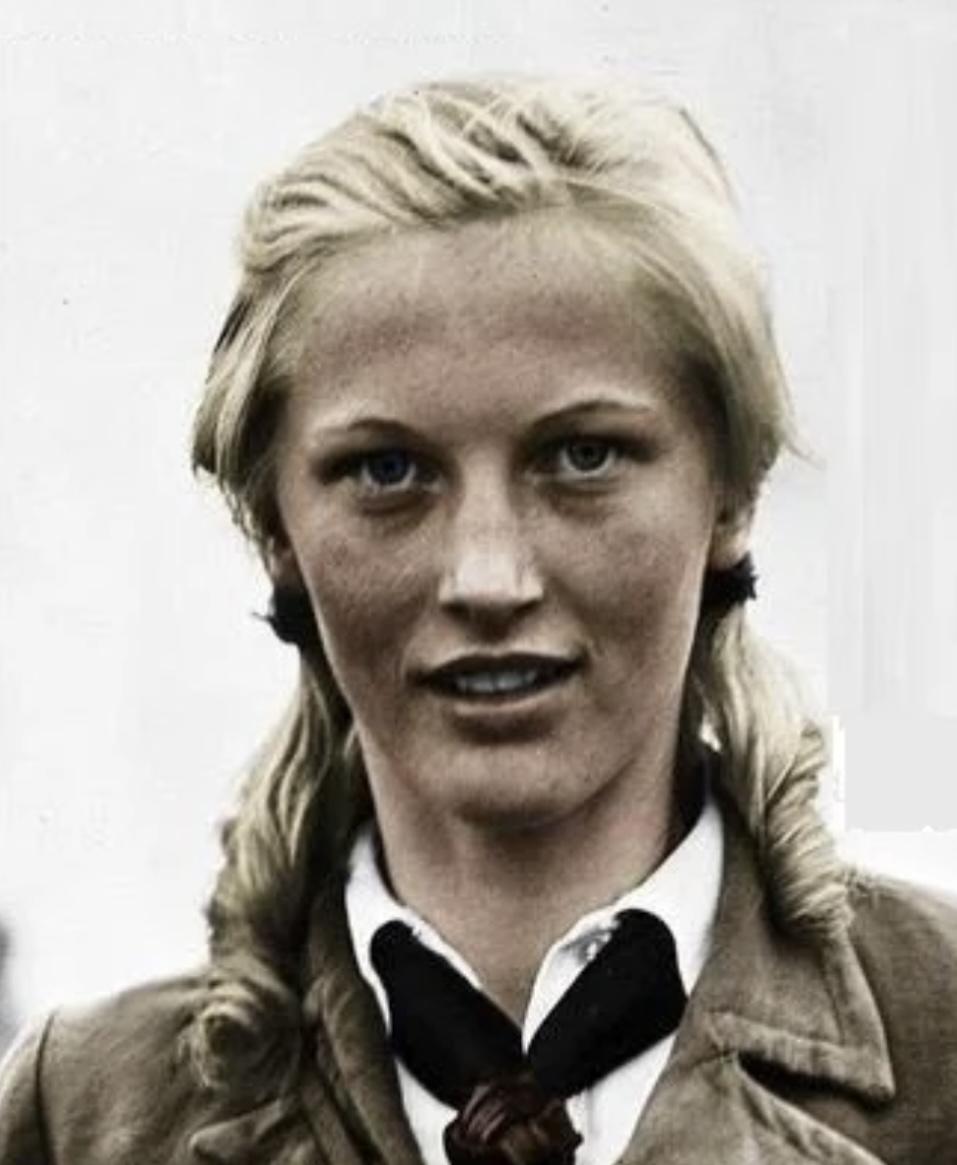
Ilse Hirsch was born in 1922 in the industrial town of Hamm in western Germany and grew up during a period of political instability and radical change. Her adolescence coincided with the rise of Adolf Hitler and the rapid reshaping of German society under National Socialist rule. Like many girls of her generation, she joined the League of German Girls, the female branch of the Hitler Youth. The organisation offered structure, purpose, and social status, while steadily immersing its members in Nazi ideology. Hirsch proved disciplined and committed, rising to a leadership role and eventually becoming a senior organiser in the town of Monschau.
As the Second World War turned decisively against Germany, the country descended into chaos. By late 1944 and early 1945, Allied forces had crossed into German territory, cities were being destroyed, and the authority of the Nazi state was breaking down. In response, the regime resorted to increasingly extreme measures. One of these was the creation of the Werwolf program, a secret initiative intended to form guerrilla units that would operate behind enemy lines. Despite later confusion, Werwolf was not an anti-Nazi resistance movement but a fanatically loyal effort to continue the fight through sabotage and assassinations, particularly targeting Germans who cooperated with the Allies.
Ilse Hirsch became involved in Werwolf activities during this final phase of the war. Although Nazi Germany generally restricted women from direct military roles, the desperate circumstances of 1945 led to exceptions. Hirsch was selected for a special mission due to her loyalty, reliability, and familiarity with the border region around Aachen. She underwent training for covert operations and was assigned to a small team tasked with carrying out a targeted killing intended to send a political message.
The mission, known as Operation Carnival, aimed to assassinate Franz Oppenhoff, a German lawyer who had been appointed mayor of Aachen by American occupation authorities after the city fell in late 1944. To the Nazi leadership, Oppenhoff symbolised betrayal and collaboration. His appointment deeply angered Hitler and senior SS figures, who ordered his elimination as a warning to others who might cooperate with the occupiers.
In March 1945, Hirsch and five male members of the Werwolf team were transported by aircraft and parachuted into woodland near the German-Belgian border. From there, they travelled cautiously toward Aachen, moving mainly at night to avoid detection. During their advance, they shot and killed a border guard who unexpectedly encountered them, highlighting the lethal nature of the mission and the lawless conditions of the collapsing Reich.
On 20 March 1945, the group reached Oppenhoff’s home. After he was summoned back from a nearby social gathering, the assassination was carried out at close range on his doorstep. Oppenhoff died almost immediately. As the team attempted to escape, tragedy struck. Hirsch stepped on a concealed landmine, suffering a serious knee injury, while one of her comrades was killed in the explosion. The remaining members dispersed as German resistance rapidly collapsed in the following weeks.
After the war, surviving participants in the assassination were located and put on trial by German courts. The case became known as the Aachen Werwolf Trial. Several members of the group received prison sentences, though these were relatively short and later reduced. Ilse Hirsch, however, was acquitted and never served a prison term, a decision that has remained controversial given her involvement in the operation.
In her post-war life, Hirsch settled quietly in the Aachen region. She married, raised a family, and largely disappeared from public attention. She had three children and lived into old age, dying in the year 2000. Unlike many former Nazis, she did not become a public figure or write memoirs, and she rarely spoke about her wartime role.
Ilse Hirsch’s story is sometimes mischaracterised as that of a resistance fighter, but in reality she was a participant in one of the last violent acts carried out in service of the Nazi regime. Her involvement in Operation Carnival reflects the fanaticism, fear, and moral collapse that marked the final months of the Third Reich, when even young civilians were drawn into acts of political murder in the name of a doomed cause.