Saab 37 Viggen
The Saab 37 Viggen is not just a fighter-bomber; it’s one of the most fascinating aircraft of the Cold War era — a bold and uniquely Swedish solution to the demands of national defence, blending pioneering technology with rugged practicality. Designed and built by Saab AB in Linköping, it was conceived at a time when Sweden sought to maintain its neutrality yet deter potential aggression from larger neighbouring powers. The aircraft first flew on 8 February 1967 and entered service with the Swedish Air Force on 21 June 1971, quickly becoming the backbone of the combat fleet for decades.
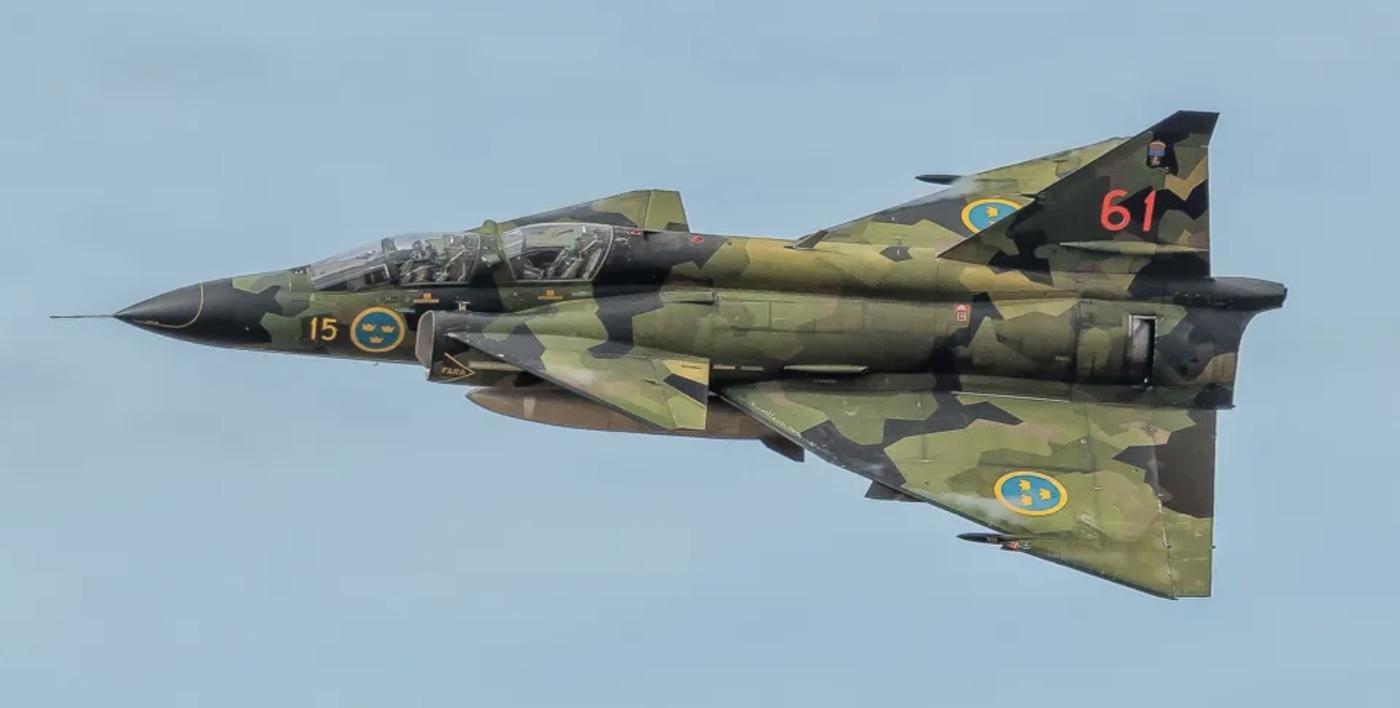
From the outset, the Viggen stood out. Its swept-delta wing paired with prominent foreplanes — a canard layout — gave it remarkable agility for its size and era, while making it one of the first combat aircraft produced in quantity with this aerodynamic configuration. It also featured avionics that were cutting edge at the time, including an onboard digital central computer that helped manage navigation, weapons delivery, and flight systems. These innovations placed it among the most advanced European military aircraft of its generation.
At the heart of its performance was a single Volvo RM8B afterburning turbofan engine, producing enough thrust to exceed Mach 2.1 at high altitude while still retaining impressive short take-off and landing capability. Thanks to thrust-reversing equipment and robust landing gear, it could operate from runways as short as roughly 500 metres — even stretches of public highway. This was a deliberate design choice aligned with Sweden’s dispersed Bas 60 defence concept, which envisioned aircraft dispersal across many hardened sites to survive wartime strikes.
Several variants were developed to fulfill a range of roles. The original AJ 37 was a fighter-bomber and ground-attack platform, while later improvements allowed it to take on reconnaissance tasks as well. A two-seat trainer known as the SK 37 helped pilots transition to the aircraft, while the SF 37 and SH 37 carried specialized cameras or maritime radar for photo-reconnaissance and anti-surface missions. The most advanced operational version was the JA 37, a dedicated all-weather interceptor and strike fighter equipped with improved radar, avionics, and air-to-air weapons. In the late 1990s, the JA 37D upgrade enhanced radar performance, mission computing power, and weapons compatibility, adding beyond-visual-range missiles alongside traditional Sidewinders and updating cockpit displays for easier pilot use.
Its service life spanned more than three decades, with the last examples retired in 2005, trainers following slightly later. It was never exported internationally, primarily due to Sweden’s strict export policies and how uniquely tailored the design was to national defence plans, but its legacy is unmistakable in Swedish aviation history. During its operational career, the fleet was central to aerial deterrence during the tense Cold War years, equipped to respond quickly from roadway bases if needed.
Beyond raw performance and versatility, the aircraft holds a cultural resonance in Sweden. Its name is a double reference — to a native diving duck, alluding to its canard wing design, and to “thunderbolt” in Nordic lore, tying it to both the natural and mythic heritage of the country. Even today, the Viggen remains a celebrated chapter in aerospace history — a striking example of how inventive design, national needs, and cutting-edge technology came together to produce a combat aircraft that stood far above the expectations of its time and continues to capture the imagination of aviation enthusiasts around the world.