Invention of Tracer Ammunition
The problem British airmen faced in the early years of the First World War was brutally simple: they could fire their guns, but they had almost no idea where the bullets were actually going. A pilot might aim carefully at an enemy aircraft or an enemy airship and still miss entirely, because once a round left the muzzle it vanished from sight. In 1914 and early 1915, air combat was still experimental, and the limits of human eyesight at speed and altitude made accurate shooting more guesswork than skill.
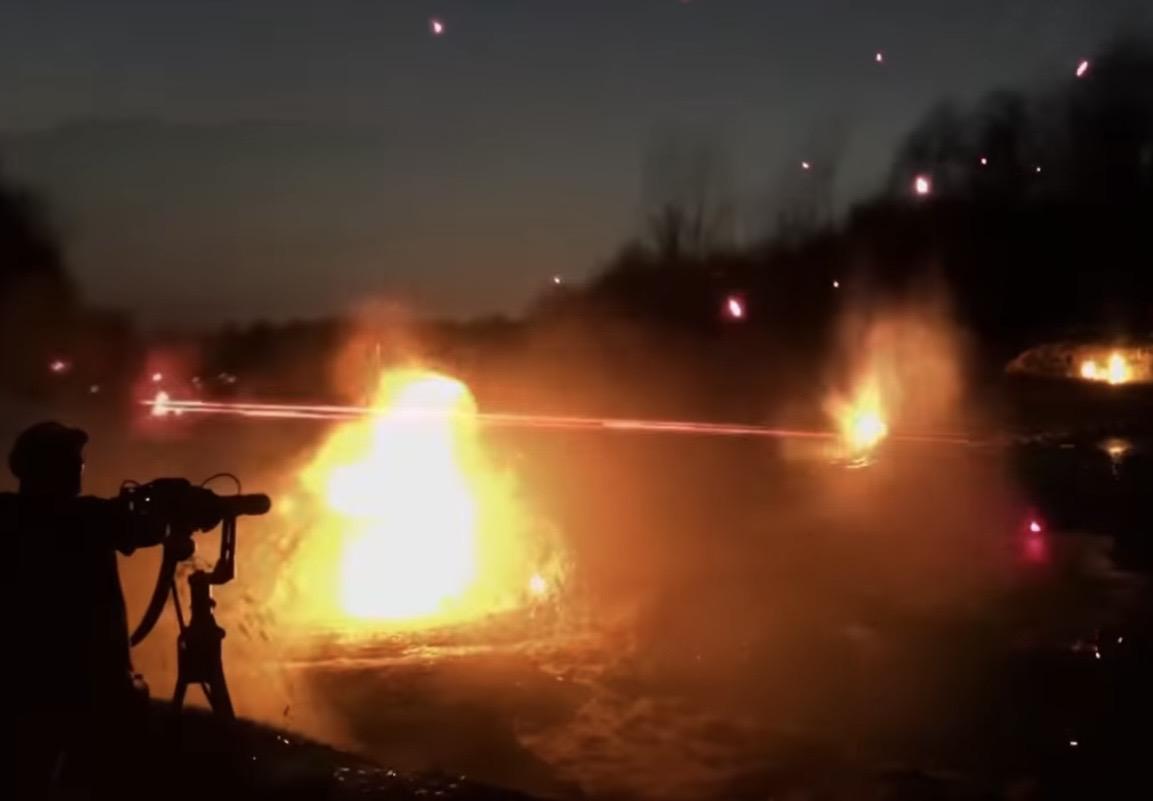
The breakthrough came in 1915, when British designers developed what became known as tracer ammunition. The core idea was to make a small percentage of bullets visibly mark their own flight path. By adding a pyrotechnic composition to the base of the projectile, the round would ignite after leaving the barrel and burn brightly as it flew through the air. To the pilot, this appeared as a glowing streak showing exactly where the gun was firing. This innovation was rapidly adopted by the Royal Flying Corps, whose pilots desperately needed a way to correct their aim in real time.
One of the earliest and most dramatic uses of tracer ammunition was against German airships. These were not balloons filled with inert materials, but large hydrogen-filled airships commonly referred to as Zeppelins, after the company that built them. At night, when these airships raided British cities, conventional bullets were almost useless. Pilots struggled to judge range and deflection in darkness, and even when rounds struck home, the effect was hard to see. Tracer ammunition changed that equation almost overnight. A pilot could now walk their fire onto the massive silhouette of an airship, watching the glowing lines of tracer rounds converge on the target.
Once combined with incendiary and explosive ammunition, tracer rounds made the destruction of hydrogen-filled airships far easier. The pilot could see exactly where the bullets were striking and adjust aim to concentrate fire into one section of the envelope. Famous night victories over airships in 1915 and 1916 owed a great deal to this visibility. What had previously been an exercise in blind firing became a controlled and deliberate attack, and the psychological impact on both sides was enormous.
The British quickly realised that the value of tracer ammunition was not limited to the air. On the ground, machine gunners faced a similar problem: at long range, it was difficult to see where bursts were landing, especially in poor light, smoke, or broken terrain. By loading ammunition belts with tracer rounds at regular intervals, usually one tracer for every four or five ordinary bullets, gunners could instantly correct their fire. This made it much easier to engage moving targets, suppress enemy positions, and coordinate fire between multiple weapons. By the later years of the war, tracer ammunition had become standard issue across many armies, not just British forces.
There were drawbacks. Tracer rounds burned extremely hot, which increased barrel wear and could raise the risk of overheating during sustained fire. The bright streaks also revealed the shooter’s position to the enemy, particularly at night. Despite these risks, the advantages were decisive. The ability to see and adjust fire in real time transformed both air combat and ground fighting.
After the First World War, tracer ammunition became a permanent feature of modern warfare. Advances in chemistry improved consistency and allowed tracers to ignite later in flight, reducing barrel damage and improving accuracy. Different colours were introduced so units could distinguish between friendly fire, enemy fire, and different weapon types. Tracers were adapted for heavy machine guns, aircraft cannons, and anti-aircraft weapons, extending their usefulness far beyond their original role.
Today, tracer ammunition is still widely used, though often more selectively. Modern armed forces rely on tracers for training, target indication, and coordination, especially at night or over long distances. In aircraft, tracers remain valuable for confirming aim during high-speed engagements. At the same time, modern optics, thermal sights, and digital fire-control systems have reduced reliance on visible tracers, particularly in situations where concealment is vital.
What began in 1915 as a British solution to the problem of invisible gunfire became a lasting military innovation.