HMS Janus Sunk
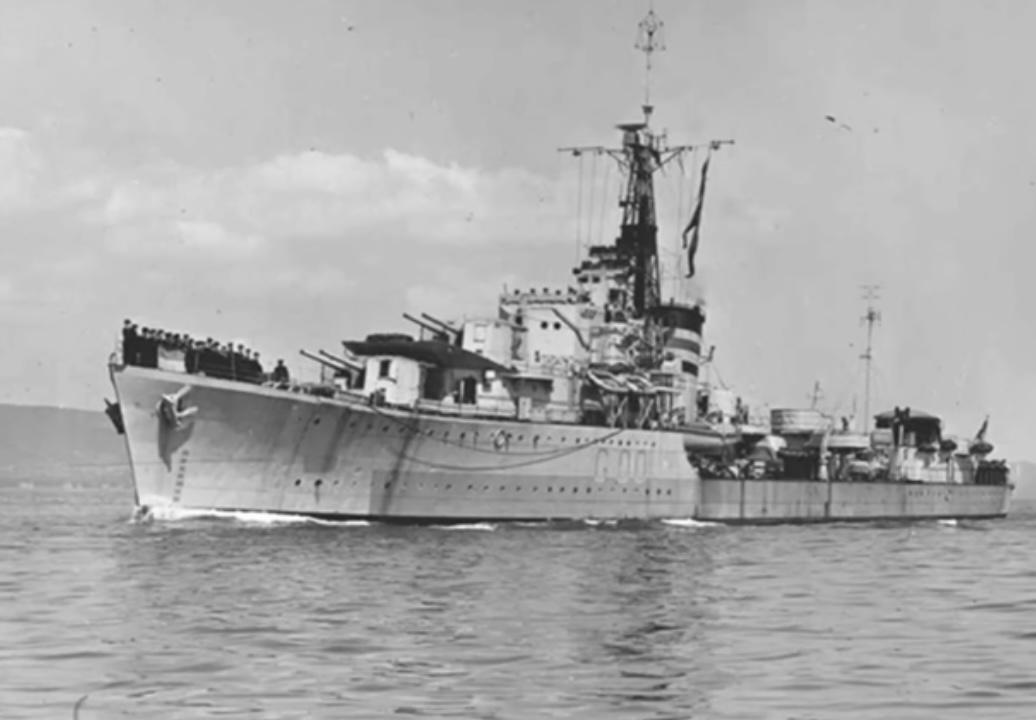
On 23 January 1944 the central Mediterranean was alive with tension as Allied naval forces crowded off the Anzio beachhead, supporting the landings that were meant to break the deadlock in Italy. Among the ships steaming back and forth in the grey winter seas was HMS Janus, a J-class destroyer that had already survived years of hard service in the Atlantic and Mediterranean. She had hunted U-boats, escorted convoys through some of the most dangerous waters in the world, and fought in fleet actions against Italian and German forces. That morning she was part of the naval screen protecting the invasion area, moving at speed and firing on shore targets when required, a small but vital piece of the massive Allied effort.
The Luftwaffe, although battered by years of war, was far from finished. German air commanders had prepared a sharp counterblow against the Allied ships off Anzio, and it would involve one of the most advanced weapons of the conflict, the radio-guided Henschel Hs 293 glide bomb. These weapons were released from bombers at altitude and then steered by an operator via radio control, using flares on the tail to guide them visually onto their target. To the men on the ships below they were terrifying, because instead of falling straight down like ordinary bombs, they seemed to hover and then curve toward a chosen ship, making last-second evasive manoeuvres far less effective.
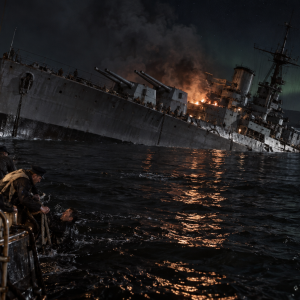
As German bombers broke through the defensive fire and released their weapons, Janus was manoeuvring at speed when one of the glide bombs was guided directly toward her. Lookouts and gunners would have seen the bright flare at the tail of the weapon growing rapidly larger as it homed in. Despite frantic attempts to throw the destroyer out of its path, the bomb struck Janus amidships. The explosion was devastating, ripping through the thin hull and into the machinery spaces, shattering boilers and flooding compartments in seconds. Fires broke out almost immediately, fed by fuel and hot steam, and the ship began to lose power and stability.
The damage was so severe that Janus had little chance of survival. Within minutes she was settling rapidly, her deck tilting as water poured in below. The order to abandon ship was given, but the violence of the blast and the speed with which she was going down meant that many of her crew never had the chance to escape. Some were killed outright by the explosion, others were trapped below decks, and more were thrown into the sea amid burning wreckage. Nearby ships moved in to rescue survivors, hauling men from the water despite the danger of further air attack, but the human cost was terrible. Out of a crew of roughly 240 officers and sailors, only about 80 were rescued. Around 160 men were lost with their ship, making the sinking of Janus one of the most tragic single incidents for the Royal Navy during the Anzio operations.
The attack that destroyed Janus was part of a larger, coordinated Luftwaffe strike. At the same time, other Allied ships off Anzio were targeted by glide bombs and conventional bombs, as German aircraft tried to overwhelm the crowded anchorage. Some vessels were badly damaged, their decks torn open and superstructures blasted, while others narrowly escaped as bombs splashed into the sea close alongside them. The sight of these guided weapons weaving toward their targets left a deep impression on Allied sailors, who knew they were facing a new and dangerous phase of the air-sea war.
What makes the loss of Janus especially poignant is how close it came to the end of her war. By early 1944 the Allies were firmly on the offensive, and ships like Janus were working almost continuously to support landings, bombard enemy positions, and protect the vital flow of supplies. She had survived the Atlantic, the Mediterranean, and countless actions against submarines and aircraft, only to be destroyed in minutes by a single precisely guided weapon in sight of the Allied beachhead. The Hs 293 and similar weapons would not change the final outcome of the war, but on that cold January day they proved just how lethal German innovation could still be.