Grumman f4f-3 Wildcat
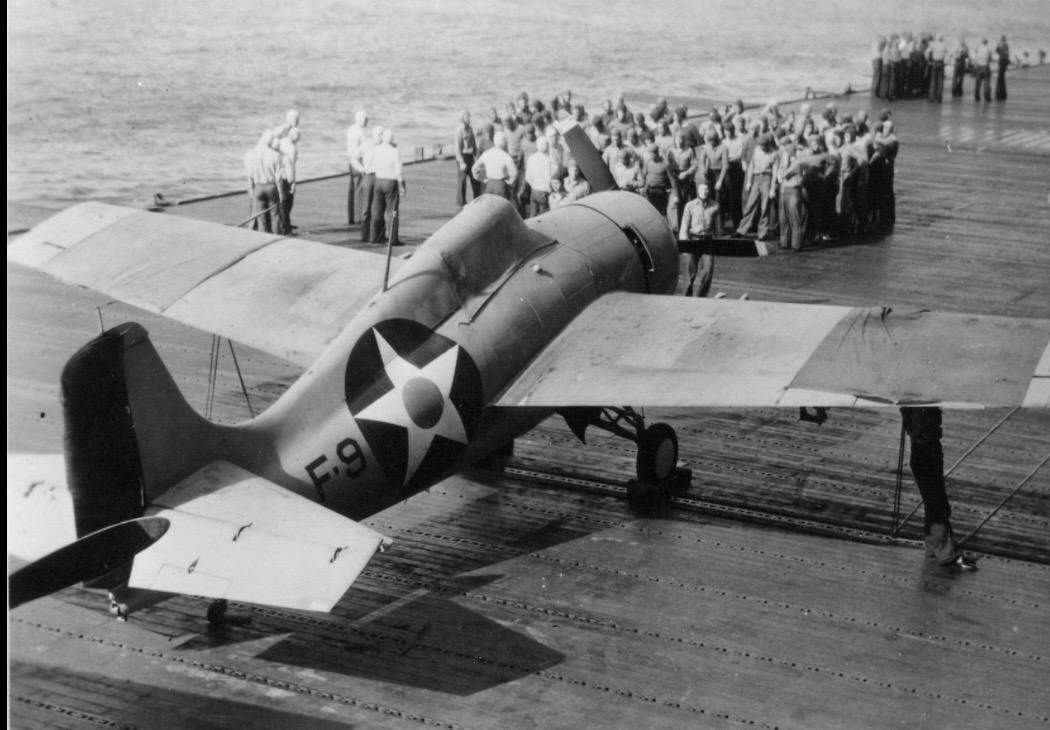
The F4F-3 Wildcat was one of the most important American naval fighter aircraft of the early Second World War and played a decisive role during the difficult opening years of the conflict in the Pacific. It was designed by the Grumman Aircraft Engineering Corporation, a company already known for producing rugged naval aircraft. The design team was led by Leroy Grumman, with key engineering contributions from William Schwendler and Robert Hall. Their goal was to produce a modern carrier-based monoplane fighter that could replace earlier biplanes and meet the growing performance demands of naval aviation.
The aircraft originated during the late 1930s when the United States Navy sought a new generation of fighters capable of operating from aircraft carriers. Grumman initially proposed a biplane successor to its earlier F3F fighter, but as aviation technology advanced rapidly, the Navy insisted on a more modern monoplane design. Grumman responded by redesigning the project into what became the XF4F-3 prototype. This aircraft first flew in February 1939 and demonstrated sufficient promise to enter production shortly afterward. By 1940 it was entering service with US Navy and Marine Corps squadrons.
Production of this early model was carried out primarily at Grumman’s factory in Bethpage, New York. The F4F-3 was built entirely by Grumman, unlike later variants that would also be produced by General Motors under license. Around 285 examples of this specific model were manufactured, while total production of all Wildcat variants during the war exceeded 7,800 aircraft. The F4F-3 formed the backbone of American carrier fighter strength during the crucial period from 1941 through 1943.
Its main role was as a carrier-based interceptor and fleet defense fighter. It was designed to protect aircraft carriers and naval task forces from enemy bombers and fighters. It also served as an escort for American dive bombers and torpedo bombers during offensive strikes. In addition to carrier operations, it was used from land bases by the US Marine Corps in the Pacific. Marine pilots flew it in desperate defensive battles over Wake Island, Guadalcanal, and other strategic locations. The British Fleet Air Arm also used the aircraft, where it was known as the Martlet, for convoy protection and carrier operations in both the Atlantic and Mediterranean.
Technically, the F4F-3 was a compact and heavily built aircraft with a strong emphasis on durability and reliability. It was powered by a Pratt & Whitney R-1830-76 Twin Wasp radial engine producing approximately 1,200 horsepower. This engine gave it a maximum speed of around 331 miles per hour at altitude and a service ceiling of about 37,000 feet. Its operational range was roughly 770 miles, though this could be extended with additional fuel tanks in later operations. The aircraft had a wingspan of about 38 feet and a length of just under 29 feet. Empty weight was approximately 5,900 pounds, with a fully loaded weight exceeding 7,900 pounds.
One of its most distinctive mechanical features was the manually operated landing gear. Instead of using hydraulic systems, the pilot raised and lowered the gear using a hand crank in the cockpit. Although this required physical effort and time, it proved extremely reliable and was less prone to failure than hydraulic systems of the period. The aircraft’s sturdy construction and wide landing gear stance made it particularly suitable for repeated carrier landings on pitching decks at sea.
Armament consisted of four .50-caliber Browning M2 heavy machine guns mounted in the wings. Each gun typically carried around 450 rounds of ammunition. This weapon arrangement provided strong hitting power and was effective against enemy aircraft and lightly armored targets. The aircraft could also carry small bombs or depth charges under its wings, enabling it to perform limited ground-attack and anti-submarine duties when required, though air combat and fleet defense remained its primary missions.
In combat, the aircraft faced serious challenges when it first encountered the Japanese Mitsubishi A6M Zero. The Zero was faster, more maneuverable, and could out-climb American fighters in the early stages of the war. However, American pilots quickly learned not to engage in turning battles. Instead, they developed new tactics that exploited the strengths of their aircraft, such as superior firepower, diving ability, and exceptional durability. One of the most famous of these tactics was the “Thach Weave,” devised by Lieutenant Commander John Thach. This method allowed two fighters to support each other defensively and counter the Zero’s maneuverability advantage.
The aircraft played a major role in several key naval battles of 1942. During the Battle of the Coral Sea, it provided fighter cover for American carriers engaged in the first carrier-versus-carrier battle in history. At the Battle of Midway, it defended American ships against Japanese air attacks and escorted dive bombers that sank four Japanese carriers, a turning point in the Pacific War. It was also heavily involved in the Guadalcanal campaign, where Marine pilots flying from Henderson Field fought almost daily against Japanese air raids under extremely harsh conditions. These operations demonstrated the aircraft’s toughness and reliability, as many returned safely despite heavy battle damage.
Pilots generally respected and valued the aircraft. Although it lacked the speed and agility of some opponents, it was known for being exceptionally rugged. Many airmen credited its strong construction and radial engine with saving their lives after sustaining significant damage in combat. The cockpit offered good visibility for carrier operations, and the aircraft’s stable handling made it a dependable platform for both experienced and inexperienced pilots. Its reliability and survivability earned it a reputation as a sturdy and trustworthy fighter.
As a carrier aircraft, it proved highly effective. Its relatively compact size allowed aircraft carriers to carry larger numbers of fighters, which was vital during the early years of the war when carrier strength was limited. Its strong landing gear and durable airframe made it well suited to the demanding conditions of carrier operations. Even after more advanced fighters such as the F6F Hellcat and F4U Corsair entered service, it continued to operate from smaller escort carriers where its size and handling characteristics remained advantageous.
In terms of combat success, the aircraft performed far better than many initially expected. Despite facing highly maneuverable Japanese fighters and often being outnumbered, American pilots flying this machine achieved a favorable kill-to-loss ratio once effective tactics were adopted. It helped hold the line during the most dangerous phase of the Pacific War and bought time for the development and deployment of more advanced fighters.
Overall, the F4F-3 Wildcat stands as one of the most significant naval fighters of the Second World War. It was not the fastest or most advanced fighter of its era, but it combined rugged construction, reliable performance, and heavy armament in a way that proved invaluable.