Grumman Duck
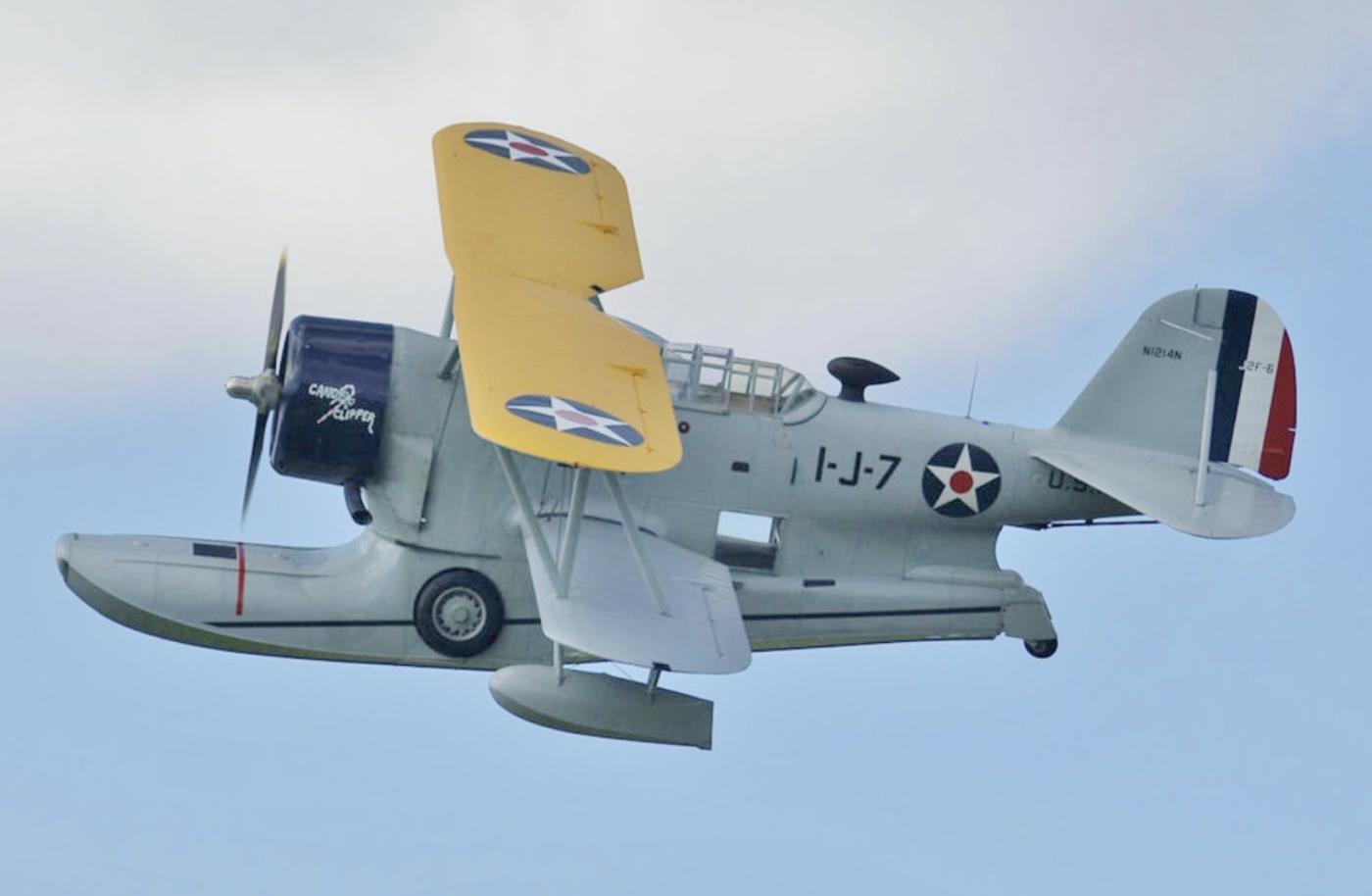
The Grumman J2F Duck was one of the most distinctive and quietly important aircraft used by the United States during the Second World War. It was never fast, never elegant, and never intended to be a frontline strike aircraft, yet it became invaluable along coastlines, around island bases, and in forward naval areas where reliability and versatility mattered far more than speed or appearance. Its bulky shape, dominated by a large central float blended into the fuselage, earned it an enduring reputation as an ugly airplane, but that same shape made it exceptionally useful.
The aircraft was designed by Grumman in the mid-1930s, at a time when the U.S. Navy wanted a rugged amphibian that could operate from both land and water without special facilities. Leroy Grumman’s company had already developed a strong reputation for sturdy naval aircraft, and the Duck reflected that philosophy perfectly. The design built on earlier Grumman amphibians and incorporated an integrated float that housed retractable landing gear, allowing the aircraft to taxi up beaches, use short airstrips, or land in sheltered water. The first J2F flew in 1936, and the type quickly entered U.S. Navy service.
Manufacture was handled initially by Grumman itself, but as wartime demands increased, production was expanded to the Columbia Aircraft Corporation. In total, 584 J2F Ducks were built, making it a common sight at naval air stations and coastal patrol bases during the war years. Earlier versions were built by Grumman, while the majority of later wartime aircraft, especially the J2F-6, came from Columbia.
The Duck’s role in World War II was primarily that of a utility and patrol aircraft, but it was also used for coastal defense and anti-submarine duties, especially early in the war when German U-boats operated alarmingly close to the American coastline. It was well suited to this work because it could take off from protected waters, fly low and slow, and remain on station for long periods. Its job was often to spot suspicious wakes, periscopes, or surface vessels, identify and track them, and relay precise position reports by radio to naval patrol boats, destroyers, or heavier patrol aircraft. In many cases, simply keeping visual contact with a submarine and forcing it to remain submerged was a significant tactical contribution.
Although it was not a heavy attack aircraft, the Duck was not unarmed. Most versions carried a flexible machine gun in the rear cockpit for defensive use, and some variants added a forward-firing gun. It could also be fitted with underwing racks for small bombs or depth charges. This allowed it to carry out limited attacks against surfaced submarines or light targets, but in practice its greatest value was as a spotter, observer, and communications platform rather than as a primary submarine killer. It could attack if necessary, but more often it guided others to the target.
The Duck’s crew arrangement reflected this mission. The pilot sat in the forward cockpit, with an observer behind who could operate radios, watch for targets, and man the defensive gun. The aircraft also had space for a passenger, cargo, or even a stretcher, making it extremely useful for medical evacuation and rescue. One of its most famous roles was air-sea rescue, where it could land near downed airmen and bring them back, sometimes under combat conditions.
As the type evolved, improvements were incremental rather than revolutionary. Early versions focused on basic patrol and utility work, while later models received more powerful engines, increased payload capability, and better military equipment. The J2F-5 and J2F-6, in particular, benefited from stronger engines that improved performance and load-carrying ability. Despite these changes, the aircraft always remained slow by fighter standards, with a top speed of under 200 miles per hour. What it did have was endurance: a typical range of around 800 miles and the ability to stay airborne for seven hours or more under economical cruising conditions. This long time aloft made it ideal for coastal patrols and search missions.
The Duck entered service before the war and remained in frontline naval use throughout World War II. After 1945 it was gradually phased out as newer monoplanes replaced biplanes, but the aircraft did not disappear immediately. Some continued in service as air-sea rescue aircraft into the late 1940s, and many surplus Ducks were sold for civilian use, where their ability to operate from water made them popular for transport, surveying, and utility flying in remote areas.
In the end, the Grumman J2F Duck was never meant to be beautiful or glamorous. Its ungainly appearance, which led to jokes and unflattering nicknames, masked a design that was extremely practical and dependable. During the war it proved that spotting, reporting, rescuing, and staying airborne when others could not were just as vital as firepower. In coastal patrol operations against German submarines, the Duck often played the quiet but crucial role of finding the enemy first and making sure they could not slip away unnoticed.