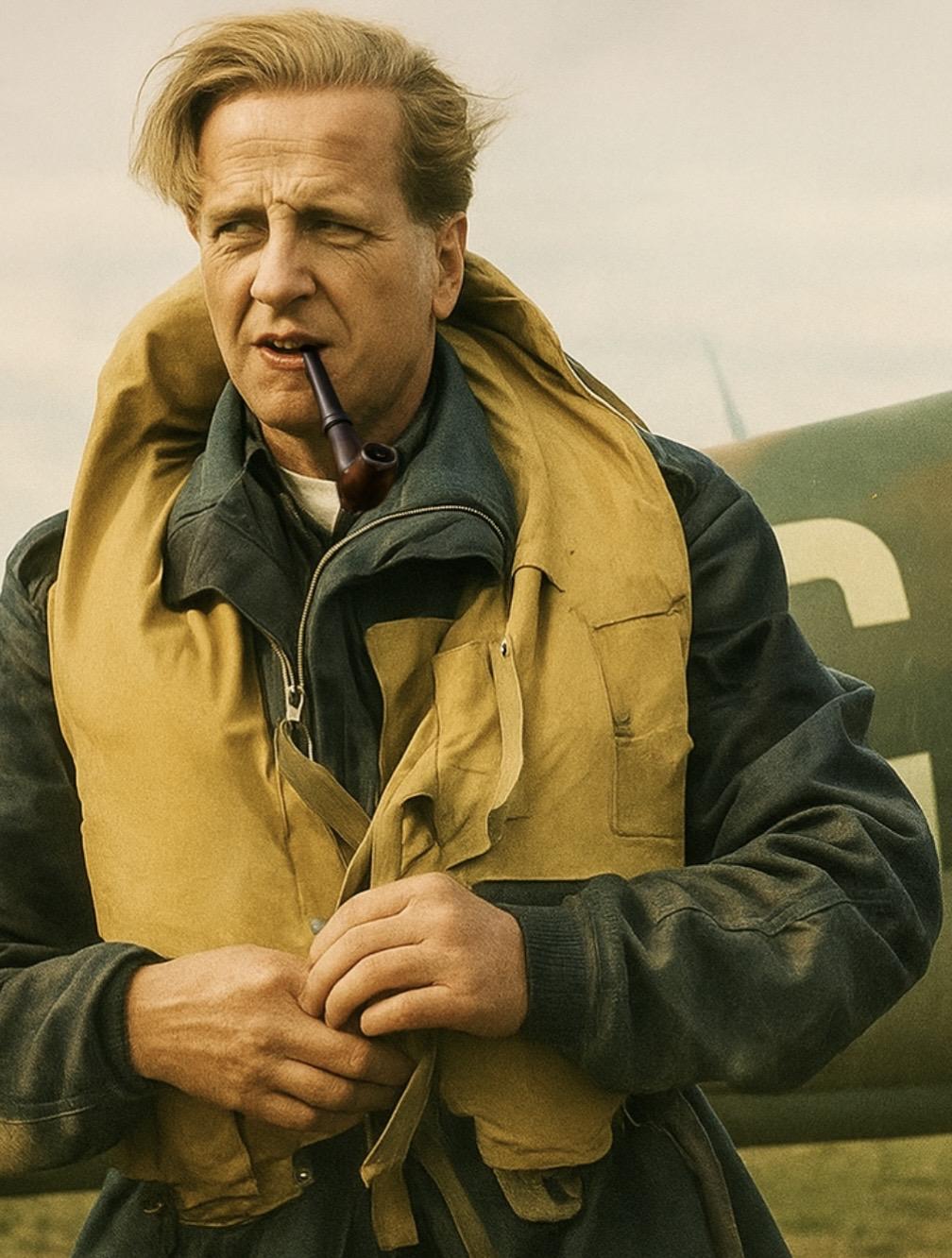
Group Captain Percy Pickard
Group Captain Percy Charles “Pick” Pickard was one of the Royal Air Force’s most distinctive and courageous officers, remembered both for his exceptional operational leadership and for the dramatic circumstances of his death during the Second World War.
Percy Charles Pickard was born on 21 February 1904 in Hammersmith, London. He grew up in an era when aviation was still developing but already inspiring excitement and ambition. Educated at Eton College, he was known as confident, energetic, and naturally authoritative. Although he did not immediately embark on a military career after leaving school, the expanding opportunities of the inter-war Royal Air Force eventually drew him toward flying.
He entered the Royal Air Force in 1927, joining at a time when the service was becoming increasingly professional and technologically advanced. Training as a pilot, he quickly showed strong flying ability alongside a calm assurance in the air. His early years were spent in routine squadron duties that provided a solid foundation in navigation, aircraft handling, and discipline. During this period he progressed steadily through the junior officer ranks, earning respect for his competence and reliability.
Throughout the 1930s he gained further experience in leadership and instructional roles. He became known as an officer who demanded high standards while leading from the front, a trait that later defined his wartime reputation. By the outbreak of the Second World War in September 1939, he was well prepared for senior responsibility. The rapid expansion of the RAF during the conflict accelerated promotion, and his operational ability soon brought him into more prominent command positions.
His most significant wartime contribution came through bomber and strike operations, particularly the development and execution of dangerous low-level attacks against heavily defended targets. Rising to the rank of group captain, he commanded No. 140 Wing, a formation specialising in precision raids deep inside occupied Europe. These missions required extraordinary flying skill, detailed planning, and personal bravery, with commanders frequently exposed to the same dangers as their crews.
The operation most closely associated with his name was Operation Jericho in February 1944, the low-level attack on Amiens Prison in German-occupied France. The aim was to breach the prison walls to enable imprisoned members of the French Resistance to escape before execution. He personally led the raid, flying a de Havilland Mosquito at extremely low altitude under intense enemy fire. The prison walls were successfully breached and many prisoners escaped, though losses among the attacking force were severe. The mission became one of the most famous and controversial raids carried out by the RAF during the war, and his leadership was widely admired.
For his service he received several decorations, including the Distinguished Service Order for outstanding leadership and devotion to duty, and the Distinguished Flying Cross for courage and skill in aerial operations. These awards reflected both his personal bravery and his effectiveness as a commander in some of the most hazardous roles of the air war.
He did not live to see the end of the conflict. On 25 February 1944, only days after the Amiens raid, he was killed during another low-level operation over France when his Mosquito was shot down by German fighters near Beauvais. He was 40 years old. His death was a heavy blow to the RAF and to the men of No. 140 Wing, many of whom regarded him as an inspiring and fearless leader.