On this day in military history…
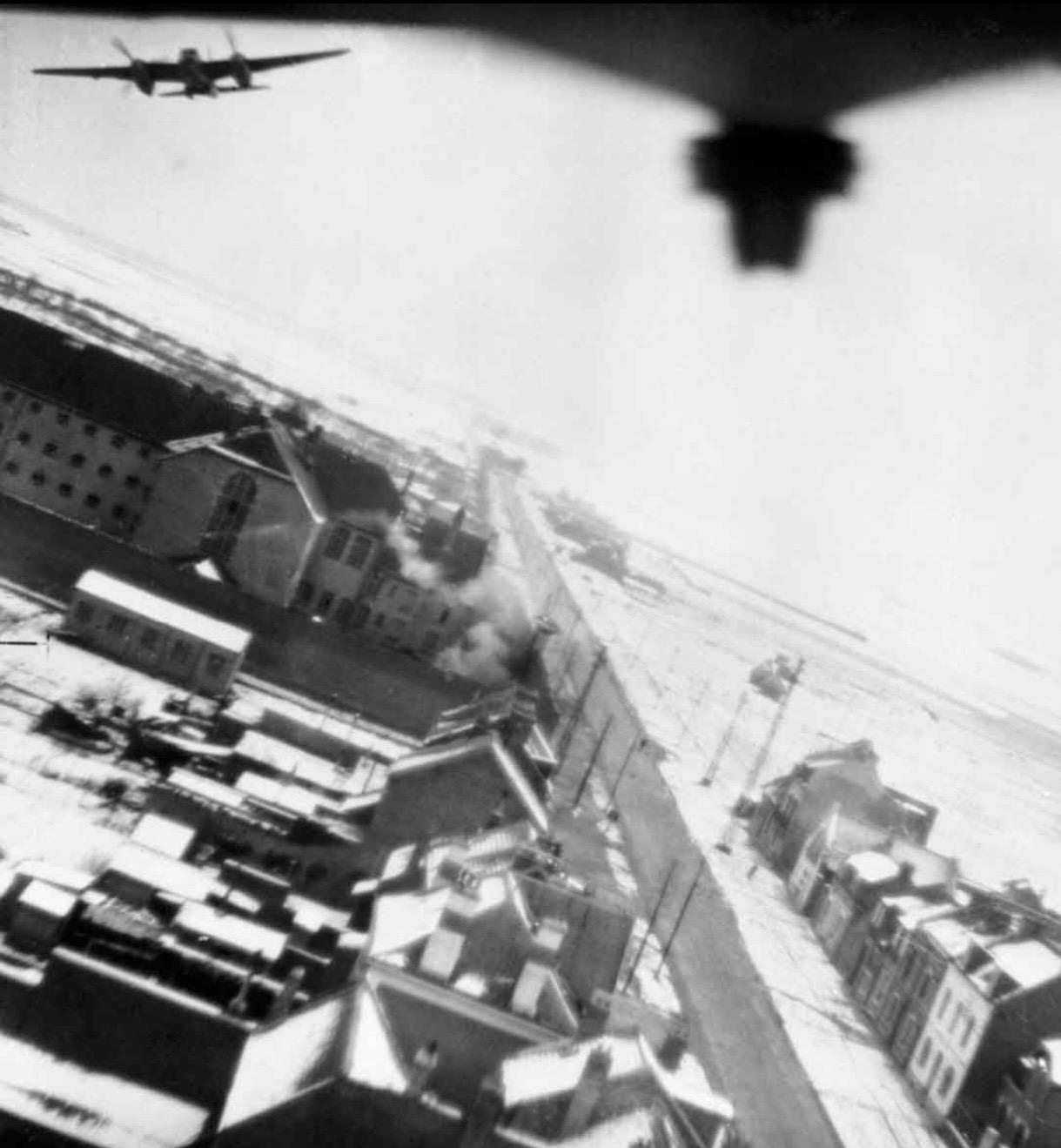
Operation Jericho was one of the most daring and controversial precision raids carried out by the Royal Air Force during the Second World War. It took place on 18 February 1944 and involved a daylight, extremely low-level attack on the German-occupied prison at Amiens in northern France, officially known as the Prison d’Amiens. The aim was to breach the prison walls and destroy key internal buildings so that imprisoned members of the French Resistance could escape before being interrogated, executed, or deported to Germany.
The raid was planned and executed by 140 Wing of the RAF’s 2nd Tactical Air Force, flying de Havilland Mosquito FB.VI fighter-bombers. The Mosquito was uniquely suited to this mission because of its speed, manoeuvrability, and ability to fly very low and steady while delivering bombs with a degree of accuracy that few other aircraft of the period could match. The aircraft’s wooden construction also gave it excellent performance at low altitude and reduced vulnerability to some types of ground fire.
Overall leadership of the operation rested with Group Captain Percy Charles “Pick” Pickard, who commanded 140 Wing and flew on the raid himself. Pickard was already well known within the RAF for his advocacy of precision low-level attacks. The strike force was divided between three squadrons. No. 487 Squadron RNZAF and No. 464 Squadron RAAF were assigned the main attack tasks, while No. 21 Squadron RAF was held in reserve with orders to return and completely destroy the prison if the initial attempts failed to open it effectively.
In total, eighteen Mosquitos were allocated to the mission, including a single aircraft from the RAF Film Production Unit tasked with filming the raid for intelligence and record purposes. Six Mosquitos from No. 487 Squadron were assigned to breach the outer walls of the prison, while six from No. 464 Squadron were to attack internal structures, particularly the guards’ quarters and administrative buildings, to suppress German response at the crucial moment. The six aircraft of No. 21 Squadron were to act only if required, which added an extra layer of moral complexity to the operation.
The aircraft took off from RAF Hunsdon in Hertfordshire, which was the base of 140 Wing. The weather was exceptionally poor for such a demanding mission. Snow covered the ground, visibility was limited by low cloud, and strong winds complicated navigation. These conditions delayed take-off and disrupted rendezvous plans, particularly for the Hawker Typhoon fighters assigned to provide top cover. Despite these difficulties, the Mosquitos pressed on, flying across the English Channel at wave-top height to avoid German radar detection.
The attack plan depended on precise timing and bomb fuzing rather than sheer destructive power. The Mosquitos carried 500-lb medium-capacity bombs fitted with delayed-action fuzes. These delays were crucial: the bombs were intended to penetrate walls or roofs before exploding, maximising structural damage while reducing the risk of killing prisoners sheltering inside. The first wave attacked the outer walls at the corners, blowing large breaches through which inmates could escape. Subsequent runs targeted the guards’ mess and administrative blocks, aiming to neutralise German personnel at the moment confusion peaked.
The raid achieved its immediate physical objectives. Large sections of the prison walls were destroyed, internal buildings were heavily damaged, and chaos spread rapidly through the compound. Around 258 prisoners managed to escape in the aftermath, though not all were Resistance members; some were common criminals who took advantage of the opportunity. Approximately 102 prisoners were killed during the raid, either by bombs, collapsing masonry, or subsequent German gunfire, and several others were recaptured in the days that followed. The human cost has remained a central point of debate about the operation ever since.
Losses among the attackers were also significant. Of the Mosquitos that set out, fourteen returned to base. Two aircraft were shot down by German flak during the attack, including the Mosquito flown by Pickard himself, who was killed along with his navigator. Another aircraft was lost on the return journey. These losses were keenly felt, particularly the death of Pickard, who had been instrumental in shaping the tactics used.
Whether Operation Jericho was truly a success depends on how its purpose is judged. From a tactical standpoint, the RAF demonstrated that it could carry out extraordinarily precise attacks against heavily defended targets in occupied Europe. A number of Resistance prisoners did escape and avoided execution, which fulfilled the mission’s stated humanitarian aim. However, the high number of prisoner deaths raised serious moral questions, and some historians argue that the operation’s benefits were limited.
Adding to the controversy is the long-standing suggestion that the raid may have served additional, less publicised purposes. Some historical interpretations propose that Jericho acted as a diversion to draw German attention and resources away from other Allied operations taking place at the same time, including clandestine activities linked to preparations for the invasion of northwest Europe. Others suggest that intelligence priorities, such as preventing sensitive information from being extracted from key prisoners, may have been as important as the rescue narrative presented afterward. While definitive proof of a hidden agenda remains elusive, the timing and scale of the raid have ensured that such theories persist.