Germanys most daring raid
On 9 April 1940, Operation Weserübung marked one of the most daring and complex combined operations of the Second World War. Ordered by Adolf Hitler, the invasion aimed to secure Germany’s strategic position in northern Europe by seizing control of Denmark and Norway in a single, coordinated strike.
The roots of the operation lay in Germany’s dependence on Swedish iron ore, much of which was shipped through the Norwegian port of Narvik during winter months when the Baltic Sea froze. British interest in cutting off this supply alarmed German planners. At the same time, control of Norway’s long coastline would provide naval bases and protect German shipping routes. Hitler became convinced that waiting would risk Allied intervention, so he approved a pre-emptive invasion.
Planning for the operation began in late 1939 under the direction of General Nikolaus von Falkenhorst. The plan was ambitious: a simultaneous assault by land, sea, and air across a vast geographical area. Unlike earlier campaigns, this would rely heavily on speed, surprise, and coordination between the army, navy, and air force. The Germans divided the invasion into multiple task forces, each assigned a specific Norwegian city including Oslo, Bergen, Trondheim, Narvik, and others. Denmark, lying directly between Germany and Norway, was to be overrun quickly to secure airfields and supply lines.
The attack began in the early hours of 9 April 1940. Denmark was struck first. German forces crossed the border with little warning, supported by airborne troops and naval landings. The Danish military was small and unprepared for a full-scale invasion. Within hours, German troops had occupied key cities and strategic points, including Copenhagen. Facing overwhelming force and wishing to avoid civilian casualties, the Danish government surrendered the same day. Denmark became one of the quickest defeats of the war, giving Germany immediate control of vital airfields that would support operations in Norway.
At the same time, the invasion of Norway unfolded with far greater complexity and resistance. German warships carried troops directly into major Norwegian ports in a bold gamble that relied on surprise. In Oslo, the capital, the Germans encountered unexpected resistance. The coastal fortress at Oscarsborg sank the heavy cruiser Blücher, delaying the capture of the city and allowing the Norwegian government and royal family to escape.
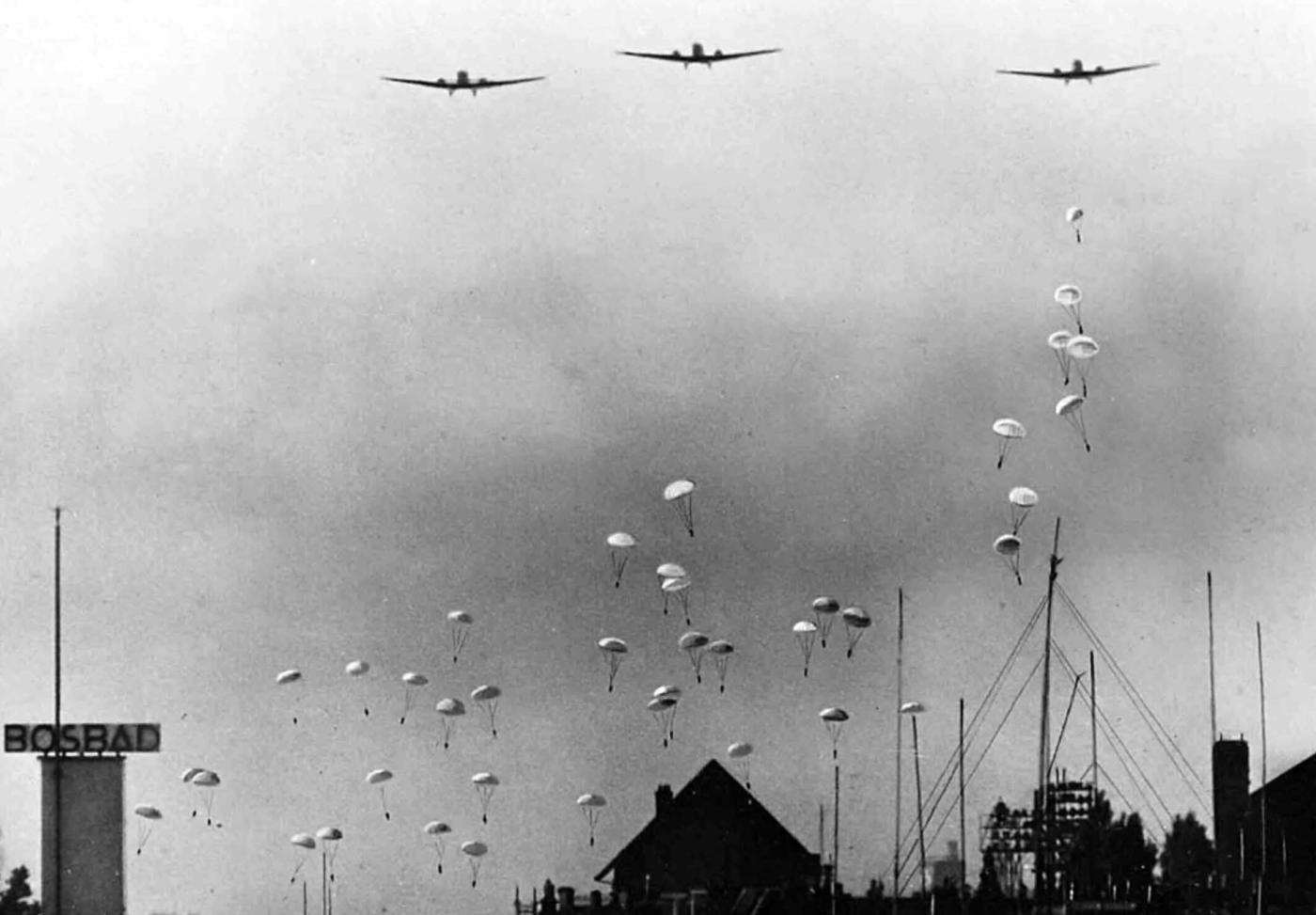
Elsewhere, German forces achieved mixed success. In Bergen and Trondheim, landings were carried out rapidly, supported by naval gunfire and air power from the Luftwaffe. One of the most innovative aspects of the operation was the use of airborne troops. German paratroopers seized key airfields, including Stavanger’s Sola airfield, enabling reinforcements to be flown in quickly. This was one of the first large-scale uses of airborne forces in modern warfare and demonstrated a new dimension of blitzkrieg tactics.
In Narvik, far to the north, German destroyers transported troops into the strategically vital port. Although they succeeded in landing forces, they became trapped and were later attacked by the Royal Navy. The naval battles around Narvik were intense and costly, resulting in heavy losses for both sides. Despite this, German mountain troops managed to hold their ground.
The invasion shocked the Allies. Britain and France had anticipated the possibility of German action in Scandinavia but had not expected such speed and coordination. Allied forces were quickly dispatched to Norway in an attempt to counter the invasion. However, German control of airfields and the effectiveness of the Luftwaffe made it difficult for Allied troops to operate. Over the following weeks, German forces consolidated their positions, and by early June 1940, Allied forces withdrew from Norway.
Operation Weserübung demonstrated several key elements of German military strategy. Surprise was crucial; the simultaneous attacks on multiple targets overwhelmed the defenders. The integration of air, sea, and land forces allowed Germany to strike with precision and speed. The use of paratroopers and direct naval landings into defended ports was highly risky but ultimately effective.
The invasion had significant consequences. Germany secured vital resources and strategic positions in northern Europe, while the Allies suffered a political and military setback. In Britain, the failure of the Norwegian campaign contributed to the resignation of Prime Minister Neville Chamberlain and the rise of Winston Churchill.